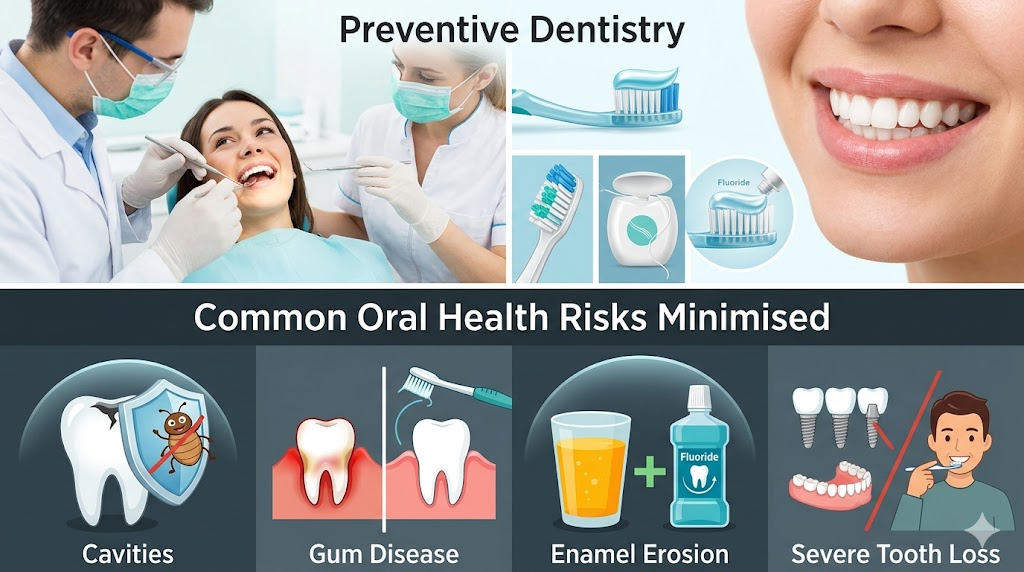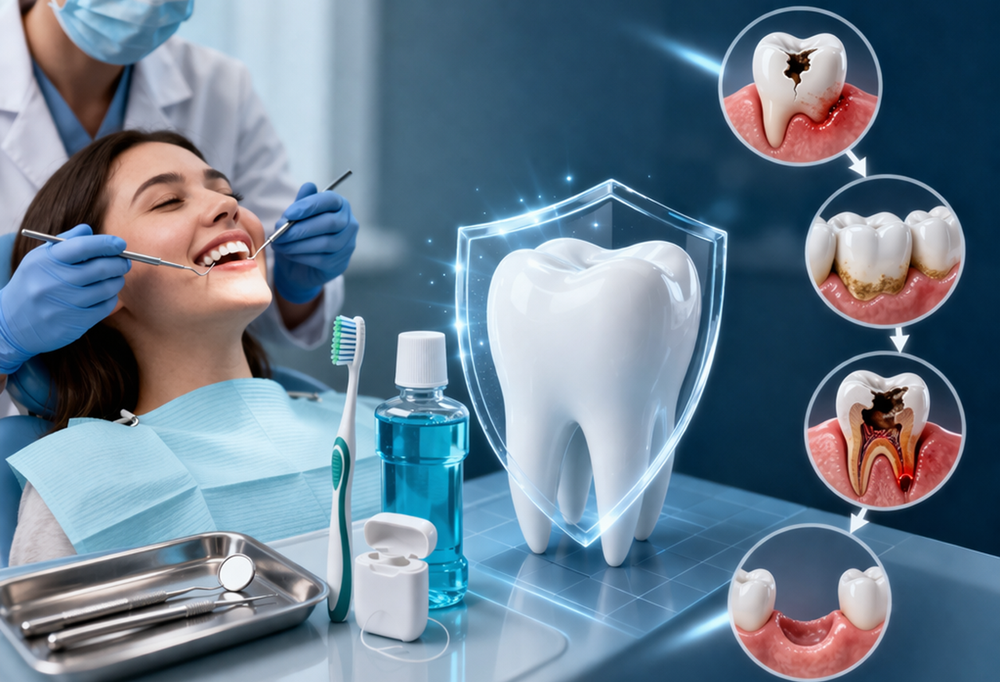
Preventive dentistry protects you from pain that hides under the surface. Small problems often grow in silence. A tiny cavity, light bleeding, or mild jaw soreness can turn into an infection, tooth loss, or costly treatment. Routine cleanings, exams, and X-rays help find these threats early. You gain time, choice, and control. A Manhasset dentist can spot signs of grinding, decay, gum disease, and even some health conditions before you feel them. Early care keeps your teeth strong. It also protects your heart, lungs, and blood sugar. Many people skip visits because they feel fine. That quiet comfort can be risky. You deserve clear answers and simple steps that prevent crisis care. This blog explains how steady checkups, cleanings, and home care work together to guard you from hidden oral problems.
How Hidden Oral Problems Start
Many mouth problems start small and quietly. You may not feel pain. You may not see a clear sign in the mirror. Yet change has begun.
Common hidden problems include:
- Early tooth decay between teeth
- Gum disease under the gumline
- Cracks in teeth from grinding
- Bone loss around teeth
- Dry mouth from medicine or health conditions
Each of these can stay silent for months. Then one day you wake up with swelling, sharp pain, or a loose tooth. At that point, treatment is harder and more costly. Preventive care breaks that pattern. You find trouble when it is small, simple, and less painful to fix.
What Routine Visits Really Check
A checkup is more than a quick look. It is a full review of your mouth, gums, and bite. It is also a chance to spot signs of health problems in the body.
During a visit, the dental team may:
- Check each tooth for soft spots, chips, or wear
- Measure your gums to find early gum disease
- Review X-rays to see between teeth and under fillings
- Look for sores, white patches, or color change in soft tissue
- Watch how your teeth meet when you bite
The team may also ask about sleep, snoring, dry mouth, smoking, and new medicines. These details help connect mouth signs with body health. The Centers for Disease Control and Prevention explains that poor oral health is linked to heart disease, diabetes, and pregnancy problems. A routine visit can be the first clue that something deeper needs care.
Why Cleanings Matter Even When Teeth Look Fine
Home brushing and flossing are important. Still, they cannot reach every spot. Plaque hardens into tartar. Once that happens, only a professional cleaning can remove it.
Cleanings help you by:
- Removing tartar that traps germs near the gums
- Smoothing tooth surfaces so plaque sticks less
- Polishing away some surface stains
- Letting the hygienist watch for bleeding or swelling
Bleeding during a cleaning is not “normal.” It is a warning sign. It often shows early gum disease. Caught early, gum disease may improve with better home care and a few focused cleanings. Ignored, it can lead to bone loss and loose teeth.
The Cost of Prevention Compared to Crisis Care
Many families worry about the cost of dental visits. That concern is real. It can cause people to wait until pain forces them to seek help. Yet research shows that preventive care costs less than emergency care over time.
The table below shows a simple comparison of common services. These are rough national ranges and not exact prices. They show how early care can save money and stress.
| Type of visit or treatment | Typical reason | Estimated cost range | Impact on your life |
|---|---|---|---|
| Routine exam and cleaning | Prevention and early checks | Low | Short visit. Little or no pain. |
| Small filling | Early cavity found on X ray | Low to medium | One visit. Quick recovery. |
| Root canal and crown | Deep decay or cracked tooth | High | Many visits. Missed work or school. |
| Deep cleaning for gum disease | Heavy tartar and bone loss | Medium to high | Long visits. Ongoing care nis eeded. |
| Tooth removal and replacement | Untreated decay or infection | High | Change in chewing and speech. |
Prevention does not remove all risk. It does shift the odds in your favor. It also lowers the chance of missing work, school, or family events because of a sudden tooth problem.
Links Between Oral Health and Whole Body Health
Your mouth is part of your body. Germs that cause gum disease can enter the blood. That can raise strain on the heart and blood vessels. People with diabetes often have more severe gum problems. Gum infection can also make blood sugar harder to control.
The National Institute of Dental and Craniofacial Research describes how gum disease and health conditions connect. You help your future health when you care for your gums now.
Warning signs to watch include:
- Gums that bleed when you brush or floss
- Bad breath that does not improve with brushing
- Gums that look puffy or dark red
- Loose teeth in adults
- Changes in how your teeth meet when you bite
These signs do not always cause pain at first. That is why steady checkups matter. You give your care team a chance to see problems before they grow.
Simple Daily Habits That Strengthen Prevention
Office visits work best when you back them up at home. You do not need complex tools. Steady, simple habits work.
Focus on three daily steps:
- Brush twice a day with fluoride toothpaste
- Clean between teeth once a day with floss or another tool
- Limit sugary drinks and snacks to mealtimes
You can add help for dry mouth by sipping water and using sugar-free gum. You can support your child by brushing with them and setting a timer. You can protect teeth from sports injuries with a mouthguard.
When to Schedule a Visit
Most people need a checkup and cleaning every six months. Some need visits more often. That includes people who smoke, have diabetes, are pregnant, or have a history of gum disease.
You should schedule a visit soon if you notice:
- Any mouth pain that lasts more than two days
- A chipped or broken tooth
- A sore that does not heal within two weeks
- Sudden sensitivity to hot, cold, or sweets
- Jaw pain or headaches when you wake up
Do not wait for severe pain. Early care is kinder to your body and your budget.
Taking Control Before Problems Take Hold
Preventive dentistry is not about perfect teeth. It is about control. You choose steady care instead of a sudden crisis. You choose short visits instead of long, stressful treatment. You choose to protect your health and your family from hidden problems that grow in the dark.
One call to schedule a checkup starts that process. You do not need to fix everything at once. You only need to take the next small step. Each visit, each cleaning, and each night of brushing gives you more strength against hidden oral problems.