A journey often begins not with boarding the plane, but with a multitude of small decisions that shape the first hours in a new country. Tickets are bought, a hotel is booked, a suitcase is packed, but many people put off mobile data “for later,” even though it’s what they need immediately upon landing. It’s much more reassuring to figure out your connection before departure, for example, by choosing an eSIM in advance through globustele.com and avoiding the hassle of random Wi-Fi, expensive roaming charges, or queues at a mobile phone store after a long journey. This is especially important if the trip is short, the itinerary is tight, and the first hours after arrival are already planned down to the minute.
The first hours after arrival decide a lot
The most frustrating moment of a trip is ending up at the airport without decent internet. At first glance, it seems like nothing serious will happen: you can connect to Wi-Fi, find a service desk, or ask the staff for directions. But in practice, things are more complicated. Airport Wi-Fi may require confirmation via SMS, which is not received due to roaming charges. Local SIM cards may only be sold after a passport check. Waiting in line to see a service desk can take half an hour or more, especially in popular tourist cities.
At the same time, you need to open your map, message the apartment owner, call a taxi, check the bus number, find the baggage carousel, show your reservation, or contact loved ones. If there’s no internet, even simple tasks become stressful. You’ve just landed, are tired, and have trouble finding your way around the new place, and instead of calmly exiting the airport, you start searching for internet.
A pre-installed eSIM eliminates this problem. It’s activated on your phone without a physical SIM card, so there’s no need to change the slot, buy a plastic one, or search for a mobile phone store. When the plane lands, all you have to do is turn on mobile data and immediately use maps, messaging apps, translation services, and transportation apps.
Roaming is often more expensive than it seems.
Many tourists don’t plan their mobile data in advance, thinking, “I’ll just turn on roaming for a couple of minutes just in case.” But those “couple of minutes” can sometimes turn into an unpleasant surprise. Roaming charges from your home carrier can be deducted per megabyte, automatically activate a daily plan, or round up your data usage to your disadvantage. All it takes is opening your map, loading your messages, updating your email, and receiving a few notifications to spend more than you planned.
The problem is that modern smartphones are constantly exchanging data. Even if a user isn’t downloading anything, apps can update feeds, sync photos, pull up messages, check geolocation, and download backup data. This is especially dangerous abroad if the data plan isn’t clear in advance.
When mobile data is purchased before the trip, expenses become predictable. Travelers understand how much they’re paying, what volume or connection format they’ll receive, and which countries it will work in. This helps reduce the stress of activating mobile data every time.
eSIM is convenient for routes through several countries
Modern travel is rarely limited to a single city. Today, you can fly to Italy, travel to France two days later, then change trains to Switzerland or make a layover in Turkey. On such routes, purchasing a local SIM card in each country becomes inconvenient. You need to find a new operator, navigate tariffs, check documents, change settings, and keep track of which packages work where.
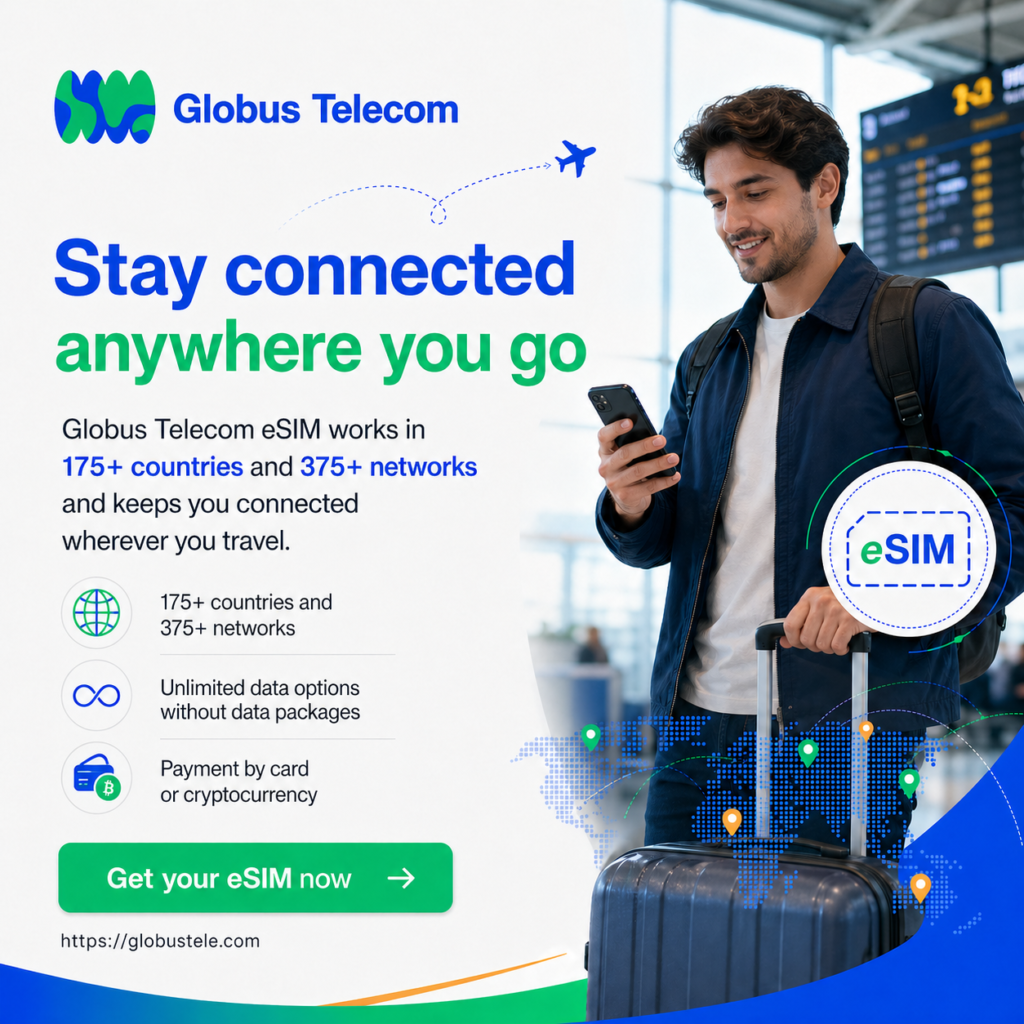
According to the image, the Globus Telecom eSIM works in 175+ countries and connects to 375+ networks. This is an important detail for travelers, as coverage during a trip depends not only on the country but also on the specific network. One operator may have better coverage in one area, while another may have better coverage in another. The wider the partner network, the higher the chance that internet will be available not only in the city center but also on the way from the airport, in the suburbs, at the train station, or near your hotel.
This is especially useful for those traveling on business, family vacations, independent tours, or long journeys with multiple transfers. People don’t have to worry about what will happen after crossing the border. Internet access is already planned as part of the trip.
Navigating without internet quickly becomes a problem
One of the main arguments in favor of having a pre-connected mobile internet connection is navigation. Even experienced travelers can get lost in an unfamiliar city, especially if the signs are in another language, the transportation system is unfamiliar, and the hotel’s address isn’t in a tourist center.
Maps are useful for more than just walking directions. They help you understand where a stop is, which metro exit to take, how much a taxi costs, and where the nearest currency exchange, supermarket, or pharmacy is. Without internet access, a map might not update your route, show traffic jams, find the right address, or navigate public transportation.
Yes, some maps can be downloaded offline, but this doesn’t solve all problems. Offline maps don’t always show up-to-date schedules, service changes, closed stations, fares, or establishment information. Therefore, mobile internet while traveling is not just a convenience, but also a safety and situational awareness tool.
Taxis, bookings, and messengers are linked
The first few hours after arrival are often filled with several important tasks. You need to call a taxi or book a transfer, contact the hotel, confirm your check-in time, open your reservation email, check the apartment door code, find a QR code for your train ticket, or contact your landlord. All of this requires internet access.
It’s especially frustrating when the information you need is supposedly on your phone, but it’s in an app that can’t be accessed without a network connection. For example, your reservation might be in your email, your apartment keys might be in a messenger, your ticket might be in the airline’s app, and your address might be on an online map. At such a moment, travelers realize they need mobile service not later, but right now.
A pre-registered eSIM helps avoid this situation. You can step off the plane and immediately access the services you need. This is especially important on nighttime arrivals, when operator counters may be closed, public transportation is less frequent, and you need to get to your accommodation quickly and easily.
A local SIM card is not always more convenient
Buying a local SIM card may seem like a common solution, but it has its drawbacks. In some countries, tourist plans are overpriced. Others require passport registration. Sometimes, the activation instructions are written in the local language, and the consultant speaks limited English. Sometimes, the SIM card doesn’t work right away, requires manual APN settings, or isn’t compatible if there’s no free slot in the phone.
Furthermore, a physical SIM card takes time. You need to find a store, choose a plan, pay, wait for activation, and check if the internet is working. On a short trip, even one lost hour can be significant. And if you’re flying with children, heavy luggage, or after a long flight, the desire to do all this usually quickly fades after landing.
The eSIM is convenient because you can set it up at home, in a relaxed environment. There’s no need to explain to the seller which plan you need, show documents in an unfamiliar place, or worry about the wrong plan being purchased.
Payment is also important
Another practical consideration is the payment method. The image indicates that Globus Telecom supports card and cryptocurrency payments. This can be convenient for travelers, as they don’t always want to be tied to cash, local payment terminals, or banking restrictions while traveling.
Sometimes a card won’t work abroad, the bank blocks the transaction, the terminal won’t accept the foreign card, and the local currency hasn’t been purchased yet. When the service is prepaid, this problem disappears. Tourists don’t start their trip searching for an ATM or currency exchange, but simply use the internet.
The ability to pre-pay for internet is especially useful for those flying to a country for the first time. A new destination already has its share of everyday issues: transportation, accommodations, documents, food, and language. The fewer technical issues you have to deal with upon arrival, the more peaceful your journey will be.
Internet on a trip is needed not only for entertainment
Mobile internet is sometimes perceived as a way to watch videos, surf social media, or send photos. But when traveling, it plays a much more important role. It provides contact with family, access to documents, online translation, banking apps, insurance, medical contacts, tickets, navigation, and emergency assistance.
If you’re lost, missed a train, can’t find accommodation, or have a flight canceled, the internet becomes your primary solution. It allows you to quickly find an alternative route, contact support, access an airport map, buy a new ticket, or contact your insurance company.
Therefore, planning your mobile internet in advance is as important as booking a hotel or checking your passport’s expiration date. It’s not a small detail, but part of normal travel preparation.
A peaceful journey begins before departure
Well-planned communications make traveling significantly easier. Travelers don’t have to worry about where to buy a SIM card, worry about accidentally triggering expensive roaming charges, search for Wi-Fi at the airport, or rely on random circumstances. They know they can open their card, call a taxi, message loved ones, and check their reservations after landing.
This is the main point of having a pre-arranged mobile internet connection. It doesn’t make traveling perfect, but it does eliminate one of the most common causes of stress. Once you’ve secured your connection, the first few hours in a new country are more relaxed, and the trip begins with the drive to the hotel, a stroll around the city, or a cup of coffee, not with searching for a mobile provider.