The tree comes down and everyone assumes the job is done. The crew leaves, the garden looks mostly clear, and that wide disc of wood sitting in the soil barely gets a second glance. That changes a few months later. Shoots start pushing up from nowhere. The lawn mower catches something solid beneath the grass. Something is clearly going on under there, and it is not good. Gold Coast stump grindingis what stops that slow unravelling before it starts — and the window to act smartly is shorter than most people expect.
The Termite Risk Nobody Talks About
The Gold Coast sits in one of the most termite-active regions in the country. A decaying stump offers exactly what subterranean species are drawn to — moist, softening wood close to the surface. The problem is that by the time activity shows on the stump itself, a colony may already be tunnelling toward the house, the fence, or the garden shed. Pest inspectors trace active infestations back to neglected stumps more often than homeowners want to hear. Stump grinding on the Gold Coast removes the entry point entirely. Chemical treatments wear off. Grinding doesn’t.
Lawn Mowers Find Every Hidden Stump
A stump sitting just below the grass line is invisible right up until the blade hits it. The equipment damage is annoying and sometimes expensive. The kickback risk is the bigger concern. Anyone mowing regularly — whether it’s the homeowner or a contracted lawn service — ends up navigating around a hazard they can’t always see. Ground-level grinding removes that obstacle completely. The lawn becomes usable again without the awkward detour around a patch of grass nobody wants to walk on either.
What Happens Below the Surface
Root systems don’t decay evenly. Different sections break down at different rates, and as they do, they leave voids in the soil. Those voids cause the ground to settle unevenly — which shows up as cracked paving, sunken pathways, and unstable garden edging. On older Gold Coast properties where large trees were removed and stumps left in place, this kind of slow subsidence is a well-known nuisance. It doesn’t happen overnight, but when it does show up, it’s costly to fix and the cause is usually obvious in hindsight.
The Leftover Mulch Is Actually Useful
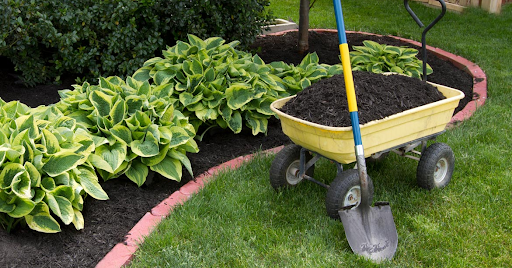
After grinding, there is a pile of wood chip mulch sitting where the stump used to be. Most people don’t realise it’s worth keeping. Spread across garden beds, it holds moisture through the dry stretches the Gold Coast regularly gets, slows down weed growth, and breaks down gradually into organic material that improves the soil. It’s essentially free mulch produced from the same tree that already occupied that patch of garden. Paying to have it carted away and then buying replacement mulch from a nursery is a decision that makes less sense the more you think about it.
Grinding vs. Full Removal
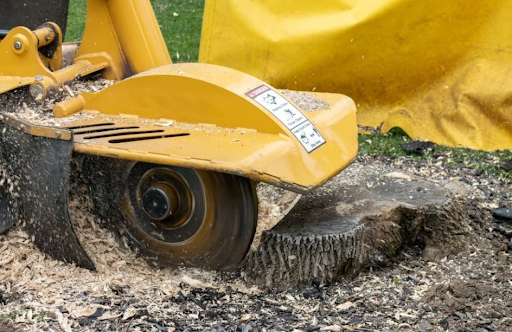
There’s a difference between grinding a stump and pulling it out entirely, and it matters. Full removal means excavating the whole root ball — heavy machinery, a significant hole left behind, substantial cost, and a yard that looks like a construction site for a while. Grinding reduces the stump to chips well below the surface using a rotating cutter, leaves the surrounding garden largely untouched, and is done in a fraction of the time. For most residential properties, grinding achieves everything the homeowner actually needs without the disruption of a full extraction.
Timing Makes a Genuine Difference
Fresh stumps grind cleanly. Wood that has been sitting and partially rotting for a season or two becomes harder to work with — softer material clogs the equipment and the grind has to go deeper to reach stable timber. There is also a seasonal logic to acting early on the Gold Coast. Stumps ground before the wet season allow the disturbed soil and wood chip mulch to settle naturally over summer, which means turfing or replanting in the following months is straightforward rather than a patchwork fix. Waiting until the problem becomes obvious costs more effort and usually more money.
Conclusion
Stumps cause real problems — not dramatic ones, but the slow, compounding kind that become harder to ignore over time. Regrowth, termites, subsidence, equipment damage — none of it is inevitable, and all of it is avoidable. Gold Coast stump grinding is the straightforward fix that most property owners wish they had arranged right after the tree came down, rather than a year later when the evidence made the decision for them.