A few years ago, most companies talked about AI as if it were some future idea.
Now it shows up in weekly meetings.
Mid-sized firms across the U.S. are no longer just testing tools. They are building systems around AI development. The focus has moved from “let’s try a chatbot” to “how do we use data to improve real decisions?”
This shift is not just happening in tech startups. It is happening in logistics hubs in Ohio, healthcare networks in New York, construction groups in Texas, and retail brands in California.
The reason is simple. Competition is tighter. Margins are thinner. Leaders need better forecasting and faster reporting. Artificial Intelligence helps with that, but only when it is built the right way.
From Simple Automation to Structured Intelligence
At first, many companies used automation in small ways. Auto-generated reports. Email alerts. Basic workflow triggers. Those steps saved time, but they were rule-based.
AI goes further.
Instead of following fixed instructions, it analyzes patterns in data. It looks at trends. It predicts outcomes. It learns from history.
For example, a regional distributor may want to predict product demand before the holiday rush. In the past, managers guessed based on last year’s numbers. With structured AI systems, forecasting can adjust based on weather trends, regional buying behavior, and supply chain delays.
That kind of insight requires more than a plug-and-play tool. It requires proper data design and careful system integration.
Why Most AI Projects Fail Quietly
Many businesses invest in Artificial Intelligence and feel disappointed after six months. The models are built. Dashboards look impressive. Yet results feel inconsistent.
The main issue is not the algorithm. It is the data.
If ERP systems contain duplicate customer records, inconsistent financial entries, or manual adjustments hidden in spreadsheets, predictions become unstable. AI does not fix messy data. It amplifies it.
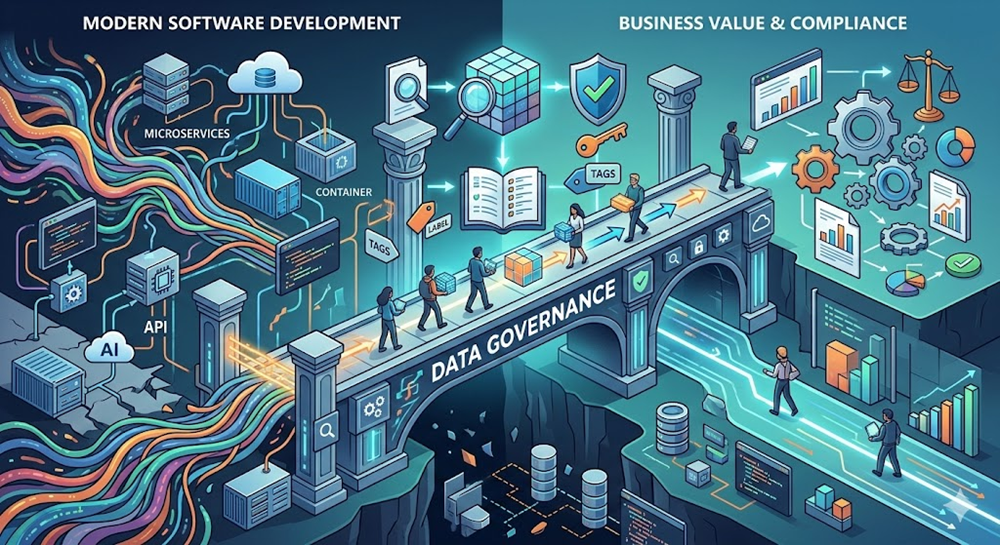
That is why structured AI development must begin with system architecture. Data fields need standardization. Workflows need alignment. Integration points need validation.
Companies that skip these steps often waste time and budget.
AI Development Requires Cross-Department Planning
AI is not just an IT project. It touches finance, operations, HR, and leadership.
A healthcare network using AI to predict patient scheduling needs clean billing records. A logistics firm forecasting shipment delays needs accurate warehouse scans. A retail brand modeling seasonal sales needs consistent product codes across regions.
When departments operate in silos, AI struggles.
That is why experienced technology partners matter. Firms working with Sprinterra often begin AI initiatives with a review of their current ERP and reporting systems. Sprinterra has supported organizations across healthcare, finance, and distribution that needed stable digital foundations before scaling advanced analytics.
This planning phase may feel slow, but it prevents repeated system rebuilds later.
Regional and Seasonal Pressures Make AI Practical
In many parts of the country, seasonal shifts affect operations.
Retailers in northern states prepare for heavy Q4 traffic and winter delivery delays. Construction firms rush to complete outdoor projects before freezing weather. Healthcare billing cycles reset at the start of the year. Logistics companies in coastal areas plan for hurricane season disruptions.
These cycles create unpredictable demand swings.
Artificial Intelligence models can analyze years of historical data to predict these patterns more accurately. Staffing can adjust earlier. Inventory can be ordered sooner. Budgets can reflect expected shifts.
But the predictions only work if the historical data is structured properly.
Companies that prepare their systems before building AI layers experience more stable results during peak seasons.
The Human Side of AI
There is still concern among employees about job loss.
In reality, most AI development in mid-sized firms focuses on reducing repetitive tasks. Invoice matching. Basic reporting. Pattern detection in billing. Early fraud alerts.
This frees staff to focus on decision-making, customer service, and strategy.
For example, a finance team in Pennsylvania might use AI-assisted reconciliation to reduce manual month-end corrections. The team is not replaced. Their workload becomes more manageable.
When leadership communicates clearly about AI goals, adoption becomes smoother.
Integration Is Where AI Becomes Powerful
AI tools must connect to ERP systems, CRM platforms, payroll data, and analytics dashboards. Without integration, they operate on partial information.
Strong integration reduces data duplication and improves real-time visibility.
Poor integration, on the other hand, creates hidden mismatches. Small data mapping errors can distort forecasts months later.
Structured AI development includes careful API design, validation layers, and staged deployment. That protects system stability as AI expands.
Long-Term Strategy Over Short-Term Hype
Many vendors market Artificial Intelligence as an instant transformation. Real results take planning.
Successful companies start with specific problems. Improve demand forecasting. Reduce billing errors. Detect unusual spending patterns. Measure impact. Expand gradually.
They invest in clean data architecture first. They align departments. They test carefully.
Over time, AI becomes part of the core strategy rather than a side experiment.
Businesses that approach AI with patience and structure often gain steady improvements in efficiency and insight.
If your company is exploring AI development but feels unsure where to begin, reviewing your data structure and integration layers is a strong first step. Building on stable foundations makes future AI adoption smoother and more reliable.
Technology will continue evolving. Companies that build structured systems today will adapt faster tomorrow without constant disruption.