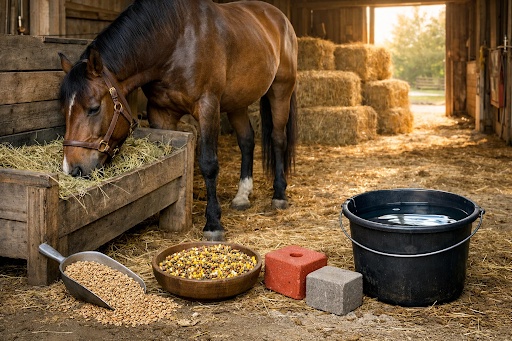
Feeding a horse is far more than filling a bucket with hay and grain. Every meal your horse eats either builds their strength or quietly chips away at it. Horses have precise nutritional requirements that shift depending on their age, breed, activity level, and overall health condition.
Getting this balance right is not optional, it is the foundation of a long, healthy life for your horse. Trusted feed for animals have spent decades researching and developing formulas that address these complex needs, because even a small nutritional gap, left unaddressed, can develop into a serious health problem over time.
Why Nutrition Is the Starting Point of Horse Health
It is better to understand the work of the digestive system of a horse before speaking about separate nutrients. Horses are hindgut fermenters unlike humans or dogs. It implies that much of their digestion occurs in the cecum and large intestine where billions of microorganisms break down fibrous plant matter. This is a lean system that is weak.
Colic, laminitis, weight loss or behavior problems are easily triggered by disruptions due to incorrect feed, or abrupt changes in the diet or nutritional deficiencies.
That is why it is not only about keeping a horse fed. It is concerned with feeding them in the right way, at all times and with a reason.
The Six Essential Nutrients Every Horse Requires
A well-balanced equine diet must deliver six core categories of nutrients. Each one performs a specific and irreplaceable function in the body.
1. Water The Most Important Nutrient of All
Technically, water is a nutrient and it should be mentioned first. An average horse of 500 kg will need 25 to 55 liters of clean and fresh water daily. That figure increases even higher during hot weather or extreme exercise.
Water aids in digestion, controls body temperature, lubricates the joints and removes waste products in the body. In the absence of adequate water, gut motility reduces and a sluggish gut is among the main causes of impaction colic which is a potentially life threatening emergency.
To minimize the risk of decreased consumption of clean water during cold weather, the heated buckets should always be used to make sure that all the sources are available to the horse at all times and the water is always inspected on a daily basis.
2. Carbohydrates Fuel for Energy and Gut Health
The main sources of energy of the horse are carbohydrates which may be found in two forms.
Hay, pasture grass and roughage contain structural carbohydrates that are digested slowly by fermentation in the hindgut. They are a reliable and permanent source of energy and are completely necessary to the healthy functioning of the gut. Every horse diet should be based on the forage and it should comprise of 1.5 to 2 percent of body weight per day.
Sugars and starches in the grains such as oats, corn, and barley are Non-structural carbohydrates (NSC). They are fast digested and give instant energy, something which is advantageous to performance horses. Nevertheless, an over intake of NSC directly correlates with hindgut acidosis, laminitis, and metabolic disorders including Equine Metabolic Syndrome.
3. Protein For Muscle, Growth, and Recovery
Protein is the constituent of muscle, tissue, hooves, skin and hair. This is particularly important in growing foals, pregnant mares, lactating mares, and heavily trained and competing horses.
Not all protein is equal. Horses require certain essential amino acids especially lysine, methionine and threonine which the body itself is incapable of producing. These should be derived directly out of the diet. A horse with poor quality protein will exhibit symptoms such as underdeveloped muscle growth, slow hooves, a dull coat and poor immunity. Maintenance levels of the average adult horse demand about 600-700 grams of crude protein per day but increases with the work load and life stage.
4. Fats Concentrated Energy Without the Risks of Grain
Fat is a powerful and often underused nutrient in equine diets. It provides 2.25 times more energy per gram than carbohydrates and delivers that energy without the metabolic spikes associated with high-grain feeding.
This is precisely why many horse owners work directly with reliable horse feed dealers to source fat-enriched feeds and supplements tailored to their horse’s workload and condition.
Common dietary fat sources include rice bran, flaxseed, and vegetable oils. Flaxseed and fish oil are particularly valued for their omega-3 fatty acids, which have well-documented anti-inflammatory properties that support joint health, skin quality, and a healthy, shiny coat.
Fat should be introduced gradually and generally kept to 10 to 15 percent of total caloric intake.
5. Vitamins Small Quantities, Big Consequences
Horses need not only fat-soluble vitamins (A, D, E, and K) but also water-soluble (B-complex). Both of them have a certain role.
Vitamin A helps in eyesight, immunity and reproductive health. Equines that are provided with fresh green grass usually satisfy their needs without the need of supplementation, whereas those on dry hay diets might need to be supplemented.
Vitamin D is formed in the sun and is very vital in absorption of calcium and healthy bones. Horses that are not exposed to much outdoor time stand the danger of being deficient.
The most significant vitamin antioxidant to horses is vitamin E. It shields muscle cells and promotes neurological activity. Deficiency is especially susceptible to horses that have minimal access to fresh pasture, and this may result in Equine Motor Neuron Disease (EMND) a progressive and debilitating disease.
The microbiome of the hindgut of horses is the largest producer of B vitamins, which again, adds weight to the argument that everything starts with the health of the gut.
6. Minerals The Framework of Bone, Blood, and Function
Minerals fall into two groups: macrominerals which are required in much larger quantities and trace minerals which are required in small quantities but in the same critical quantities.
The most significant macrominerals are Calcium and Phosphorus which should be kept in the right proportion preferably 1.5: 1 to 2: 1 with more calcium. An imbalance in these two even when the two are available can cause progressive bone disorders.
Selenium is a minimal mineral that interacts with Vitamin E to improve immunity and muscle tragedy. Deficiency and excess are both life threatening forms of selenium toxicity is a genuine danger when a person is left to take supplements.
Zinc and Copper promote the integrity of the hoof, the quality of the coats and immune response. The shortcomings are usually manifested through brittle hooves, bad state of coat and low healing of wounds.
Quick Reference: Essential Nutrients and Their Roles
| Nutrient | Primary Function | Best Sources | Signs of Deficiency |
| Water | Digestion, temperature control, waste removal | Fresh water sources | Colic, dehydration, poor performance |
| Structural Carbohydrates | Sustained energy, gut health | Hay, pasture grass | Weight loss, poor gut motility |
| Non-Structural Carbohydrates | Rapid energy for performance | Oats, corn, barley | Fatigue, poor performance |
| Protein | Muscle building, tissue repair, immunity | Alfalfa, soybean meal, legumes | Poor muscle tone, slow hoof growth |
| Fat | Concentrated energy, coat and joint health | Flaxseed, rice bran, vegetable oil | Low stamina, dull coat |
| Vitamin E | Antioxidant, muscle and nerve protection | Fresh pasture, supplements | Muscle weakness, EMND |
| Calcium & Phosphorus | Bone strength and structure | Hay, balanced commercial feed | Bone disorders, developmental issues |
| Selenium | Immune function, muscle health | Fortified feed, supplements | White muscle disease |
| Zinc & Copper | Hoof quality, coat condition, immunity | Mineral supplements, balanced feed | Brittle hooves, poor coat quality |
Putting It All Together
None of these nutrients work in isolation. The horse’s body is a finely tuned system where vitamins, minerals, proteins, and energy sources are all interdependent — too much of one can block the absorption of another, and a single gap left unaddressed can cascade into serious, costly health problems.
The most practical approach is to build the diet on premium forage, layer in a commercial feed matched to your horse’s age and workload, keep fresh water always available, and introduce supplements only when a real deficiency has been confirmed by a veterinarian or equine nutritionist.
Choosing the right feed partner matters just as much as the feeding plan itself.
MidSouth Feeds is a premium equine feed manufacturer offering science-backed formulas for every life stage from high-energy performance blends like the Southern Supreme Race 14/10 to gentle senior-specific rations all made with carefully sourced ingredients and held to strict quality standards.
A well-fed horse doesn’t just survive; it performs better, recovers faster, and lives longer. That starts with the feed in the bucket.