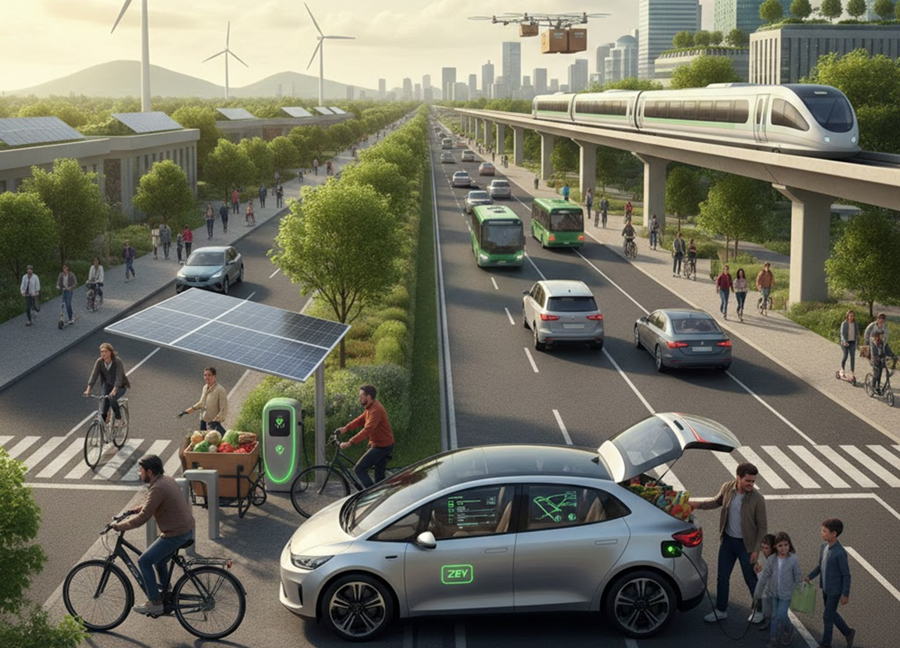
In recent years, the many countries have committed to tackling climate change with increasingly ambitious targets and transport is naturally a major part of that effort. Under the UK government’s new framework, the sale of new petrol and diesel cars is set to end in 2030 and after this date, all newly sold cars will need to be hybridised or zero-emission.
This policy forms a core part of the UK’s push toward net-zero greenhouse-gas emissions by 2050. For everyday drivers it signals a gradual but tangible shift in what kinds of vehicles will dominate the roads over the next decade.
What You Should Expect as a Driver: EVs, Hybrids and the Phase-Out of Petrol/Diesel
As the rules change, so does what’s available. Over the next several years, more of the new cars on sale will be zero-emission. For drivers in Northern England and beyond, this will likely influence both new-car and used-car markets. As petrol and diesel cars become gradually phased out and demand for them declines, used EVs (and recent hybrids) may become more common and competitively priced. Meanwhile, older petrol/diesel cars may depreciate faster than before.
If you’re considering switching vehicles, now may be a wise time to explore near-zero-emission options, especially if you expect to keep the car for at least several years.
Incentives, Infrastructure & Practicalities: What Drivers Need to Know Now
To smooth the transition, the government continues to support EV adoption through financial incentives and infrastructure investment. As of 2025, the updated Electric Car Grant (ECG) offers discounts of up to £3,750 on eligible EVs priced under £37,000, making them significantly more affordable at the point of purchase.
At the same time, efforts are underway to expand charging infrastructure. Grants and funding are being allocated for public and workplace electric chargepoints, as well as local authority initiatives to support charge-point rollout.
That said (especially for those living or driving in Northern England) access to charging remains a practical concern. Not all areas yet have reliable local charging networks, and rural or less-urban regions may lag behind major cities. For many drivers, this means carefully considering where they live or commute (and whether home or workplace charging is feasible) before investing in an EV.
What This Means for the Everyday Commuter
For everyday commuters, the shift toward zero-emission vehicles could deliver both costs savings and peace of mind. Electric vehicles tend to have lower running costs (electricity vs petrol/diesel), fewer mechanical parts to maintain, and a reduced upfront purchase price.
Long-term, as petrol and diesel cars become increasingly phased out and less common, their resale value could drop. Meanwhile, demand for used EVs and hybrids may rise, as drivers look to future-proof themselves against tighter vehicle regulations. If you’re ahead of the curve in the North and start thinking about Sheffield used cars or near-zero-emission options now, you could benefit from better pricing and selection before the full transition plays out.
That makes this a strategic moment for drivers in Northern England. With thoughtful planning, embracing net-zero transport needn’t feel like a sacrifice. Instead, it can be an opportunity to move towards cleaner, more modern motoring.