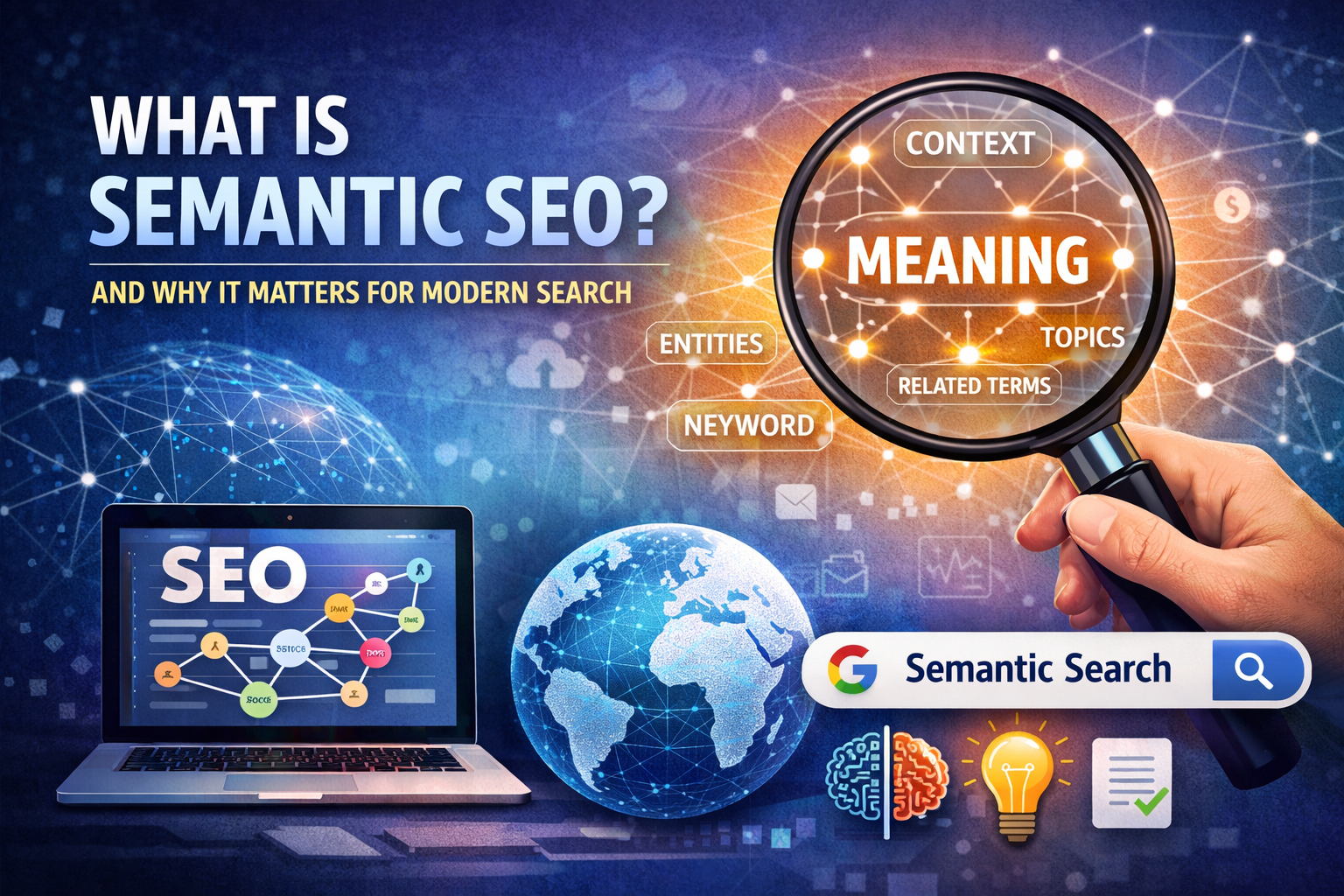
What Is Semantic SEO?
What is semantic SEO? Semantic SEO is the process of optimizing content based on meaning and context, rather than focusing only on individual keywords. Instead of repeating the same phrase many times, semantic SEO helps search systems understand the overall topic of a page.
In simple terms, it’s about writing content that answers real questions in a complete and natural way. When you cover related ideas, definitions, examples, and supporting concepts, your page becomes easier to understand—for both readers and search engines.
Modern search systems are designed to interpret intent, not just words. That’s why semantic SEO has become a core strategy in long-term optimization. It aligns your content with how search engines process language today.
How Search Systems Understand Meaning
Search engines no longer rely only on exact keyword matches. They analyze relationships between words, context clues, and topic relevance. For example, if a page discusses “search intent,” “structured data,” and “content relevance,” the system understands that the topic relates to advanced SEO concepts—even if certain keywords are not repeated frequently.
This shift allows search engines to deliver more accurate and helpful results. Pages that clearly explain a subject and include related terminology tend to perform better because they demonstrate depth and completeness.
Semantic SEO vs Traditional Keyword SEO
Traditional SEO often emphasized keyword density and exact-match repetition. While keywords are still important, overuse can reduce clarity and readability.
Semantic SEO shifts the focus toward topic authority. Instead of asking, “How many times should I use this keyword?” the better question becomes, “Have I fully covered this topic in a helpful way?”
This change improves user experience. Readers prefer natural language and complete explanations, not repetitive phrasing.
Why Semantic SEO Improves Content Quality
Semantic SEO encourages comprehensive writing. When you explain related ideas and answer supporting questions, your content becomes more useful.
This approach also builds credibility. Pages that demonstrate knowledge, clarity, and structure appear more trustworthy. Over time, this consistency supports stable visibility and long-term growth.
Another advantage is adaptability. Because semantic content focuses on meaning rather than exact phrases, it remains relevant even as search patterns evolve.