Most people think they know what matters after a crash. They snap a few photos, maybe grab the other driver’s insurance card, and figure that’s enough. Then they find out weeks later that half of what they collected doesn’t help their case at all, while the stuff that actually matters? Nobody told them to document it.
The gap between what feels important in the moment and what holds up later can make or break a claim. Some evidence seems rock-solid but falls apart under scrutiny. Other details that seem minor turn out to be exactly what’s needed to prove what happened.
Physical Evidence from the Scene Matters More Than You’d Think
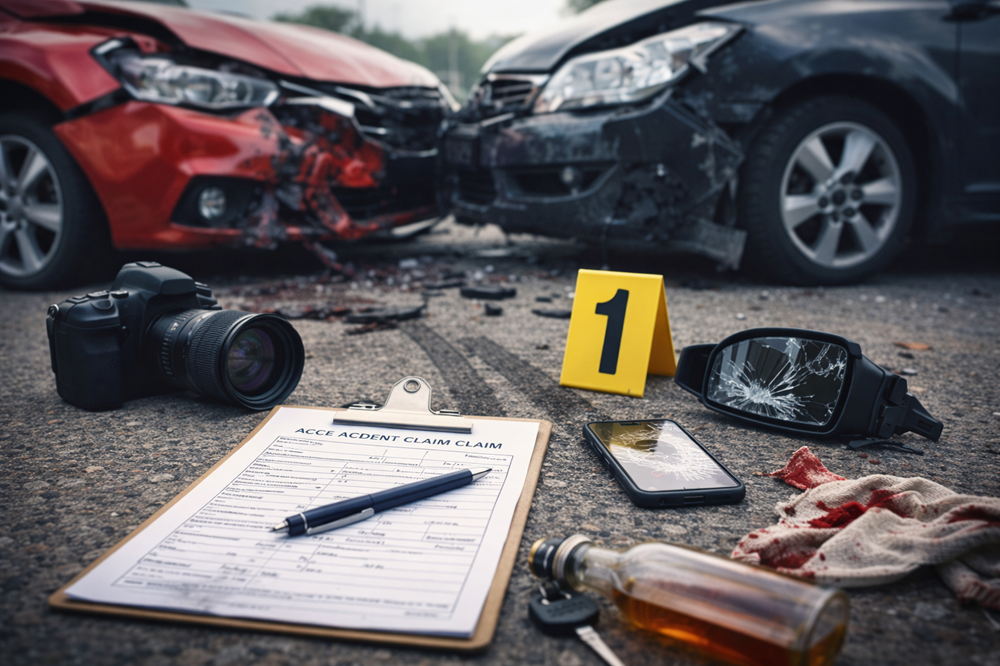
The actual damage to the vehicles tells a story that words can’t change later. Paint transfer, crush patterns, where the debris ended up scattered across the road, these details help reconstruct exactly how the collision occurred. Insurance adjusters and attorneys look at damage patterns to verify whether someone’s version of events matches the physics of what happened.
But here’s where people mess up. They take one quick photo of their bumper and call it done. What actually helps is documenting all angles of both vehicles, the final resting positions, skid marks on the pavement, traffic control devices, sight line obstructions, and the overall intersection or road layout. These details can’t be recreated once everyone drives away.
Debris matters too. Glass, plastic fragments, and fluid trails show impact points and vehicle paths. The location where parts ended up can prove which vehicle crossed into which lane, who was already in the intersection, or how fast someone was traveling.
The Police Report Isn’t Always the Final Word
People assume the police report settles everything, but that’s not quite how it works. The report documents what the officer observed and what people said at the scene, but officers don’t always witness the actual collision. They’re writing down their interpretation based on damage, statements, and whatever evidence remains by the time they arrive.
Sometimes the report contains errors. An officer might note the wrong vehicle positions, misunderstand who said what, or make an initial determination about fault that doesn’t match what actually happened. These reports carry weight with insurance companies, but they’re not set in stone. They can be challenged with other evidence.
What makes police reports valuable is the objective information they contain – time of day, weather conditions, whether citations were issued, and statements made at the scene before people had time to reconsider their stories.
Medical Documentation Creates a Timeline That Can’t Be Argued With
The gap between the accident and seeking medical treatment becomes one of the biggest arguments insurance companies use to deny claims. They’ll suggest injuries weren’t serious if someone waited days to see a doctor, or they’ll claim symptoms developed from something else entirely.
Immediate medical attention creates documentation that connects injuries directly to the collision. Emergency room records, ambulance reports, and initial doctor visits establish what hurt right away. But the documentation can’t stop there. Following through with recommended treatment, attending follow-up appointments, and documenting ongoing symptoms builds the complete picture of how injuries progressed.
Medical records also catch delayed symptoms that show up later. Some injuries don’t announce themselves immediately, soft tissue damage, concussion symptoms, and internal issues can take days to become apparent. When these get documented as they develop, it’s harder for anyone to claim they’re unrelated to the crash.
For anyone dealing with serious injuries from a collision, working with a Beaumont Car Accident Lawyer helps ensure medical evidence gets properly connected to the claim and nothing important falls through the gaps.
Witness Statements Get Harder to Obtain as Time Passes
Independent witnesses who have no stake in the outcome carry serious credibility. They’re not trying to protect themselves or get compensation – they’re just describing what they saw. But most people are terrible at collecting witness information in the chaos right after a crash.
Getting names and phone numbers matters less than getting actual statements about what the witness observed. Memory fades fast. Details get fuzzy. What someone clearly remembers an hour after the accident becomes uncertain a week later and completely gone a month down the road.
Written statements or recorded descriptions made at the scene preserve observations before they get contaminated by hearing other versions of events or simply forgetting specifics. Even something as simple as “the truck ran the red light” or “the car suddenly swerved into the other lane” provides outside confirmation that can counter disputed claims.
What Doesn’t Help as Much as People Think
Personal injury claims aren’t won or lost on social media posts, but people sure do damage their cases this way. Posting photos from the accident scene, complaining about injuries, or (worse) posting pictures of yourself doing activities that seem inconsistent with claimed limitations gives insurance companies ammunition to argue injuries aren’t as serious as claimed.
Estimates from body shops don’t prove much about the accident itself, they show repair costs, but that’s about it. Insurance companies get their own estimates anyway, so collecting three different repair quotes doesn’t strengthen the case about what happened or who’s responsible.
Text messages and phone records can cut both ways. They might prove someone was distracted while driving, but they could also show gaps in a timeline or contradict other statements. These records only help if they actually support the version of events being claimed.
Video Evidence Changes Everything (When It Exists)
Dashboard cameras, security cameras from nearby businesses, traffic cameras, and doorbell cameras from houses near intersections potentially captured what happened. This footage doesn’t lie or misremember, it shows exactly what occurred from whatever angle it recorded.
The problem is that most of this footage gets recorded over within days or weeks. Business security systems loop after a few days. Traffic camera footage might only be retained briefly unless specifically requested. Getting this evidence means acting fast, knowing where to look, and understanding how to request it before it disappears.
Even partial footage that doesn’t show the actual impact can establish important facts, which direction vehicles were traveling, who was where when, whether brake lights came on, or how fast vehicles appeared to be moving.
Pulling It All Together
Strong cases get built from multiple types of evidence that all point to the same conclusion. No single piece proves everything, but when physical damage, medical records, witness accounts, and documentation all align, the picture becomes hard to dispute.
The key is knowing what to collect immediately versus what can be gathered later, and understanding which details matter for proving not just that an accident happened, but exactly how it happened and why that matters for determining responsibility. Most people only get one chance to document the scene properly, everything else has to be reconstructed from whatever evidence remains.