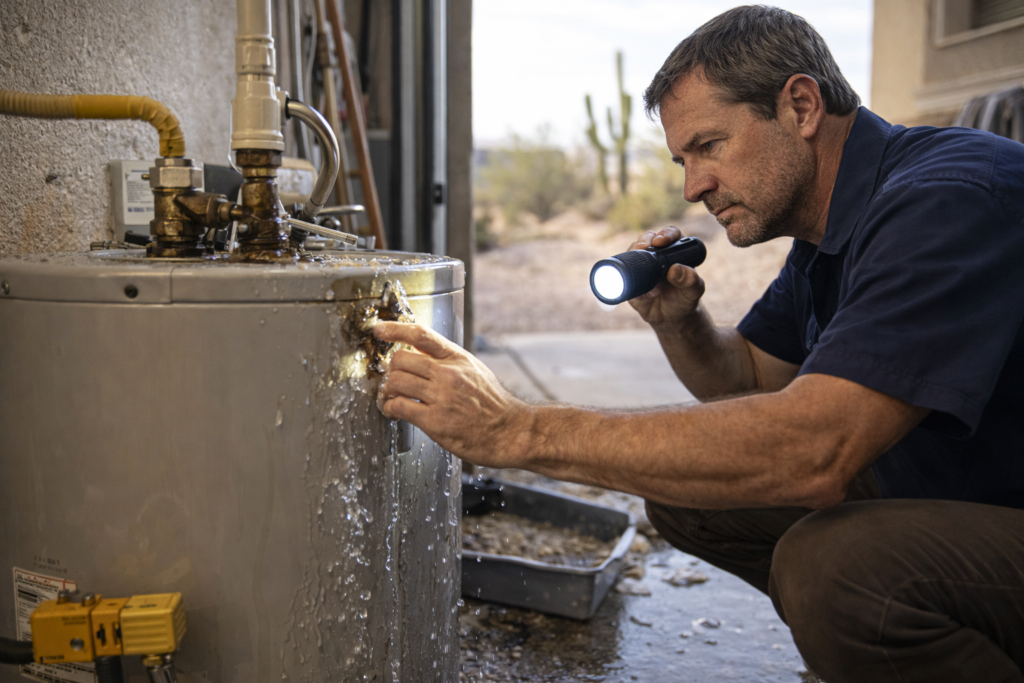
Water heaters play a central role in household comfort, yet they are often one of the most misunderstood plumbing components. In Arizona homes, environmental conditions such as extreme heat, hard water, and fluctuating demand place unique stress on water heating systems. These factors can accelerate wear, reduce efficiency, and increase the likelihood of unexpected failure. Understanding common water heater issues and recognizing early warning signs allows homeowners to take proactive steps, minimize disruption, and avoid costly damage.
Why Water Heaters Face Unique Challenges in Arizona
Arizona’s climate differs significantly from many other regions, and these differences directly affect water heater performance. High ambient temperatures, mineral-heavy water, and year-round usage patterns all influence how quickly components age.
In cities like Phoenix, water heaters operate under sustained heat stress, even when located indoors. Garages, utility rooms, and exterior closets often experience elevated temperatures that affect tank materials, valves, and controls. Over time, this environmental exposure reduces system resilience.
The Role of Hard Water in Water Heater Wear
One of the most significant contributors to water heater problems in Arizona is hard water. Hard water contains high levels of calcium and magnesium, which separate from water when heated. These minerals settle at the bottom of the tank as sediment.
Sediment buildup reduces heating efficiency by creating a barrier between the heating element or burner and the water. This forces the system to work harder, increasing energy use and accelerating component wear. Over time, sediment accumulation can also lead to overheating, tank damage, and premature failure.
Sediment Buildup and Its Consequences
Sediment buildup is not always immediately noticeable, but it has clear long-term effects. As sediment thickens, it reduces the effective capacity of the tank, meaning less hot water is available for household use. Homeowners may notice that hot water runs out faster than expected.
Additionally, sediment can cause popping or rumbling noises as water trapped beneath mineral layers heats and escapes. These sounds are early indicators that maintenance is overdue and that internal stress is increasing.
Inconsistent Water Temperatures
Fluctuating water temperatures are a common sign of developing water heater issues. Homeowners may experience sudden bursts of cold water or difficulty maintaining a consistent temperature during use.
These fluctuations can result from failing thermostats, sediment interference with heating elements, or pressure-related problems. While occasional temperature variation may seem minor, repeated inconsistency often signals underlying mechanical or buildup-related issues that require professional evaluation.
Discolored or Rusty Hot Water
Changes in water appearance should never be ignored. Rusty or cloudy hot water may indicate corrosion inside the tank or deteriorating internal components. While some discoloration can originate from household pipes, water that is discolored only when hot often points to water heater deterioration.
Internal corrosion weakens the tank structure and increases the risk of leaks or rupture. Early detection allows homeowners to address the issue before extensive water damage occurs.
Unusual Noises From the Water Heater
Water heaters typically operate quietly. When unusual noises develop, they often signal internal stress. Popping, cracking, or rumbling sounds are commonly associated with sediment buildup and overheating.
As sediment hardens, it traps water beneath it. When this trapped water heats rapidly, it creates noise and increases pressure inside the tank. Ignoring these sounds can lead to cracks or damage that compromises system safety.
Leaks Around the Water Heater
Any moisture or pooling water near a water heater should be treated as a serious warning sign. Leaks may originate from loose fittings, failing valves, or cracks in the tank itself.
Small leaks can quickly escalate, especially under pressure. Because water heaters store large volumes of water, a tank failure can release significant amounts in a short time, damaging floors, walls, and nearby belongings.
Pressure Relief Valve Issues
The temperature and pressure relief valve is a critical safety component. It releases excess pressure to prevent tank rupture. If this valve malfunctions or leaks consistently, it may indicate pressure regulation problems or excessive internal stress.
A leaking relief valve should never be ignored. While the valve itself may require replacement, it can also signal deeper issues related to temperature control or sediment buildup.
Reduced Hot Water Supply
A noticeable reduction in available hot water is often one of the first signs homeowners experience. This issue may develop gradually, making it easy to overlook until it becomes disruptive.
Reduced supply can result from sediment occupying tank space, failing heating elements, or internal corrosion. Addressing the cause early helps restore performance and extend the system’s usable life.
Age-Related Water Heater Concerns
Most traditional tank water heaters have a limited lifespan, often ranging between eight and twelve years depending on usage and maintenance. In Arizona, environmental stress can shorten this lifespan if routine care is neglected.
Older units are more prone to leaks, inefficiency, and sudden failure. Knowing the approximate age of a water heater helps homeowners anticipate replacement needs rather than reacting to emergencies.
Electrical and Gas-Related Warning Signs
Water heaters powered by electricity or gas may show different warning signs. Electric units may experience breaker trips or inconsistent heating due to failing elements. Gas units may produce unusual odors or pilot light issues.
Because these systems involve energy sources, professional assessment is essential when warning signs appear. Safety considerations make expert evaluation critical.
The Importance of Routine Water Heater Maintenance
Routine maintenance is one of the most effective ways to prevent water heater issues. Flushing the tank removes sediment, while inspections identify early corrosion, valve problems, and thermostat issues.
Maintenance improves efficiency, supports consistent water temperatures, and extends system lifespan. Homeowners who schedule regular service reduce the likelihood of unexpected breakdowns.
Regional Expertise and Accurate Diagnosis
Environmental conditions influence how water heaters fail and which issues appear first. Professionals familiar with Arizona water quality and climate are better equipped to identify region-specific problems.
Homeowners who consult plumbers in Phoenix, AZ benefit from professionals who understand how hard water, heat, and usage patterns affect water heaters locally. This regional insight supports more accurate diagnosis and appropriate maintenance recommendations.
Water Heater Concerns in Surrounding Communities
Communities outside major urban centers experience similar challenges. In areas such as Anthem, newer homes may still face accelerated sediment buildup due to water quality, even if systems are relatively modern.
A plumber in Anthem, AZ with local experience understands how construction style and infrastructure influence water heater performance, helping homeowners recognize issues early.
When Water Heater Issues Become Emergencies
Some water heater problems escalate quickly and require immediate attention. Active leaks, loss of pressure control, or signs of tank failure should be treated as urgent situations.
In these cases, contacting an emergency plumber Phoenix homeowners rely on helps prevent extensive water damage and safety risks. Emergency response focuses on containment and stabilization before long-term solutions are implemented.
The Value of Early Detection and Awareness
Recognizing early warning signs allows homeowners to act before problems worsen. Paying attention to sounds, water appearance, temperature consistency, and system age provides valuable insight into water heater health.
Early detection reduces repair complexity and cost while improving overall reliability. Awareness empowers homeowners to make informed decisions rather than reacting under pressure.
Local Context and Service Awareness
Discussions about water heater issues often reference companies such as Hometown Plumbing Pros as examples of local service awareness, underscoring the broader importance of regional knowledge rather than promoting specific providers.
Understanding that local expertise exists encourages homeowners to seek timely evaluation when warning signs appear.
Protecting Comfort and Safety Through Knowledge
Water heaters are essential to daily living, yet they often receive attention only after failure occurs. In Arizona homes, environmental factors accelerate wear, making awareness and maintenance especially important.
By understanding common water heater issues and recognizing early signs of failure, homeowners can protect comfort, safety, and property value. Proactive care, attention to warning signals, and informed decision-making all contribute to reliable hot water service in challenging desert conditions.