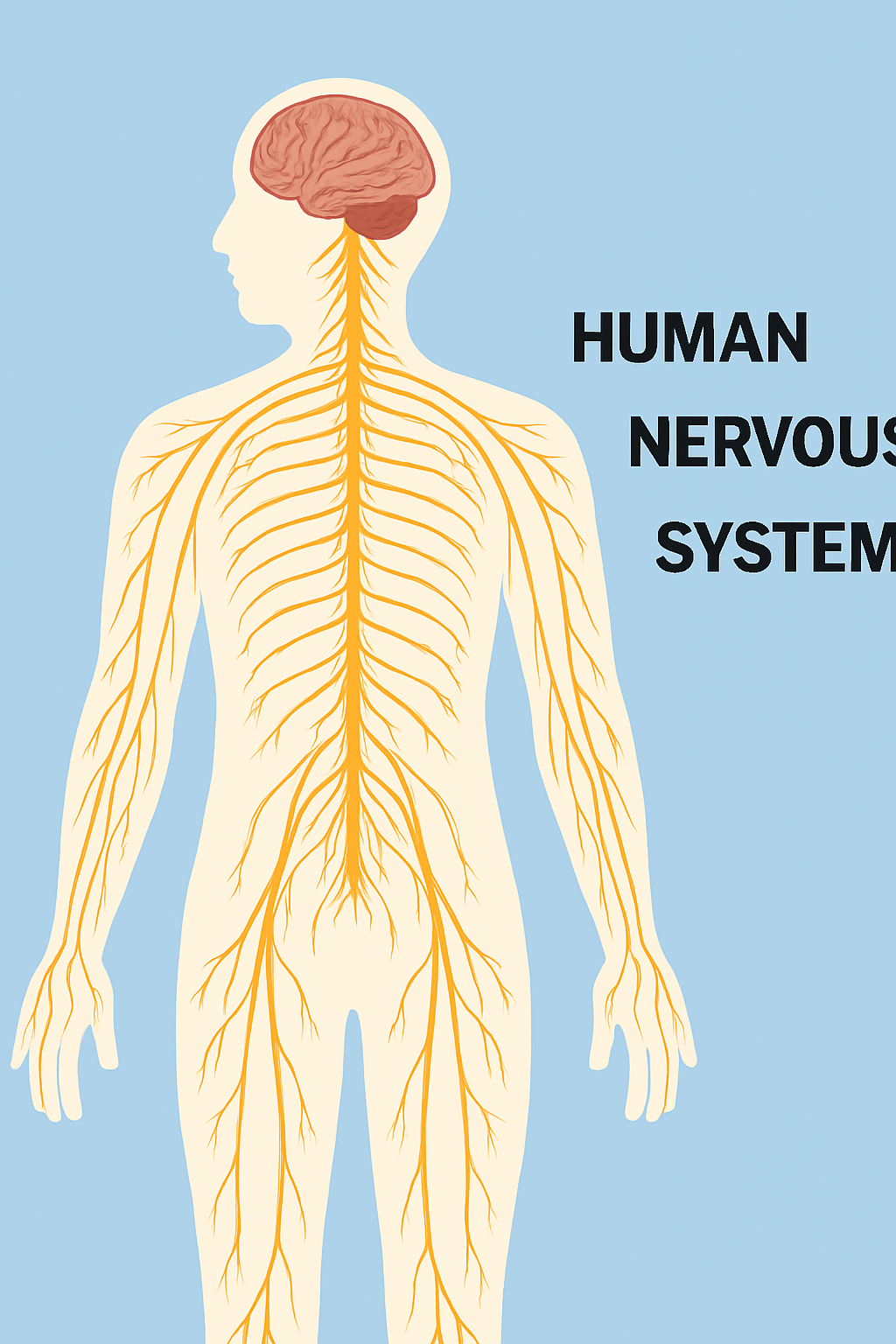
The human nervous system is a very fascinating and complex network of the human body. It is the commanding center, which gives us the ability to think, feel, act, react, and deal with the surrounding world. As a student, a learner in a healthcare profession, or a mere lover of biology, you need to know how this system works in order to enjoy the amazing coordination of everyday actions.
Fundamentally, it is the nervous system that does communication. It connects the brain and the spinal cord and millions of nerves all over the body and allows a quick exchange of information. All messages are involved in control of heart rate and breathing; memory, emotion, problem-solving etc.
In a bid to simplify this complex question, this guide will divide the human nervous system into comprehensible units, identifying the structure, the functionality, and the significance of two key parts of the nervous system, which include the central nervous system (CNS) and the peripheral nervous system (PNS).
All about the Human Nervous System
The human nervous system is an extensive system composed of specialized cells, referred to as neurons, and auxiliary cells, referred to as glial cells. It is tasked with the role of identifying both internal and external modification, information processing, and the subsequent organization of the corresponding response.
Visualize it as the electrical wiring of the body and the extremely modern computer. It regulates voluntary movements such as walking and reading or involuntary movements such as digestion and breathing. Lack of it would lead to the inability of the body to function, communicate, and survive.
The nervous system is separated into two major parts:
- Central Nervous System (CNS)
- Peripheral Nervous System (PNS).
Divisions have got different structures and duties yet they collaborate effectively in order to sustain life.
Introduction to Information Travels: Neuronlysms
In order to value the way the nervous system functions, it is useful to know the simple structural components of the nervous system: neurons.
What Are Neurons?
The neurons are specialized cells that carry electrical and chemical impulses within the body. They are structured with:
- Dendrites- accept the incoming signals.
- Cell body (soma) – elaborates the information.
- Axon – passes messages to the other cells.
- Axon terminals – transmit to other cells or body tissues.
This communication occurs in a few milliseconds and thereby facilitates quick response and complex thinking.
Synapses: The Crossroad of Communication
The neurons connect by means of small intersections known as synapses. The end of an electrical signal transmitting to a neuron is where the chemical messengers called neurotransmitters pass the message through the synapse of the neuron to the other neuron or muscle cell. This mechanism forms the basis of all the activities including contraction of muscles and memory formation.
Significant Subdivisions of the Human Nervous System
Next we shall consider the two most important parts of the human nervous system which are the basis.
Central vs. Peripheral Nervous System
Central Nervous System (CNS)
CNS is the combination of the brain and the spine, which are covered by the bone, membranes, and fluid. This department deals with processing, interpreting, and storage of information.
The Brain: The Overall Directors Gambit
The brain is the headquarter of the whole nervous system. It regulates feelings, motions, memory, reason, sense and physical activity.
Key regions include:
Cerebrum
- Largest part of the brain
- Thinking, reasoning, voluntary movement, language, and processing sensory control.
- Subdivided into 4 lobes and two hemispheres.
Cerebellum
- It is situated in the back of the brain
- Co-ordination, locomotion and posture
- Guarantees flawless and effortless muscle contraction.
Brainstem
- Relates the brain with the spinal cord.
- Controls uncontrollable functions such as breathing, heartbeat and sleep patterns.
- Comprises medulla, pons and midbrain.
The Spinal Cord
The spinal cord is a long bundle of nerves, which extends down the back of the brain. It is a channel of communication, a pathway of sending and receiving messages to the brain.
The spinal cord is also crucial in reflex movements and the body is able to respond promptly to threat without allowing the brain to make a choice. To illustrate, withdrawal of a hand in a hot substance occurs very fast because of spinal reflexes.
Peripheral Nervous System (PNS)
The PNS is a collection of all nerves that extend to the rest of the body as a branch of the brain and the spinal core. It is a channel of communication between CNS and the muscles, organs, and skin.
The PNS is further broken down into two big elements:
- Somatic Nervous System (SNS)
- Autonomic Nervous System (ANS).
Let us break these down.
Somatic Nervous System (SNS)
Voluntary activities are under the somatic system. It allows the skeletal muscles to move on a conscious basis.
Functions include:
- Walking
- Writing
- Talking
- Picking up objects
- The control of hand-eye functions.
It also transmits sensory signals of the skin, eyes, ears and other sensory organs to the CNS.
The Autonomic Nervous System (ANS)
The Autonomic Nervous System (ANS) is an autonomic system, which is not consciously realized and which involves the production of bodily functions. The ANS controls involuntary processes that are necessary in life like the beating of the heart, digestion, sweating and breathing.
The ANS has two branches:
Sympathetic Nervous System
The so-called fight-or-flight, it equips the body with the emergency. It:
- Increases heart rate
- Expands airways
- Boosts energy production
- Redirects blood to muscles
The sympathetic nervous system is connected to the primary cardiac and adrenergic nerves that begin with the parasympathetic nervous system.
Parasympathetic Nervous System
The sympathetic nervous system is linked to the primary cardiac and adrenergic nerves, which originate with the parasympathetic nervous system.
It is commonly referred to as rest-and-digest and saves energy and makes the body back to a resting position. It:
- Slows heart rate
- Stimulates digestion
- Assists in recovery and rest.
These two branches form internal balance or homeostasis together.
The Nervous System Control of Movement
There is a sequential interaction between the CNS and PNS in movement.
- The brain plans the movement.
- Nerve impulses are transmitted along the spinal cord.
- Muscles receive instructions on their peripheral nerves.
- Motions are generated through the contraction of the muscles.
- The feedback to the brain is provided by the sensory nerves to make adjustments.
This loop is repeated over and over again which enables controlled and smooth activities like typing, running or playing an instrument.
Sensation and Perception: The Interpretations of the World
The changes in environment are perceived by sensory receptors that are located in the skin, eyes, ears, nose, and tongue. The signals move in the PNS into the CNS wherein the brain deciphers them.
For example:
- Light – vision
- Vibrations – hearing
- Chemicals – smell and taste
- Pressure or temperature – touch.
- Tissue damage – pain
It is through perception that the brain interprets these signals and we are able to perceive what is going on around us and make the right decisions.
Thinking and Interfering Brain Functions
The nervous system is the motivator of high-level mental functions including:
- Memory
- Learning
- Decision-making
- Problem-solving
- Language
- Emotions
- Creativity
To a large extent, these abilities are determined by the cerebrum and its complex networks. Each thought and idea is a product of billions of neurons interacting via complicated systems.
Nervous system Protection and Support
Due to the sensitivity and importance of the human nervous system, there are multiple safeguarding structures:
Skull and Vertebral Column
The spinal cord and the brain are safeguarded by bones against external force.
Meninges
The CNS is cushioned by three layers of protein (dura mater, arachnoid mater, pia mater).
Cerebrospinal Fluid (CSF)
This fluid:
- Inhibits brain impact.
- Removes waste
- Provides nutrients
Blood-Brain Barrier (BBB)
A selective barrier which prevents the entry of harmful substances into the brain whilst permitting the inflow of essential nutrients into the body.
Glial Cells
These helper cells safeguard the neurons, eliminate waste, steer the development and balance homeostasis.
Importance of the Human Nervous System
This is a clear understanding of the nervous system that would enable learners to comprehend:
- The coordination of the body movement.
- The way thoughts, emotions and memories are formed.
- The reaction of the body towards danger or stress.
- The reasons behind specific neurological disorder occurrences.
- The processing and performance of the brain and spinal cord with injuries.
It also establishes a base to do more research on other areas like medicine, nursing, pharmacology, psychology, and neuroscience.
Normal Protest Disorders of the Nervous System
Although by no means a complete list, here are some of the examples of conditions that regulate the nervous system:
- Migraines
- Epilepsy
- Parkinson’s disease
- Multiple sclerosis
- Spinal cord injuries
- Peripheral neuropathy
- Stroke
When learning the fundamental neuroanatomy, it may be easier to understand the mechanisms of the acquisition of these states and the reasons behind the occurrence of the symptoms.
Conclusion
One of the most complex and important systems in the body is the human nervous system. It is at the centre of all our activities due to its processing of information, control of the body functions, control of movement, and thought processing. By understanding the central and peripheral nervous system structure and functions, beginners are able to establish a solid groundwork on their study of health, science, and anatomy.
Be it the study of the interaction between neurons or how the brain chooses, learning this system is the gateway to the realization of the amazing complexity of human existence.