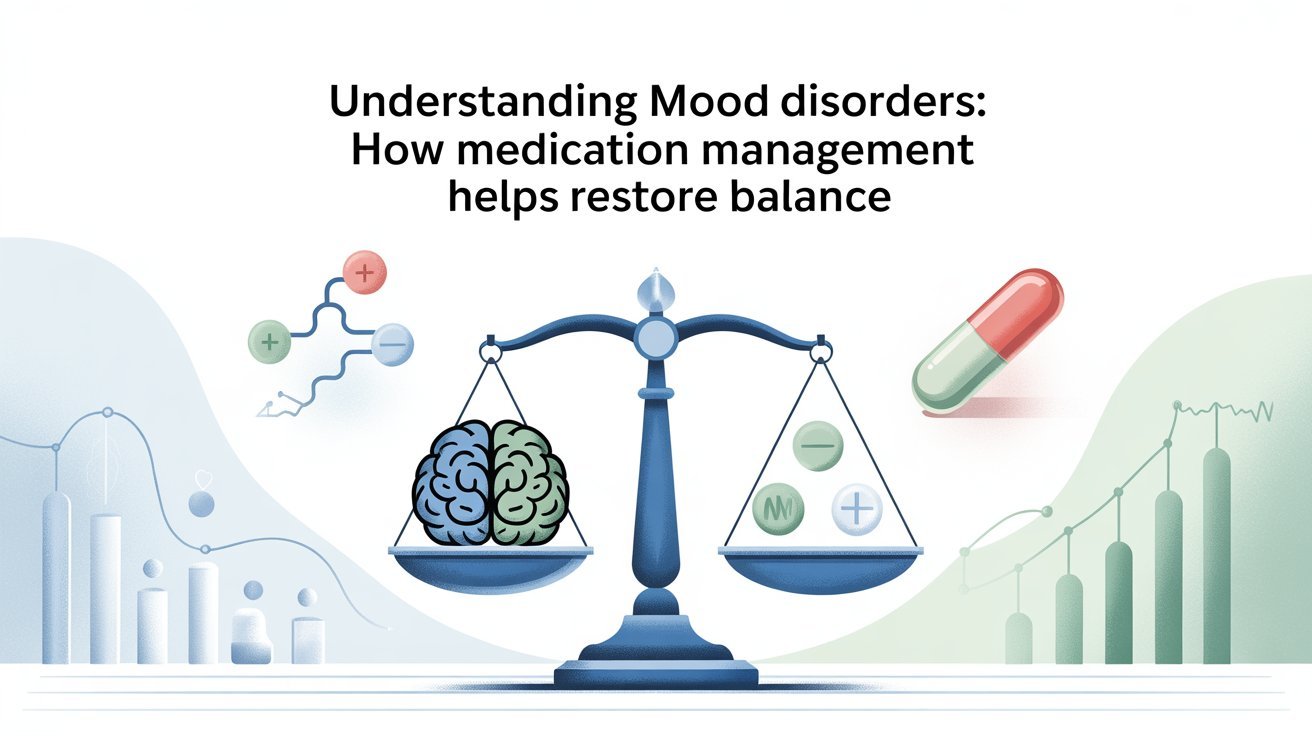
Achieving Emotional Equilibrium Through Medication Management
The process of medication management enables people to achieve emotional equilibrium when treating their mood disorders.
Mood disorders represent one of the leading mental health conditions which people worldwide fail to understand properly. The disorders create ongoing emotional instability which affects all aspects of life including personal relationships and work performance and self-perception.
The current state of psychiatric treatment provides patients with their best chance for recovery. The combination of individualized medication management and empathetic medical care enables people to achieve emotional equilibrium and maintain their emotional stability. The path to recovery starts with learning about mood disorder mechanisms and treatment approaches.
Recognizing the Warning Indicators
People need to identify the warning indicators which appear during mood disorder development.
People experience mood variations but mood disorders produce enduring emotional states which disrupt their ability to function normally and reduce their life quality.
The most prevalent mood disorders include:
- Major Depressive Disorder (MDD) causes people to experience extended periods of sadness and hopelessness and fatigue which prevents them from performing daily tasks.
- Bipolar Disorder causes people to experience alternating periods of depression and manic or hypomanic episodes which produce intense emotional extremes.
- Cyclothymic Disorder produces ongoing mood changes which stay at a lower intensity yet persist throughout several years.
The absence of proper treatment for these conditions results in worsening symptoms which produce social withdrawal and exhaustion and physical health deterioration. People need to find professional help right away because it provides them with their best chance for recovery. The psychiatric team at Gimel Health enables patients to obtain proper diagnosis and treatment plans before their symptoms become more severe.
How Medication Management Restores Emotional Stability
The brain chemical imbalances that cause mood disorders become controllable through medication treatment. The effects of medication differ between patients because each person responds differently to treatment. The treatment that brings relief to one patient may trigger adverse reactions or produce minimal benefits in another patient.
Modern psychiatric treatment focuses on delivering precise care to patients. The combination of psychiatric expertise and medication management allows doctors to create personalized treatment plans based on each patient’s specific symptoms and medical background and reaction patterns. The treatment process aims to discover the correct combination of medication strength and type which will establish enduring emotional stability.
The most successful treatment approach for mood disorders requires patients to receive medication alongside therapy sessions and make lifestyle changes while maintaining scheduled medical check-ups. Proper management of their condition enables patients to achieve better mood control and improved sleep quality and clearer mental processing.
The Importance of Continuous Monitoring
The process of monitoring patients requires ongoing evaluation to verify medication effectiveness and handle any developing side effects. The brain needs periodic adjustments to its medication regimen because it adapts to changes in life situations and symptom patterns.
The ongoing care model between doctors and their patients develops through their shared work together. The psychiatrist maintains continuous communication with patients to develop new treatment approaches which maximize their support effectiveness.
People who experience unpredictable mood swings and emotional instability should understand that professional assistance exists for their condition. The initial step toward achieving stability becomes possible when you access this website to discover how customized care can create substantial improvements.
Types of Mood Disorders and Why They Vary
The different types of mood disorders present unique characteristics because each condition has its own distinct characteristics. People experience different types of mood disorders because some face constant depression while others experience unpredictable mood swings that affect their daily activities.
Bipolar disorder requires specific medication management to control its alternating depressive and manic episodes. The treatment approach for major depression tends to work best through antidepressant medication and/or combination with therapy.
The specific characteristics of mood disorders enable healthcare providers to create treatment plans which address actual patient requirements beyond basic textbook descriptions. Each person experiences their recovery path differently so flexible treatment approaches combined with ongoing monitoring become essential for achieving lasting healing.
People with diabetes need insulin as a treatment but mood disorder patients require specific medications to maintain proper brain operation. Medical supervision of these treatments enables people to achieve life-changing results which bring back their energy levels and motivation and emotional clarity.
The practice of modern psychiatric care unites scientific methods with compassionate care to deliver professional expertise together with genuine understanding to all patients. The main objective of all evidence-based treatments including mood stabilizers and antidepressants remains to achieve enduring mental stability and wellness.
The Role of Personalized Care in Long-Term Recovery
The process of mood disorder recovery requires more than symptom control because it involves developing emotional strength and avoiding future episodes. The treatment approach of personalized care modifies its plans based on how the patient’s requirements shift throughout time. The evaluation process at Gimel Health starts by assessing both present symptoms and all biological and psychological and environmental elements which affect mood stability.
The process of personalized medication management considers each patient’s medical background and their genetic profile and their past treatment results. The treatment process involves individualized therapy selection through close patient-clinician collaboration to find the best possible combination of medications. The treatment plan includes dosage adjustments and medication class changes and adds cognitive behavioral therapy and mindfulness-based strategies as supportive interventions.
The treatment plan focuses on establishing a long-term plan which supports both mental and physical health needs. Patients who receive individualized care report better treatment results and fewer side effects and increased optimism about their future. The collaborative treatment method enables patients to gain emotional control while building their self-assurance about their mental health.
Building a Foundation for Emotional Resilience
The maintenance of treatment success after the first phase needs patients to stay actively involved and develop self-knowledge skills. The clinical team tracks minor changes in mood and stress and sleep patterns through scheduled follow-up appointments to determine if treatment adjustments are needed. The scheduled check-ins enable patients to actively participate in their recovery process which transforms mental health care into a collaborative effort.
Medical supervision at Gimel Health works together with patients to understand how their lifestyle choices affect their emotional stability. The combination of proper nutrition with consistent sleep routines and exercise and social support helps patients achieve better results from their medication. Patients who combine their daily health practices with scheduled psychiatric care appointments achieve better long-term recovery results.