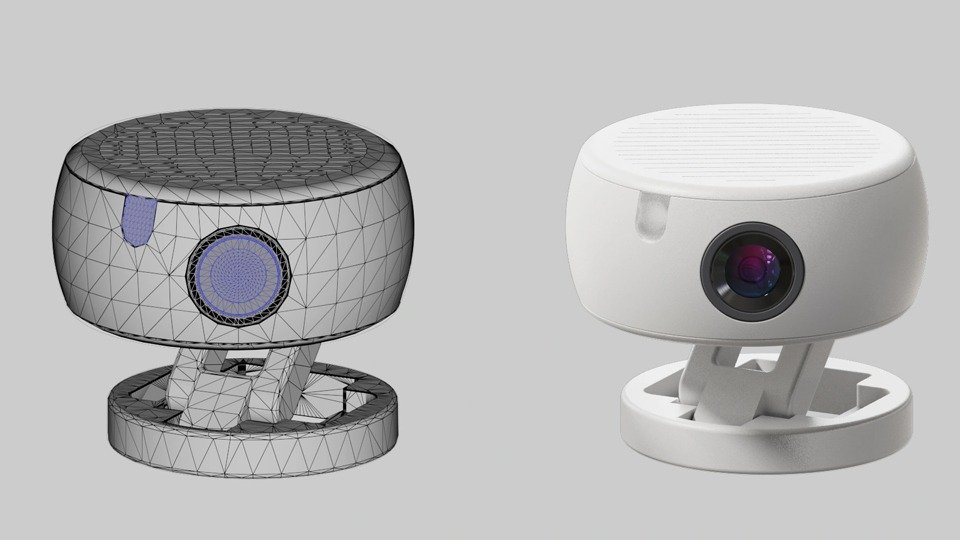
You often hear introductions like: “Our product has reached the C-Sample stage,” or “We are still at the A-Sample phase.” While these terms are clear to experienced design engineers, they can be confusing to newcomers.
What exactly are A, B, C, and D samples?
In essence, these represent different stages of product Research and Development (R&D). This is a conventional nomenclature in the automotive industry, similar to how we categorize vehicles into A-segment, B-segment, or C-segment. For instance, when I refer to an “A-Sample,” its fundamental meaning remains consistent across different companies and sectors. As this was the first lesson I learned when I started my career, I would like to briefly discuss these stages and their implications.
The Stages of Product Design
A- Sample
It is also known as a prototype. Generally referred to as a prototype or a handmade sample, the A-Sample is an early-stage, relatively immature solution developed to fulfill initial user requirements. How to create a product prototype? They are typically produced manually or modified from existing products. Throughout the design process, the A-Sample’s dimensions and functions are continuously optimized. These samples are often sent to customers to verify whether the product meets market needs. The advantage of designing an A-Sample is the ability to identify improvement directions early without following rigid production processes, thereby shortening the development cycle and avoiding waste. However, A-Samples are only suitable for basic performance verification and cannot be used for long-term reliability tests, such as fatigue or life-cycle testing.
B- Sample
It is also known as soft tooling. These can be either handmade or produced using soft tooling. At the B-Sample stage, the full-dimensional functions and parameters are finalized and must align with the eventual mass-produced product. B-Samples are capable of undergoing long-term performance validation, including durability and fatigue strength tests. In my view, the primary significance of the B-Sample is to prepare for future mass production—exploring the transition from manual builds to industrial manufacturing. While the B-Sample meets most functional requirements, the production team still needs to work on cost reduction and scalability, such as defining and optimizing process flow documents. Many students focus solely on the design phase and overlook the importance of the “Process Route.” In manufacturing, superior process engineering is vital for enhancing efficiency and quality, and the B-Sample stage is exactly where this integration happens.
C- Sample
It is also known as hard tooling. This is the production-intent sample. At this stage, the product design is fully frozen and capable of meeting all customer and market demands. From a manufacturing perspective, C-Samples are produced on actual production lines using dedicated tooling, jigs, and finalized process routes. Any issues discovered regarding the line or tooling at this stage are subject to continuous refinement. From a validation standpoint, C Samples undergo comprehensive short-term and long-term testing, including NVH (Noise, Vibration, and Harshness) performance for comfort. With proper authorization, C-Samples can be used for road tests and vehicle-level trials. Generally, the C-Sample represents a mature and stable state.
D- Sample
The successor to the C-Sample, this usually refers to the product that meets final delivery standards. D-Samples are used for formal audits (such as vehicle certification/homologation) and mandatory regulatory testing. They are accompanied by warranty statements and user manuals to reach the “Product Release” standard. The D-Sample must be an exceptionally stable product. Although minor issues may still arise during end-user operation, companies strive to avoid this; ideally, all potential failures and bugs should be closed and resolved before the D-Sample stage.
Actual Product Development Workflows
Companies with mature “Forward Engineering” processes usually follow this sequence strictly. However, for many small-to-medium enterprises (SMEs) with incomplete R&D systems or those in emerging markets, the process may not strictly follow the A – B – C – D progression.
For example, bolstered by favorable policies and support from major manufacturers, a certain supplier grew rapidly to a leading position, supplying multiple major Original Equipment Manufacturers (OEMs). However, their actual production took place in a small building within an industrial park—the first floor for production and the second for warehousing. Production was primarily manual, relying on worker experience rather than standardized SOPs (Standard Operating Procedures), and capacity could not meet demand. While their mass-production line was still a year away from completion, the product had already reached the D-Sample stage. Consequently, the workshop was constantly crowded with customers demanding their orders. This discrepancy occurs when business expansion and market capture outpace the actual maturity of the manufacturing infrastructure.
How LKprototype Can Help?
Established in 2009, LKprototype is a reliable platform that provides custom manufacturing services for your manufacturing needs. LKprototype specializes in high-precision CNC machining, vacuum casting services, small to medium batch injection molding, sheet metal fabrication, and 3D printing. Our wide range of capabilities and ISO-certified quality control system allows us to serve diverse industries across the globe, delivering quality products that meet stringent international standards.