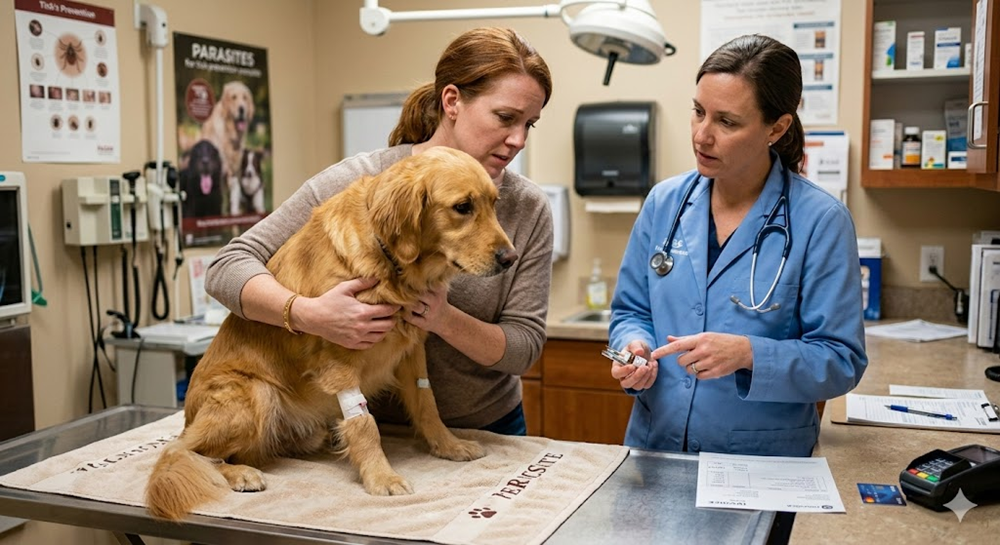
Tick season has a way of catching pet owners off guard. Your dog might seem a little lethargic, slightly unsteady on their feet, or just not quite themselves. You tell yourself you’ll keep an eye on it. A few hours later, you’re being told it could be a paralysis tick and that treatment needs to begin immediately.
That conversation escalates quickly.
Paralysis ticks are serious, and vets don’t take chances. If there is any suspicion, they move straight into treatment mode because symptoms can worsen fast. Antiserum, monitoring, and possible hospitalisation. Before you have fully processed what is happening, you are also being walked through a cost estimate.
Emergency tick treatment commonly ranges from $500 to $1,000, depending on how advanced the symptoms are and whether your pet needs to stay overnight. Most clinics require a deposit upfront before admission, and it is not unusual for that to be a significant portion of the estimated bill.
When your pet is clearly unwell, you are not debating whether to proceed. You just want to say yes. The difficulty is not willingness—it is timing.
The Insurance Gap Nobody Mentions
Many pet owners assume insurance will solve the problem. And over the long term, it often does help. The issue is that most insurers require you to pay the vet first and then submit a claim for reimbursement.
Processing can take several business days, sometimes longer. Meanwhile, the clinic needs payment immediately.
That creates a gap. You might know you will be reimbursed, but that does not help if the funds are not available in your account right now. In emergencies, even a few days can feel like too long.
When your dog is sick, you cannot pause treatment while waiting for an insurance claim to process. This is why some pet owners begin looking for options that promise fast access to funds, often out of fear of being rejected or running out of time.
It is important to be clear here. In Australia, lenders are legally required to assess your financial situation before approving a loan. A genuine “no refusal” loan does not exist under responsible lending laws. What does exist are specialist lenders who focus more on your current income and recent bank activity rather than relying solely on a credit score.
For someone with a steady income who just needs short-term access to funds, that distinction matters.
Paying the Deposit Without Delaying Treatment
In a veterinary emergency, speed is everything. The ability to transfer a deposit immediately allows the clinic to begin treatment without hesitation.
Looking for instant approval options can help identify lenders that use automated systems and real-time payment infrastructure. Many modern lenders operate through the New Payments Platform, including services like PayID and Osko. This means approved funds can arrive within minutes, even outside normal banking hours.
That speed can make the difference between standing at reception, hoping something clears in time and being able to finalise the payment on the spot.
The key is not borrowing more than necessary. If the estimated bill is $800 and you have $300 available, you may only need to bridge the difference until an insurance reimbursement arrives. Keeping the loan amount aligned with the actual shortfall helps keep repayment manageable.
Treat It as a Bridge, Not a Long-Term Fix
Short-term loans are best used as temporary solutions to timing problems, not as ongoing financial support. If you expect an insurance payout within a few days, you can structure repayment around that timeline. If not, make sure the repayment schedule fits comfortably within your income.
Before applying, consider how and when you will repay the balance. Confirm the total cost, understand the fees involved, and ensure the loan does not create additional stress once the emergency has passed.
Used carefully, this type of borrowing can remove immediate financial hesitation during a medical crisis. Used carelessly, it can extend pressure beyond the original problem.
Bottom Line
Tick paralysis is frightening because it progresses quickly and unpredictably. In those moments, hesitation can feel unbearable.
The priority is stabilising your pet. If the only barrier between starting treatment and delaying it is a short-term cash gap, access to fast funding can provide reassurance when you need it most.
Save your pet first. Once they are safe and recovering, you can deal with the financial side calmly and responsibly.