
The issue of cybersecurity is one of the most important areas of contemporary digital space. With the increasing technological advancement comes the increase in the threats posing to individuals, companies and the overall global systems. Cyberattacks have also evolved, which means that cybersecurity experts cannot maintain only the manual monitoring and the reactive approach. They instead automate their processes through scripting, faster threat detection as well as tightening their overall security posture.
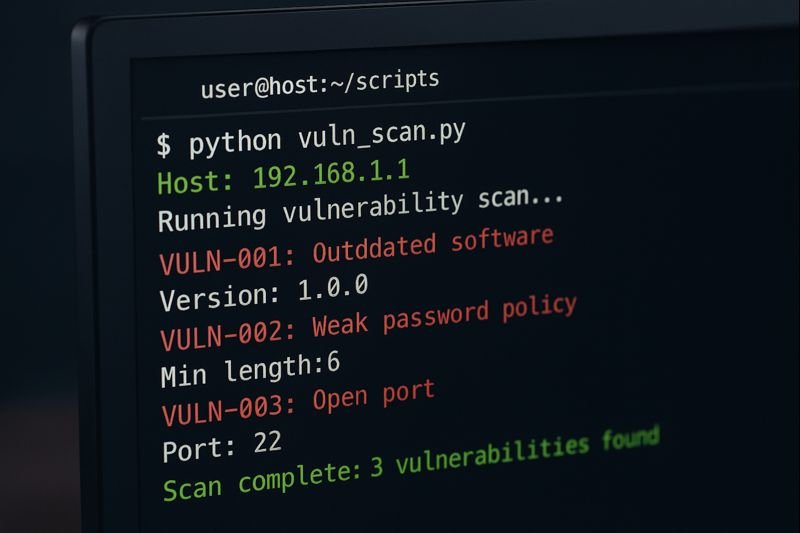
Scanning vulnerabilities is one of the most crucial purposes of scripting as this will detect the vulnerabilities in advance before the attackers could exploit them.
When you read about how scripting can increase your cybersecurity, you might want to go to the section that is called How Automation Drives Stronger Cyber Defense, and then you can read about why automation is a must in current security practice.
Introduction to Scripting in Cybersecurity
Scripting is based on the writing of small programs also known as scripts, which are used to automate certain tasks or to solve certain problems. With scripting, in contrast to full-scale software development, it is lightweight, flexible and fast to implement. This renders it ideal in cybersecurity whereby activities need to perform in a repetitive, consistent and effective manner.
Scripting is used by cybersecurity teams in:
- Robotizing work processes.
- Systems and network monitoring.
- Real time detection of malicious behavior.
- Processing of volumes of log data.
- How to operate several security tools at the same time.
Other languages like python, bash, power shell, and JavaScript are also being frequently used due to their simplicity and high capabilities. Learning how to use these tools, cybersecurity experts can ensure the more effective security of the systems.
The Reason why Scripting is a Primer Skill in Cybersecurity
It Accelerates Security Processes
The attacks are immediate, and the security personnel have to act promptly. There are functions that can be done in a few seconds by scripts that would require humans several hours to complete.
It Reduces Human Error
Human error is likely to occur in manual operations. Automated scripts are also consistent and more accurate particularly in large organizations.
It Empowers Incessant Safety
Humans are not able to work 24/7 but scripts can. The automated surveillance systems are round-the-clock.
It Allows Custom Solutions
Needs of any organization are different. Through scripting, cybersecurity teams have the ability to use their own tools rather than to use commercial software alone.
It Enhances Response to Cyber Incidents
The responses required during an attack include quick and automated response. Scripting allows quicker containments and recovery.
The Benefits of Scripting to Cybersecurity Professionals
Automation of Vulnerability Scanning.
Weaknesses in a system that are exploited by the attacker to either access the system or to inflict damage are vulnerabilities. Regular scanning will make sure that these loopholes are located and patched in time.
Security teams can use scripting to:
- Schedule automated scans
- Analyze network devices with outdated software.
- Make sure that it is not misconfigured.
- Monitor open ports
- Run follow-up scans following patch installation.
As an illustration, it is possible to develop a Python script that will scan all the servers after 12 hours automatically. Bash programs are capable of performing scheduled network scans with programs such as Nmap. PowerShell has the ability to identify the lack of updates on Windows computers.
The automation will help in making systems more resilient and secure since the vulnerabilities would not be ignored.
Automating Log Analysis
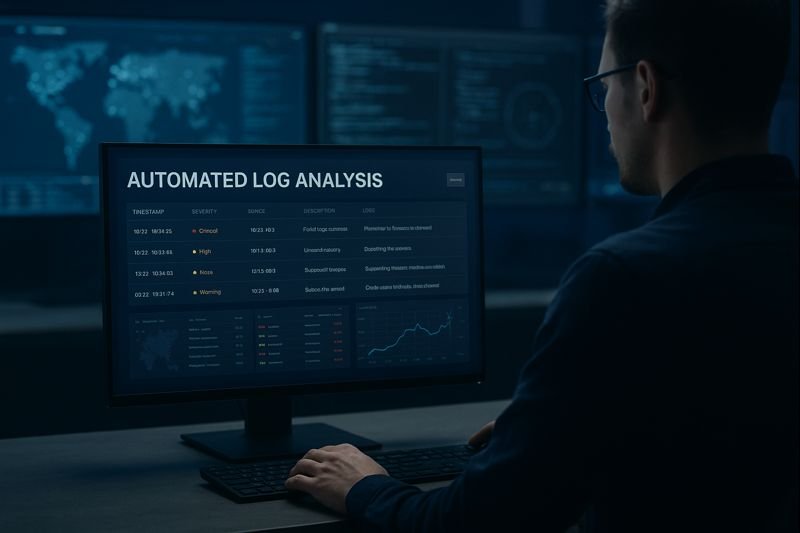
All equipment within a digital environment generates logs: firewalls, servers, cloud applications and routers, etc. These logs capture activity in terms of login attempts, requests, errors and system behavior. It is impossible to go through millions of log entries manually. This problem is overcome by scripting.
With scripts, analysts can:
- Ranks high occurrences in big logs.
- Sift through junk and superfluous information.
- Identify suspicious behavior patterns.
- Determine unsuccessful logins or suspicious IP addresses.
- Send forwarding notifications to dashboards or emails.
E.g., a Python script can be used to process log files hourly and issue warnings in case of some abnormal traffic behavior. This automation would assist the analysts to concentrate on the real threats rather than being overwhelmed by the data.
Threat Detection and Real-Time Monitoring
Contemporary cybersecurity is largely geared towards early detection of threats. Scripts are useful to security teams as they:
- Tracking network traffic of abnormalities.
- Monitoring intrusion attempts.
- Monitoring abnormal user behavior.
- Reaction to suspicious processes in the system.
- Notifying the teams when in danger.
It is even possible to automate some part of the response via scripts. For instance:
- When the script identifies a suspicious file it can quarantine the file.
- When an unfamiliar IP traffic floods a network, the script is capable of blocking the IP.
- In case the user account starts to act abnormally, the script can put the account on hiatus.
- Such rapid responses aid in curbing the spread of attacks.
Wireless Networks: Security Tool Integration and Management
There are numerous security tools that are used by organizations and they include:
- Firewalls Intrusion detection systems Intrusion detection systems monitor network traffic and compare it to a set of predefined attack signatures.
- Intrusion detection systems Intrusion detection systems scan the network traffic and match it against a predefined set of attack signatures.
- Antivirus programs
- Security Information and Event Management (SIEM) systems.
- Cloud security platforms
These tools can be used more effectively by scripting.
Scripts can:
- Transfer logs between tools
- Auto-update configurations and updates.
- Pull data from APIs
- Generate reports
- Design personal dashboards to analysts.
- Synchronize alerts
This is an example of a script that can collect firewall alerts, structure them and automatically distribute them to a SIEM platform to be monitored centrally. The result of this integration is a more reliable and easier cybersecurity environment.
Intrusion Detection Scripts an In-depth Guide to Writing and Maintaining Intrusion Detection Scripts
Python
Python is the most widespread cybersecurity programming language as it is easy to study and has inexhaustible libraries related to security. Professionals use Python to:
- Build automation scripts
- Analyze logs
- Parse network traffic
- Interact with APIs
- Create penetration testing equipment.
- Embark upon supporting machine learning models to threat detection.
Bash
Linux-based systems also need bash scripting. It is commonly used to:
- Automate system tasks
- File and directories management.
- Perform log rotation
- Monitor server health
- Execute network scans
Linux is the operating system of several of the cybersecurity tools and thus Bash is essential.
PowerShell
Windows security is based primarily on PowerShell. Professionals can:
- Audit systems
- Manage user accounts
- Do malicious process scan.
- Configure Windows Defender
- Query event logs
Since attackers use PowerShell frequently, defenders need to know it.
JavaScript
JavaScript is significant to web security. It helps professionals:
- Test web applications
- Find cross-site scripting (XSS) vulnerabilities.
- Carry out browser-based automation.
- Test the security problems of clients.
JavaScript becomes a necessity among the application security experts and ethical hackers.
Practical Uses of Scripting
Computerized Network monitoring
The network is monitored using an hourly script that identifies the abnormal traffic. The script will raise an alarm in case of a spike.
Password security enforced
Scripts can check if:
- The passwords comply with complex password rules.
- The users are storing the old passwords.
- Accounts have to be reset after the suspicious activity.
Malware Detection
The scripts have the capability of search through the directories and matching files with the malicious signature patterns. There is the automatic isolation of the suspicious files.
Response Automation of incidence
Within the context of cyber-attack, the scripts can:
- Collect logs
- Capture system snapshots
- Block harmful IP addresses
- Deactivate hacked accounts.
The impact of this on the time of response is immense.
The application of Automation to develop stronger cyber defense
Scripted automation has the following ways of improving cybersecurity:
- Prevention: Vulnerabilities are automatically identified by victimization in a few seconds.
- Detection: The scripts assist in detecting abnormal behavior at early level and thwarting threats.
- Response: It is possible to restrict the damage in real time using automated measures.
- Recovery: Scripts help systems to restore to normal quicker.
The cyberattacks are evolving at a pace that is not yet possible so automated defenses offer security to ensure that the systems do not fall victim to an attack at any point in time.
Conclusion
Scripting is the leading role in the contemporary cybersecurity. It also allows the professionals to automate the vulnerability scanning process, analyze the logs, detect threats, run the security tools, and deal with the incident in a more creative way than ever. It is not luxury anymore that automation is a necessity in combating advanced-level cyberattacks.
Scripting is the most ideal area that one can initiate with in as far as cybersecurity is concerned. It provides useful skills, improves employment opportunities and makes one ready to live a wonderful life in the field of online security. Scripting will be one of the most valuable resources that will ensure the safety of our digital world since the challenges of cybersecurity continue to expand.