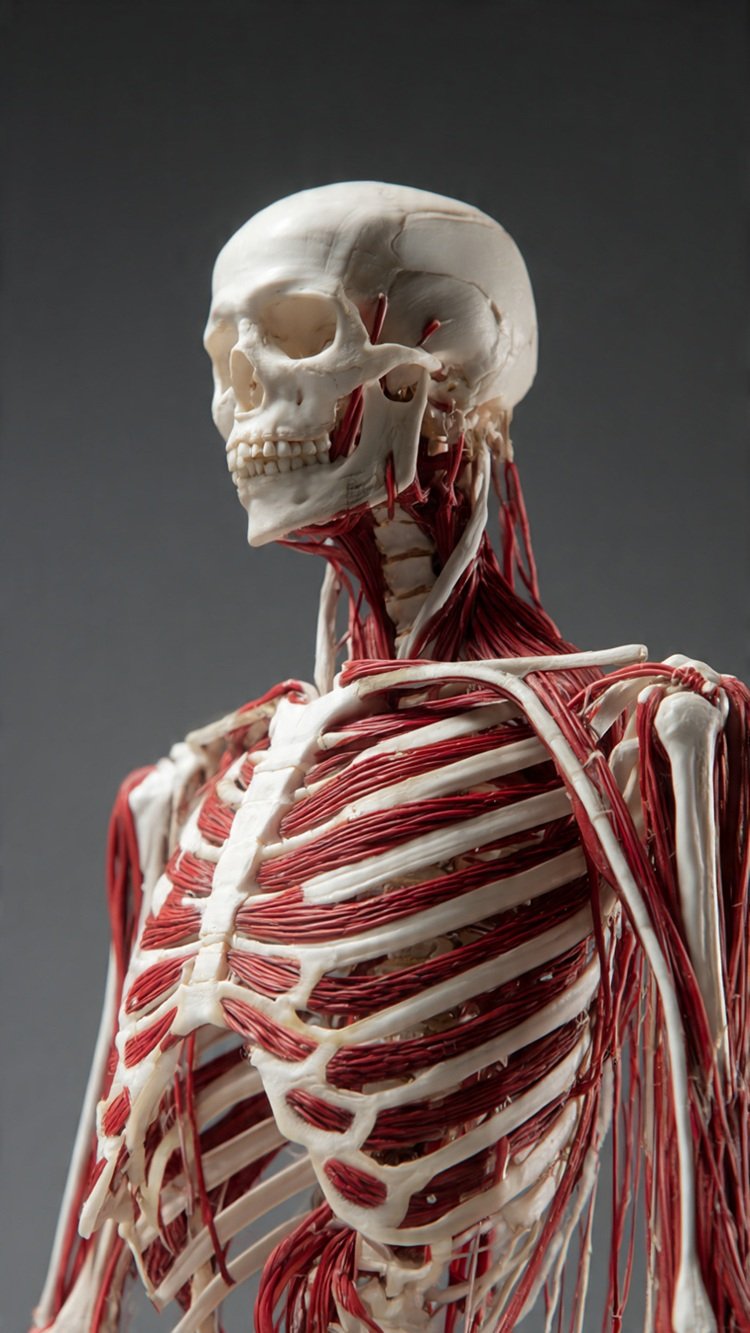
The power to move, keep the position, and preserve the important organs is based on the elaborate and highly synchronized system in the human body. The musculoskeletal system is the structural system that enables individuals to walk, lift, sit, breathe, and do an endless number of daily tasks. Even the most basic actions cannot be done without it. This system does not only involve the bones but it also involves the muscles, tendons, ligaments, and connective tissues which act in combination to give rise to movement and stability.
The knowledge of musculoskeletal system is an excellent source of information about the biomechanics of people and their physical health. It also assists in describing the strengthening effect that exercise has on the body, the impairment of mobility by aging and the disruption of normal movement patterns by injuries. Independence, productivity and quality of life in all the stages of life requires good musculoskeletal health.
To have a base of background on the topic of public health, the necessary anchor link that will be used in the first half of the article is musculoskeletal health.
This article will discuss the interrelationship between bones, muscles, tendons, and ligaments to support the body and provide movement and protect the body’s vital organs and examine how lifestyle, aging, and injury affect the musculoskeletal system.
Introduction to the Musculoskeletal System
The musculoskeletal system comprises of more than 200 bones, more than 600 muscles and a system of connective tissues that bind them together. The components play a unique role and none of them works in isolation. Bones give strength and integrity, muscles contract, tendons carry contracted force to bones and ligaments hold joints together.
Comprising these factors, there is a dynamic system that is responsive to the physical demands. The musculoskeletal system is always adaptive to the changing conditions whether lifting an object, keeping the body stable or absorbing a blow in motion. This flexibility enables human beings to make accurate movements besides enabling them to carry huge loads and cushion inner organs.
In addition to the movement, the musculoskeletal system is important in providing the posture and generating heat during muscle contraction. The bones are also storage locations of minerals like calcium and phosphorus and contain bone marrow, through which the blood cells are generated.
Bones: The Skeleton of the Body
The bones create the hard structure through which the body is made to hold the shape and protect the important organs. The skeleton is partitioned into two major structures namely axial skeleton and appendicular skeleton. The axial skeleton consists of the skull, spine and the rib cage that safeguard the brain, spinal cord, heart and lungs. The appendicular skeleton is made up of the limbs and girdles and it is the ones that allow the interaction and movement of the skeleton.
Bones are tissues that are alive and that are in constant remodeling. Different cells break old bone and others create new bone so that the skeleton can change with the stress and small damage can be repaired. Physical activity, nutrition and hormonal balance affect this process.
The various bones have various functions. Femur and humerus are long bones that provide movement as leverage. Short bones are considered to be stabilizing, flat bones offer protection to organs and irregular bones serve to provide special support. Collectively, these constructions form a system where there is a balance between strength and flexibility.
Joints: Uniting Bones and Making them move
Where two or more bones come together, the point is called a joint. They dictate the extent and nature of movement that can be done at various places in the body. There are some joints that are not movable like those around the skull and they aim to provide protection. There are others such as shoulder joint and hip joints which have extensive mobility.
Most frequently observed movable joints are the synovial joints which occur in the knees, elbows, and the shoulders. Cartilage lines these joints and is filled with synovial fluid which increases movement and decreases friction. Joints are enclosed by ligaments, which make them stable and do not allow undue movement that may bring about injuries.
Healthy joints are necessary in effective movement. In the event of arthritis, where joints are damaged or inflamed, movement may be painful and limited, which influences the mobility and quality of life in general.
Muscles: The Production of Force and Movement
The movement is produced by contracting and relaxation of muscles. The voluntarily controlled skeletal muscles are attached to the bones and produce force that propels the joints. It consists of fibers, and every muscle is made up of these fibers which shorten due to stimulation of nerve impulses, pulling the tendons to generate movement.
Depending on groups or pairs, muscles operate. As a result of one muscle contracting the opposite muscle relaxes making it easy to move with ease and control. Such a coordinated action helps a person to make accurate movements like writing, or strenuous movements like jumping or lifting.
Muscles are also important in supporting posture and joint stabilization besides movement. Moving at rest, the muscles are busy maintaining balance of the body. Heat is also produced by muscle contractions which helps to keep the body temperature low.
Tendons: Transmitting Force
Tendons are fibrous tissues that are strong and connect the muscles to bones. Their major purpose is to pass the force produced by the contraction of the muscle to the skeleton leading to movement. Tendons should be strong as well as flexible in order to sustain constant pressure without rupture.
Since tendons undergo a lot of tension during exercise, they are prone to injuries. This may cause inflammation or tears in the tendon during overuse, incorrect technique or due to sudden changes in activity level. Gradual training and sufficient rest of the tendons are critical to the long-term musculoskeletal health.
Ligaments: Skeleton Stabilizing
Joints are connected with ligaments that attach bones to the other bones and maintain stability and direct the movement. They stabilize joints to avoid dislocations and damage by ensuring that they do not move outside of normal range. The ligaments are less elastic than the tendons and this allows them to ensure the integrity of the joints.
Ligament tears or sprains result when the joints are stretched to unordinary extent. Such injuries may interfere with the stability of the joints and cause subsequent injury unless taken care of.
Biomechanics: Movement Seeing how it occurs
Biomechanics is a science that examines the way that forces affect the body and how that affects the musculoskeletal system. The movement is caused when the muscles exert a force on the bones which serve as leverages around the joints. The structure of bones and muscles defines how effective and how much movement can be attained at a specific joint.
When biomechanics are done right, the movements would be done with minimal strain on the joints and tissues. Weak posture, muscle disbalances, or incorrect patterns of movements may add stress to the musculoskeletal system, resulting in pain and damages in the course of time.
Being able to know biomechanics is important in sports, rehabilitation, and injury prevention. Proper mobility patterns will also aid in safeguarding of joints and tissues and maximize strength and performance.
Protection of Vital Organs
The musculoskeletal system is also vital in the defense of the important organs besides facilitating movement. The skull preserves the brain, the rib cage preserves the heart and the lungs and the vertebral column preserves the spinal cord.
Such protective systems are meant to dissipate and spread the force of an impact. The skeleton is also cushioned and stabilized by muscles that also minimize the chances of incurring damage to internal organs.
Physical activity and Musculoskeletal Health
Exercise is among the best methods on how to sustain and enhance musculoskeletal health. Bone remodeling is the result of weight-bearing exercises and leads to decreased bone density and strength. Resistance training develops the mass of muscle, enhances the stability of the joint, and the functioning of the body as a whole.
Flexibility, balance, and coordination are also enhanced by exercise, which decriminalizes falls and injuries. Walking, swimming and strength training are some of the activities that are aimed at keeping the joints healthy and helps one keep straight all through life.
Nevertheless, the exercise should be balanced with the necessary rest and technique. Excessive training or incorrect movement may cause muscles, tendons and joint to have too much stress leading to injury.
The Aging Process and Musculoskeletal System
With age, the musculoskeletal system experiences natural changes in the body. The bone density declines slowly exposing one to risk of fractures. The muscle mass and strength are lost and this is referred to as sarcopenia. The stiffness of the joints can be caused by the alteration of the cartilage and connective tissues.
These transformations may include mobility, balance, and independence. Nevertheless, old age does not necessarily result in extreme physical deterioration. Exercise, nutrition, and healthy lifestyle choices can slow most of the changes that occur as an individual ages and maintain their functionality.
Strength and flexibility are more important as one grows older, as they ensure good posture, lower the chance of falling, and enhance the chances of remaining independent.
Injury and Recovery
The injuries may be musculoskeletal injuries, which may be caused by trauma, overuse, or degenerative changes. Common injuries are fractures, sprains, strains and tendon injuries. These injuries break up the normal movement patterns and can be limited to temporary or permanent functions in case they are not treated correctly.
Recovery consists of rest, rehabilitation and gradual reintroduction of activity. Physical therapy is important in regaining strength and flexibility as well as coordination and preventing injuries in the future.
The knowledge of the impact of injuries on the musculoskeletal system enables individuals to make a wise choice of prevention, treatment, and recovery methods.
The third step is to maintain Lifelong Musculoskeletal Health
The musculoskeletal health needs to be supported with the help of physical activity, nutrition, and injury prevention. Properly consuming calcium, vitamin D, and protein is beneficial to the bones and muscles. Exercise keeps the body strong and flexible, whereas correct posture and techniques of movement will minimize the pressure on the joints.
Minor issues that lead to chronic problems can be forestalled through early intervention of pain or discomfort. Through learning about the musculoskeletal system and its functionality, one can engage in preventative measures to ensure their mobility and health in general.
Conclusion
Musculoskeletal system plays a basic role in the movement, support, and protection of the human body. Bones, muscles, tendons, and ligaments give strength to the body to create the structure, power, movement, and joint stability respectively. All these components combined allow one to perform daily tasks, safeguard the body and adjust to physical activities.
Knowledge of the biomechanical principles and what affects musculoskeletal health makes individuals recognize the value of exercise, good movement and prevention of the occurrence of injuries. Musculoskeletal functioning is of growing concern as people age or suffer injury in terms of independence and quality of life. This system will help those who maintain good health and make wise decisions to remain mobile and strong in their lives.



Good post! We will be linking to this particularly great post on our site. Keep up the great writing