Introduction
Effective integration of theory and practice has been identified as having a significant role in dental education especially in the early years of the dental learning trajectory. This integration is most apparent in pre-clinical operative dentistry, where theories and concepts are first introduced to students before they move on to clinical attention. The students should know complex dental materials, cavity preparation principles, and various restorative procedures at this stage and also acquire manual dexterity and precision. It is important to provide a rational coordination between presented lectures and practical sessions so that students do not have difficulties in correlating theory with practice. Thus, a curriculum that is well aligned, will provide a strong reinforcement of the concepts from the lecture immediately in the lab, and enable the students to develop their confidence, competence and clinical reasoning skills in a sequential and relevant manner.
The role of lectures in pre clinical dental education
Lectures are the intellectual support in dental education which provide dental students with theoretical part for understanding the operating procedures. During the pre-clinical period of operative dentistry, lectures present fundamental concepts in the dentistry field, including morphology, principles and design of tooth cavities, biomechanics of restoration, and properties of restorative materials. The sessions are well planned, as knowledge is taught from a first principles approach, with the “why” being taught first before the “how”. This basic knowledge is essential as it enables students not only to tackle practical tasks in a scientific way, but also not to imitate the same without understanding how these tasks work. Additionally, clinical case discussions, and evidence based guidelines are frequently used in lectures, to help students appreciate the relevance of their learning to real world dental practice.
Lectures have an essential role in providing information besides just standardizing knowledge for pupils. Within the cohort, often students have different prior learning and the purpose of the lecture is to provide information to the entire cohort ensuring they have a common starting point. This uniformity is particularly critical in the field of dentistry and/or any subject involving precision and protocol, like restorative dentistry. Moreover, effective lecturing fosters the students’ desire for inquiry which leads to self-directed learning, making it easier for students to link theory with practical learning. If no theoretical structure is provided this practical training could become mechanical and less significant.
The Role of Practical and Laboratory Sessions
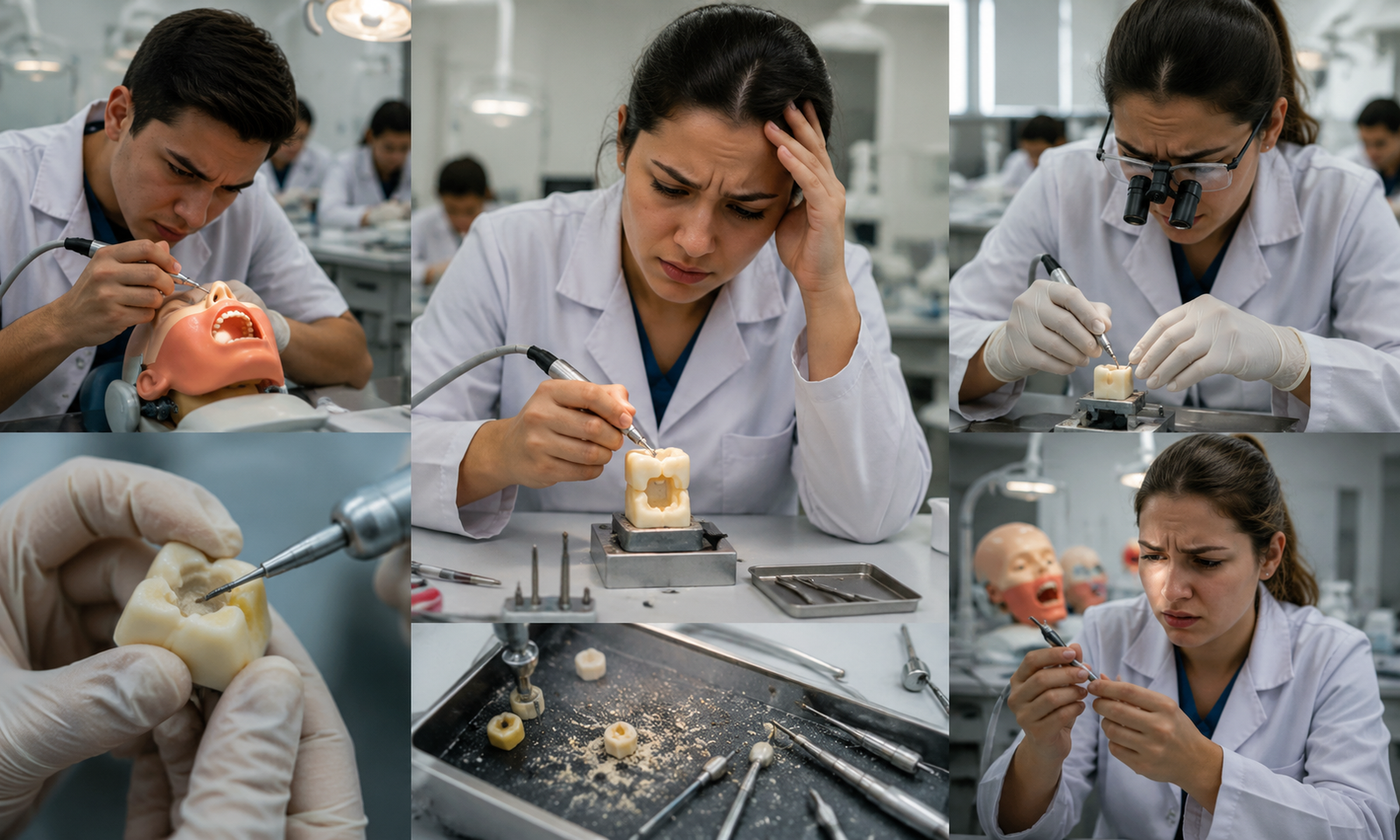
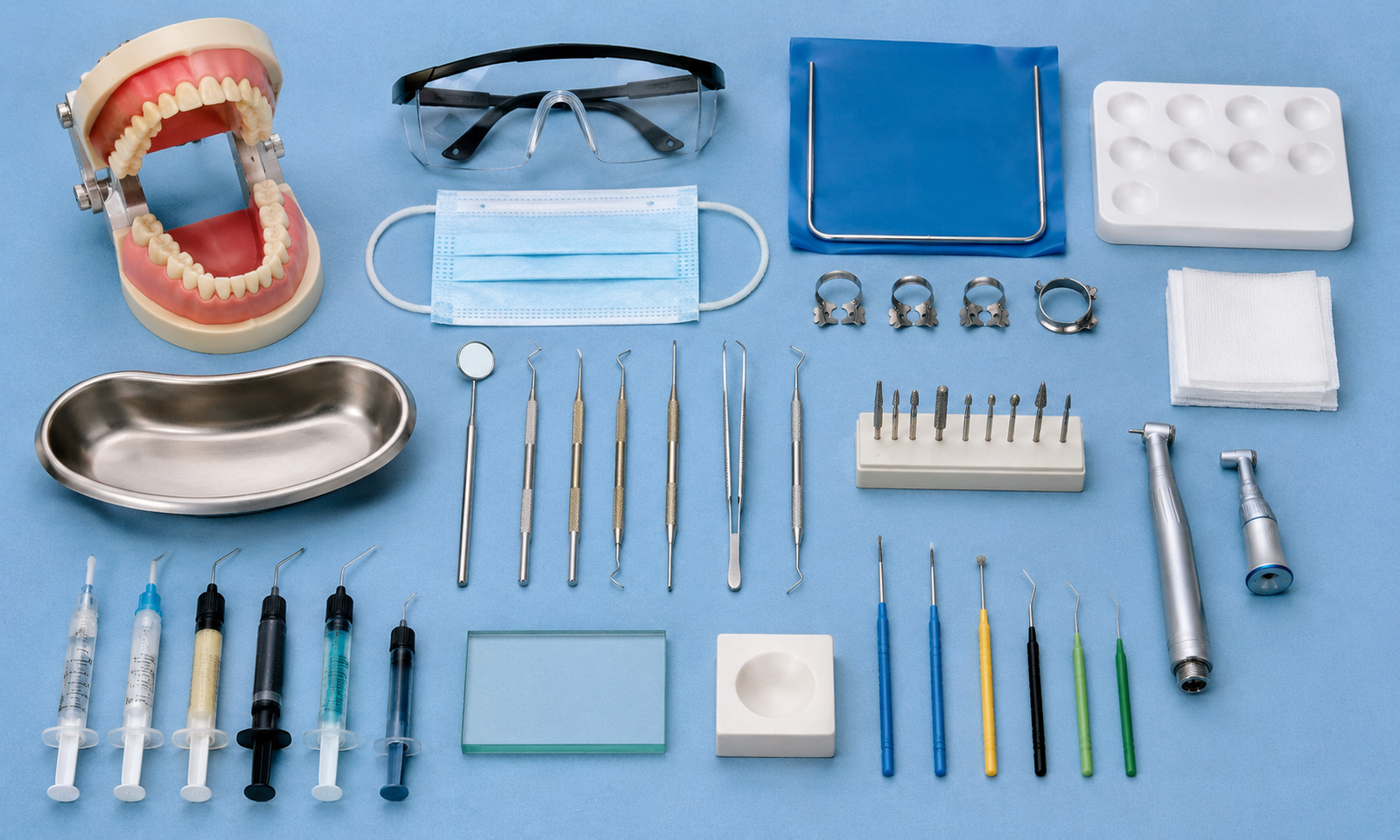
Dental Training is done in Practical sessions where theoretical knowledge is converted into skill. Laboratory instruction in pre-clinical operative dentistry provides the student with practice in the concepts taught in lecture with practical procedures like cavity preparation, restoring and finishing techniques on dental simulators or extracted teeth. A hands-on experience is vital to the acquisition of psychomotor skills, hand-eye coordination and spatial awareness, which are necessary for good clinical practice. As contrasted to the lecture, which emphasizes mainly the cognitive level, experiments and laboratory work develop several levels of learning such as the cognitive, psychomotor, and affective level.
Moreover, the laboratory setting offers a place where students can take risks of making errors and learning from them, in a safe and controlled environment without compromising patient safety. It is especially important in the dental profession as precision and accuracy are essential in this area of learning. The repeated practice helps slowly refine their techniques, at a faster speed and gaining confidence in what they can do. The students’ tasks are partly complemented by that of the instructors, who provide immediate feedback, correct the students’ mistakes, and illustrate correct techniques on such occasions. The students learn correct methods effectively with this immediate reinforcement, instead of only theoretical explanations.
Co-ordination of Lectures & Practical in Pre Clinical Operative Dentistry
The crucial part of dental education is the linkage of lectures with laboratory instruction. Well-structured programs connect each lecture with appropriate exercises so that students could use what they have learned right after each lecture. Students, for instance, learn in the lectures about the type of cavity design and experiences often take part in their laboratory in preparing them. This direct approach makes it easier to understand and remember the material because they connect abstract concepts with actual practice. There are more detailed contacts based on pre-clinical operative dentistry, which underlines the consequences on competency development with the use of organized teaching models in dental education.
This system of coordination also facilitates the spiral learning principle, with students who are given repeated learning of subjects in increasing difficulty over a period of time. They may begin with simple instrumentation and material-handling skills and progress to more advanced skills, such as complex restorations and contouring techniques. Every session in the laboratory is related to the previous lectures, and provides further challenge and reinforcement in the learning process. Using this approach will avoid information overload and make it easier to build up essential skills, crucial factors when tackling complex dental practices. Moreover, it allows students to put into perspective how theory relates to the practice of medicine and to better motivate and engage them in classroom and laboratory settings.
Accelerating the acquisition of technical skills
An excellent benefit of lecture-learning is better knowledge retention achieved by combining lecture and practical activities. However, the active learning technique is common in the field of educational psychology, and it finds that students’ memory retention has improved much more if they conduct themselves through practical activities than in the passively listening way. Students’ cognition is strengthened by physically practicing a procedure following its theoretical explanation so that it is more easily remembered in examinations and clinical practice. The two exposure to knowledge also facilitates deeper understanding because students can see the abstract concepts then relate it to real life.
It is not only a cognitive activity but it can greatly enhance technical competence if trained well. Induced repetition within a guided sequence provides opportunities to hone students’ motor skills and improve their procedural accuracy. This automation allows for the freeing up of cognitive resources for further tasks that don’t demand consciousness anymore because they become automated over time. This is the way that is important in the field of dentistry because it enables both technical execution as well as clinical judgment to prevail. Furthermore, the laboratory sessions are regularly reviewed with feedback to ensure that errors are corrected in the early stages of both the session and the entire curriculum, else otherwise poor habits may become a problem and possibly counteract future clinical performance.
Difficulties while coordinating Lectures and Practical Training
Coordinating lectures and lab time in dental education has some difficulties although there are some pros. A key challenge is the alignment of practical sessions with the lectures. This means that close scheduling of practicals to relevant lectures needs careful planning and resourcing of the curriculum. Another challenge that may result in poor coordination in institutions with high student enrollment is the absence of enough equipment available for analysis and the limited availability of the instructors in the laboratory. Apart from this, students take different time to learn and this can make the talk of uniform progress difficult with some students needing more time to understand and conceptualize theory ideas before being able to practically implement them.
One of the difficulties is consistency among those who teach in both lecture and laboratory classes. Poor communication between lecturer and clinical instructor can result in disconnects between theory and practice. This gap may result with confusion and poor learning efficiency. To solve these problems, the institutions need to change the way the curriculum is designed, and encourage teachers to have regular collaboration, and allocate appropriate investment for the teaching resources. Using technology-based learning materials (simulation softwares, video presentations, etc.) can also be a way to achieve the transition from theory to practice.
An ergonomic approach to introducing teaching methods.
Dental schools should be using a systematic approach to incorporate maximally the advantages of coordinated lectures and practical sessions. A good solution here is to use modular teaching, meaning one module should have a theoretical part with the related practical in the lab. This guarantees the application of knowledge and less time interface between knowledge and practice. The other common approach is pre-lab briefing: summarising good lecture notes from the session with emphasis on important points and procedure before practical sessions.
Moreover, continuous assessment is very important to ensure that items covered under the lectures are also delivered during practical sessions. Through a reinforcement of student learning using regular assessments consisting of quizzes, practical exams and instructor comments, the student’s learning process is monitored and parts of it need to be reinforced. Faculty development programs are also vital to make sure faculty members are trained to effectively provide theoretical and practical training for students. Collaboration between educators and the use of a student-centered approach can help to establish a comprehensive and integrated learning environment in pre-clinical operative dentistry.
Conclusion
Effective dental education requires good coordination between the teaching and learning of lectures and practical sessions. Providing hands-on experience in the lab work while reinforcing concepts with theory helps students to have a better understanding of the concepts and improve technical skills through practical application. This holistic approach promotes better retention, competency, and equips students for the challenges of real-world circumstances. Even with these obstacles like scheduling and resource issues, the proper curriculum design and faculty partnership can resolve these issues. Overall, a properly managed educational system will lead to a seamless transition for dental students to become competent health care providers capable of providing patients with quality care.