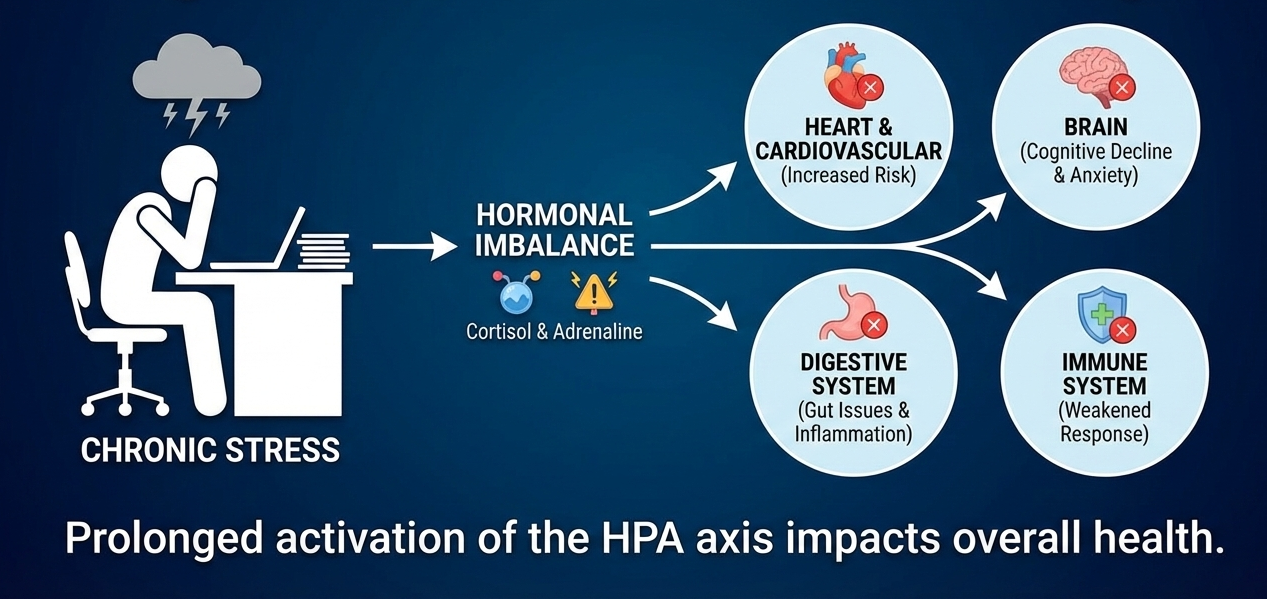
Stress is considered to be an inevitable component of the contemporary life. Although temporary stress may be inspiring and even protective, chronic stress is another physiological condition. It is only after stress turns into a chronic process that the body is stuck on a survival mode that was never intended to be permanent. This extended activation exerts a lot of stress on the various organ systems and this stress over time will lead to physical ailment that might be overlooked over years.
Contrary to acute stress, which subsides after one gets past a difficult situation, chronic stress keeps on stimulating hormonal pathways that cause a change in normal body functioning. Among the most harmful effects of the long-term stress, long-term exposure to cortisol is one that has an insidious impact on the heart, brain, digestive system, and endocrine glands. The effects compound over time making the risk of getting chronic disease more probable.
This article discusses the destructive effect of chronic stress on body organs that lie deep beneath the skin. Through the biological processing involved, the reader is able to realize that stress is a serious health risk therefore the importance of early intervention and being a proactive stress management process.
Learning about Chronic Stress and Cortisol
Cortisol: This is a hormone secreted by the adrenal glands that helps in controlling metabolism, immune response as well as energy provision. Under normal circumstances, cortisol level increases as a response to stress and decreases after the stresses have been solved. This variation assists the body to adapt and recuperate.
This is disturbed by chronic stress. In situations where the brain feels threatened, cortisol is sustained over long periods. This is a long-lasting hormonal stimulation to the body to remain in high alert, despite the absence of direct threat.
There is no benignity in prolonged cortisol elevation. It changes the work of the cell, disrupts tissue regeneration, and encourages a systemic inflammation. These alterations constitute the basis of the damage to organs because of stress.
In the case of the effects of stress on health, it is important to trace how the cortisol influences the organic systems as time goes by.
The Heart: Cardiovascular Stress in the Chronic Stress
Chronic stress is especially susceptible to the cardiovascular system. Cortisol raises blood pressure, both through the constriction of vascular tone and sodium retention. Meanwhile, the sympathetic nervous system becomes activated by stress and increases the heart rate and narrows blood vessels.
When these reactions happen intermittently, then the heart becomes adapted. The longer the persistence of the heart, the more the heart labors than it should have done over an extended period. This enhances the damage to blood vessels and atherosclerosis progression.
The chronically sustained levels of cortisol also interfere with the metabolism of lipids, which help to increase the level of cholesterol. Chronic stress causes inflammation which damages blood vessel walls thereby increasing their vulnerability to plaque.
These effects in the long run expose individuals to the risk of hypertension, heart disease, and stroke. The damage usually develops without symptoms or with some obstructive condition being evident until a significant cardiovascular event occurs.
The Brain: Thinking and Feeling the Effects of Stress
Stress hormones are very sensitive to the brain. Although cortisol has been shown to increase alertness in the short-term, on a long-term basis, it has been seen to interfere with neural structure and structure.
This is especially true of the hippocampus which is an important memory and learning region. Chronic exposure to cortisol disrupts the growth of neurons and decreases synaptic plasticity causing memory impairments and cognitive inflexibility.
Decision-making and emotional regulation are conducted by the prefrontal cortex that is inferior in the presence of chronic stress. This adds to the lack of concentration, poor judgment and instability of emotions.
Simultaneously, the amygdala that processes fear and threat becomes hyperactive. This increased reactivity strengthens anxiety and reinforces the stress response making it a self-perpetuating cycle.
Such changes in the nervous system are the reason why anxiety, depression, and burnout are closely associated with chronic stress.
Gut Health and Disruption in the Digestive System
Prolonged stress has a severe impact on digestion. Due to cortisol, the blood supply is diverted to other body parts and thus, it limits the rate of digestion. This is an adaptive suppression that is good in cases of an emergency but bad when practiced.
Symptoms in case of reduced digestive activity include bloating, belly pain as well as irregular bowel movements. There is also change in gut motility that is induced by stress and which leads to functional digestive disorders.
Moreover, chronic cortisol exposes interrupt the microbiota levels in the gut. This imbalance influences nutrient uptake, immune signaling and the regulation of inflammation in the gut.
The digestive system is of prime importance to the general health. The gut-brain axis is an immune, metabolic, and even mental health effect of gut dysfunction caused by stress.
Endocrine Glands and Hormonal Imbalance
Endocrine system depends on accurate hormone levels in the body. Chronic stress disrupts this balance by exceeding feedback mechanisms which are meant to stabilize the situation.
High levels of cortisol inhibit the synthesis of other vital hormones such as reproductive hormones and thyroid hormones. This disturbance has an impact on metabolism, reproduction, energy and mood.
Chronic stress in women may result in abnormal periods and hormonal changes. In men it can lower the levels of testosterone, impacting muscle mass, energy and emotional health.
Thyroid gland is an organ that is especially susceptible to hormonal interference due to stress. Slow metabolism associated with less activity of the thyroid leads to fatigue and weight changes.
Chronic stress has physical and emotional consequences, which are complicated over time by endocrine disturbance.
Inflammation and Metabolic Dysfunction
Among the destructive impacts of chronic stress, one can mention the facilitation of inflammation. Although cortisol has an anti-inflammatory effect, continuous exposure causes immune dysregulation.
The specific immune system loses its efficiency to eliminate the inflammation, leading to the development of chronic low-grade inflammatory process. This inflammation deteriorates tissues and leads to other conditions like diabetes, autoimmune diseases and heart diseases.
Cortisol too influences the glucose metabolism by heightening insulin resistance. This is pushing the pancreas to produce additional insulin which is straining to the metabolism systems and posing a threat of type 2 diabetes.
Such metabolic imbalances depict the action of stress as a silent cause of chronic disease.
Weakness of the Immune System and Exposure
Immunes are undermined by chronic stress. Cortisol plays down the manufacture of immune cells and lowers the capability of the body to develop effective reactions to the existence of pathogens.
Consequently, people exposed to chronic stress are prone to infections and have slow recovery times. The healing of wounds is slow and the elimination of abnormal cells within the body is hampered.
This is suppression of the immune system coupled with inflammation, and this gives a situation in which the disease is able to gain ground and thrive more readily.
Vulnerability and Immune System Suppression
Stress damages the immune system. The cortisol inhibits the immune cell production and impairs the capacity of the body to develop effective responses toward pathogens.
Consequently, the individuals experiencing chronic stress levels are more prone to infections and recovery rate is slow. Healing of wounds is also impaired as well as body capacity to get rid of abnormal cells is hampered.
This immunosuppression, coupled with the inflammation, has the effect of providing a conducive environment in which the disease is likely to develop and progress much easier.
Pernicious Sustained Cortisol Exposure as a Health Silent Killer
The consequences of chronic sustained cortisol exposure are hardly manifested immediately. Rather, it is a cumulative problem, and the harm may not be obvious.
The common symptoms are fatigue, sleeping disturbances, digestive illness, and mood swings which most people have tended to dismiss as normal effects of stress. But these symptoms could be a manifestation of underlying physiological stress on a variety of organs.
It is necessary to identify these initial symptoms before it becomes too late. Chronic stress cannot be regarded as a nuisance of a lifestyle, but as a danger to medical health.
Why Chronic Stress is Usually Invisible
Stress-induced organ damage is one of the reasons that are ignored because stress is accepted in the contemporary society. Long working hours, always-on-the-job, and low rest periods are the order of the day.
Due to the slow development of stress-related symptoms, people can become used to feeling sick and do not seek advice. Such normalization postpones the intervention and permits the damage to continue.
The concept of stress as a biological process allows redefining the importance of stress and promotes proactive health choices.
The Prevention of Stress by Health
Stress management is not only an issue of emotional comfort; it is preventative medicine. Cortisol levels can be brought to normal due to the reduction of chronic stress, which contributes to the restoration of the hormonal balance and organ recovery.
Cortisol rhythms are controlled by healthy sleep patterns. Exercise enhances the insulin sensitivity and heart condition. The relaxing methods decelerate the production of stress hormones and soothe the nervous system.
Perceived threat, which is reduced as a result of social support and other psychological coping strategies, decreases stress activation at its origin.
By responding to stress promptly, one is able to safeguard the important organs and decrease the chance of developing chronic disease.
Conclusion
The cause of physical illness is a silent, yet mighty cause such as chronic stress. Stress harms the heart, brain, digestive tract and endocrine glands over time and in most cases not immediately.
These are long-term effects that lead to cardiovascular disease, metabolic disorders, immune dysfunction, and mental health problems. It is important to understand that stress is a biological threat and not an emotional event to ensure healthy living in the long term.
Early recognition and timely management of stress is an effective tool to avoid damages in an organ before the situation turns irreversible. Chronic stress is a problem worth spending a lifetime to manage rather than a luxury.