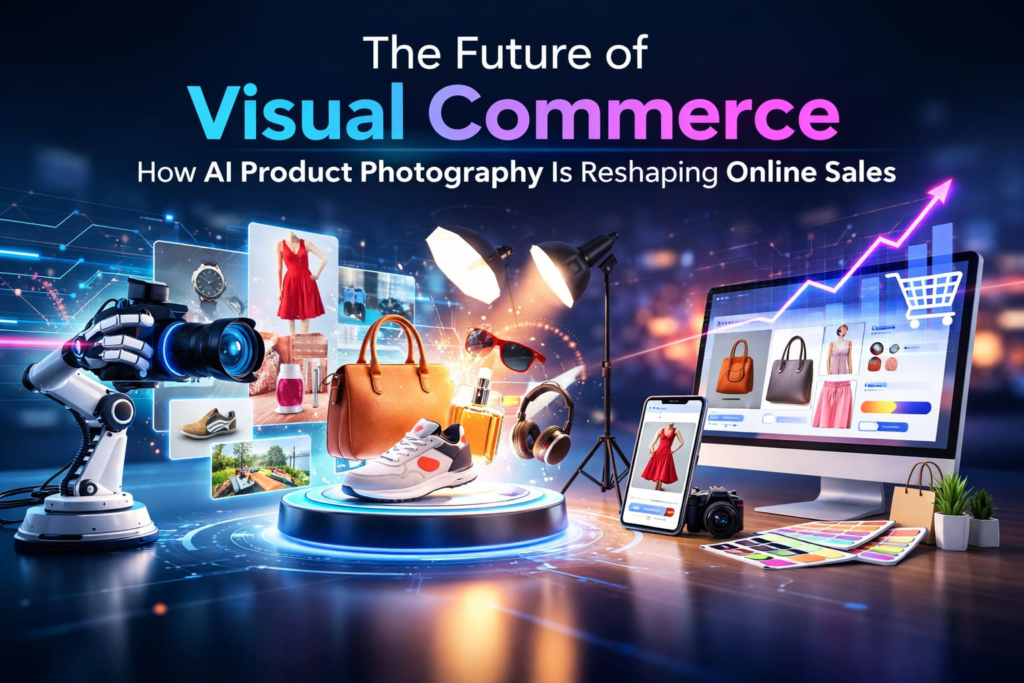
The way people shop online has changed dramatically over the past few years. Customers no longer rely only on product descriptions. They expect sharp visuals, engaging videos, immersive lifestyle scenes, and even interactive experiences before they decide to buy. For brands and sellers, this shift creates both opportunity and pressure. Producing high quality visuals consistently can be expensive, time consuming, and logistically complex.
This is where AI Product Photography steps in as a game changer. It allows brands to create studio grade images, lifestyle visuals, promotional videos, and even AI powered avatars without organizing traditional shoots. What once required photographers, models, lighting setups, and post production teams can now be generated in minutes from a single upload.
As someone deeply involved in digital growth strategies, I see this transformation not as a trend, but as a long term shift in how visual commerce will operate.
Why Visual Content Drives Conversions
Before diving into tools and technology, it is important to understand why visuals matter so much in the first place.
When shoppers land on a product page, they usually scan images before reading anything. Strong visuals instantly communicate quality, trust, and brand identity. Weak visuals do the opposite.
High performing product visuals typically:
- Build credibility and reduce hesitation
- Showcase product details clearly
- Demonstrate real life usage
- Evoke emotion and aspiration
- Increase time spent on page
Platforms like Amazon, Shopify, Etsy, and social media channels are becoming increasingly competitive. Brands that invest in compelling AI Photos, Videos, Ads, and Avatars — All Created in One Click gain a serious advantage because they can scale content production without scaling costs at the same rate.
The Problem with Traditional Product Shoots
Conventional product photography comes with multiple challenges:
- Studio rental and equipment expenses
- Model hiring and coordination
- Editing time and revisions
- Limited flexibility for seasonal or campaign based updates
- Delays in launching new products
For small and mid sized brands, these costs can be restrictive. Even larger brands struggle with speed. Launch cycles are shrinking, trends move fast, and marketing teams need fresh creatives constantly.
Imagine having to book a full shoot every time you want to test a new background, angle, or seasonal theme. It is simply not sustainable in the modern e commerce environment.
This is why more brands are shifting toward AI powered solutions.
What Makes AI Product Photography Different
Ai Product Photography removes most of the logistical friction. Instead of organizing a shoot, you upload a clear image of your product. The system then generates multiple variations including:
- Clean studio backgrounds
- Realistic lifestyle environments
- Social media ready visuals
- Ad optimized images
- Short promotional videos
- AI generated avatars presenting the product
The real advantage lies in speed and flexibility. You can test multiple creative directions in a single afternoon. If one concept does not perform well, you pivot instantly.
One solution that embodies this all in one approach is AI Product Pro. It simplifies content production by turning a single upload into a full range of marketing assets. For growing brands, this reduces dependency on external agencies while maintaining professional quality.
Studio Photos Without the Studio
Clean studio images remain essential for product listings. Marketplaces still prioritize clear, distraction free visuals that highlight product features.
With AI generated studio photos, brands can:
- Place products on pure white backgrounds
- Adjust lighting and shadows digitally
- Highlight textures and materials
- Maintain consistent visual branding
This level of consistency is particularly valuable for catalogs with dozens or hundreds of products. Instead of scheduling repeated shoots, sellers can generate uniform imagery across their entire store.
When done correctly, these visuals are nearly indistinguishable from traditional photography, especially for online use.
Lifestyle Scenes That Sell Emotion
Studio images build trust, but lifestyle scenes drive desire. Customers want to imagine how a product fits into their daily lives.
AI powered tools now generate realistic scenes such as:
- A coffee mug placed in a cozy kitchen
- A skincare product displayed in a luxury bathroom
- A fitness accessory shown in an active environment
- Apparel styled in various seasonal settings
This capability allows brands to align visuals with specific audiences. A single product can appear in multiple contexts, each tailored to a different customer segment.
AI Product Pro takes this further by enabling Studio Photos, Lifestyle Scenes, Video Ads, AI Avatars and Ad Copy — All From One Upload. That integration is what modern marketing teams need. Instead of juggling separate tools, they can manage the entire creative workflow in one place.
From Static Images to Scroll Stopping Videos
Social platforms increasingly favor video content. Short form videos often outperform static images in engagement and reach.
Traditionally, creating product videos required scripting, filming, editing, and voiceovers. Now, AI systems can generate:
- Animated product showcases
- Text overlays optimized for ads
- Motion effects that highlight features
- Short clips ready for Instagram and TikTok
This shift matters because paid advertising is becoming more competitive. Fresh creative assets are essential for maintaining performance. Being able to generate video ads quickly allows brands to test multiple variations and optimize campaigns efficiently.
When AI Photos, Videos, Ads, and Avatars — All Created in One Click become accessible, experimentation becomes easier and less risky.
The Rise of AI Avatars in Product Marketing
One of the most interesting developments is the use of AI avatars. Instead of hiring influencers or presenters, brands can create digital spokespeople to introduce products.
These avatars can:
- Explain product benefits
- Demonstrate usage
- Deliver promotional messages
- Speak in different languages
For global brands, this reduces localization costs significantly. You can adapt the same core message for different markets without reshooting content.
While human influencers still hold value, AI avatars provide a scalable supplement. They are particularly useful for product tutorials and ad creatives.
How This Impacts Growth Strategies
From a strategic perspective, AI powered product content influences multiple performance factors:
- Higher click through rates due to engaging visuals
- Better conversion rates through realistic demonstrations
- Faster campaign testing cycles
- Reduced production costs
- Greater creative consistency
When advising brands, I emphasize that content production should not be a bottleneck. If launching a new product takes weeks because visuals are not ready, revenue opportunities are lost.
Tools like AI Product Pro help remove that friction. By centralizing creative generation, they allow teams to focus more on strategy and less on logistics.
Practical Tips for Using AI Product Photography Effectively
While AI tools simplify production, results still depend on thoughtful implementation. Here are a few practical recommendations:
- Start with a high quality base image. Clear lighting and sharp details improve AI outputs.
- Define your target audience before generating lifestyle scenes. Context should align with buyer identity.
- Test multiple variations rather than relying on one creative.
- Keep branding elements consistent across visuals.
- Pair visuals with persuasive, benefit driven copy.
AI technology is powerful, but it works best when guided by clear marketing objectives.
Common Misconceptions About AI Generated Visuals
Some brands hesitate because they assume AI visuals look artificial or unrealistic. While early tools had limitations, current platforms have improved significantly.
Another misconception is that AI replaces creativity. In reality, it enhances it. Instead of spending time on setup and editing, creative teams can focus on storytelling and positioning.
There is also concern about uniqueness. The key lies in customization. When you tailor scenes, angles, and messaging to your brand voice, the output feels distinct rather than generic.
A New Era of Scalable Visual Content
E commerce continues to evolve rapidly. Customer expectations will only increase. Brands that adapt quickly will thrive, while those relying solely on traditional production methods may struggle to keep up.
Ai Product Photography is not just about convenience. It represents a structural change in how marketing assets are created and distributed. By combining images, videos, avatars, and ad copy generation into one streamlined workflow, businesses gain agility.
AI Product Pro is a clear example of how integrated platforms are shaping this new landscape. Instead of treating visuals as separate tasks, it brings them together into a cohesive system that supports growth.
Where Smart Brands Go From Here
The future of online selling belongs to brands that move fast, test boldly, and communicate visually. Investing in scalable creative production is no longer optional. It is a competitive necessity.
Whether you are launching a new product line, expanding into new markets, or optimizing paid campaigns, leveraging AI driven visual tools can dramatically increase efficiency.
The real question is not whether AI will influence product marketing. It already has. The question is how effectively you will integrate it into your strategy.
Those who embrace intelligent visual creation today position themselves ahead of the curve tomorrow.