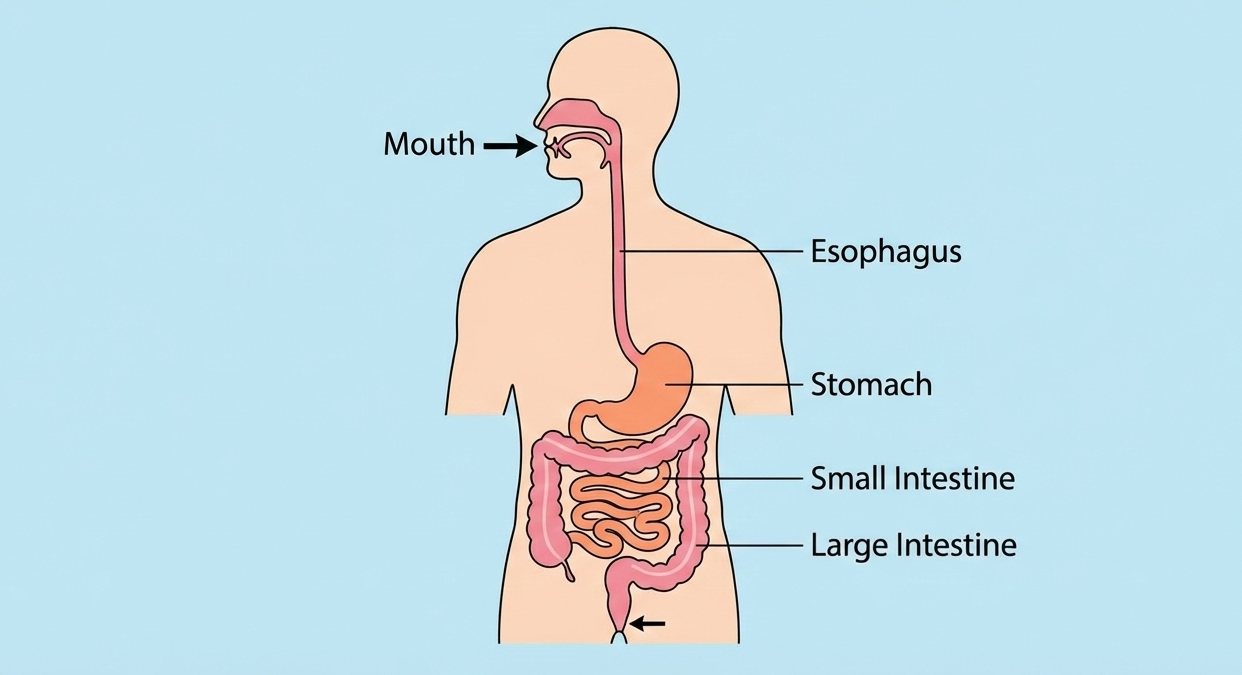
The knowledge of the body processing of food does not entail high scientific knowledge. Digestion at its most basic level is a synchronized process which breaks down what we eat into energy and nutrients that can be used by the body. This is a simple guide to the digestive tract, which can help one understand how each part works and why it is important to keep the digestive health in good order.
One of the most important systems in the body is the digestive system. It enables us to receive nourishment in food and waste disposal in food. Although most individuals learn about digestion in school, the information is usually forgotten. The article can be seen as a simple and convenient introduction to the human biology field that would appeal to readers with no or minimal background knowledge.
What Is the Digestive Tract?
In the digestive system, the digestive tract (digestive system) is a long consecutive passageway that passes through the mouth to the anus. It contains a number of organs which combine to digest the food, assimilate it, and eliminate waste products.
Imagine the digestive system as a well-structured assembly line. The sections have a given job to do and then the partially processed food is passed to the next station. The failure of one of the parts or its slowing down can impact the whole system.
The digestive tract is divided into major segments, which are:
- Mouth
- Esophagus
- Stomach
- Small intestine
- Large intestine
- Rectum and anus
Both have their own role to play in food processing.
The Mouth is the First to Start the Digestion
Chewing and Saliva
The process of digestion begins before food gets into the stomach. The action starts in the mouth. In chewing, your teeth chop food into small bits. Such a mechanical move facilitates further work of enzymes.
Salivary glands produce saliva which has enzymes that initiate the degradation of carbohydrates. Food is also moistened by saliva and this food is shaped into a soft mass known as a bolus. This eases the process of swallowing.
It is more important that people chew thoroughly. Chewing increases nutrient absorption and minimizes the pressures on the stomach.
The Esophagus: An Endoskeleton
Food flows down the esophagus after it has been swallowed. It is a muscular tube which links the mouth and the stomach.
Gravity is not sufficient in the esophagus. Rather it involves the rhythmic contractions of the muscles known as peristalsis. These wave-shaped movements cause the food to move downwards in a regulated process.
Even when one is lying down, peristalsis will make sure that the food gets to the stomach efficiently.
The Stomach: Dismantling Food Still More
Mixing and Chemical Digestion
After food gets into the stomach, it comes into contact with the gastric juices. These juices have acid and digestive enzymes which assist in breaking food to a semi-liquid mixture referred to as chyme.
The stomach resembles a stirring blender. Its muscular walls contract repeatedly mixing food with the digestive juices. This is a mechanical mixing that makes sure that it is broken down.
The acidic environment is used in two ways:
- It helps digest proteins.
- It eradicates a large number of harmful bacteria that could be allowed in with food.
One would normally take a few hours before the food leaves the stomach, and transits to the small intestine.
The Small Intestine: The Major Absorption Site of Nutrients
Most digestion and nutrients absorption takes place in the small intestine. Although it is long, its length is several meters long as the name suggests.
The Breakdown of Enzymes and Nutrient
Small intestine gets the pancreatic digestive enzymes and the liver bile. These substances assist in breaking down fats, proteins and carbohydrates into tiny molecules.
These nutrients pass via the intestinal walls and are absorbed in the blood. They move to other sections of the body and supply energy, promote growth and repair processes.
Surface Area Matters
The lining of the small intestine has small projections that look like fingers in form known as villi. Such structures enhance the amount of surface to be absorbed.
A simple analogy is that of a sponge. The larger its surface area the more it can absorb of liquids. Equally, the structure of the small intestine is such that it efficiently absorbs the nutrient.
The Large Intestine: Absorption of Water and Formation of Wastes
The rest of the material is transferred to the large intestine after the uptake of nutrients.
The main activity of the large intestine is to absorb electrolytes and water. With this step, liquid waste is converted to solid stool.
The large intestine is also inhabited by good bacteria. These are bacteria that help to digest some of the undigested materials, and help in maintaining overall digestive balance.
The large intestine processes waste which is to be removed using the rectum and the anus.
Significance of Enzymes to the Digestive System
Digestive enzymes refer to the proteins, which accelerate chemical reactions inside the body. In their absence the digestion would be too slow to satisfy the needs of the body.
Various enzymes act on different nutrients:
- Carbohydrates are broken down by enzyme amylase.
- Proteases digest proteins.
- Lipase processes fats.
These enzymes make food digestible to a small size that can be absorbed.
Benefits of Nutrients to the Body
After the intake of nutrients into the blood, they are used in various ways.
- Carbohydrates give energy to the day to day running.
- Proteins are involved in the construction and repair of the tissues.
- Fats are energy stores and they protect organs.
- Minerals and vitamins control the necessary processes.
- Even the most healthy diet cannot be fruitful without successful digestion.
Normal Digestive Problems
The digestive tract can be used to describe common problems that include indigestion, constipation, and bloating.
Indigestion
The problem of indigestion is usually caused by overeating or eating fast. The food can be too much in the stomach causing discomfort.
Constipation
Constipation is usually a result of slow passage of stool through the large intestine. Lack of fiber or lack of hydration can be a contributing factor.
Bloating
When gas accumulates in the process of digestion, it may lead to bloating. There are types of foods and inhalation of air during meals which can make this feeling even worse.
Understanding these issues will enable one to make modifications to habits.
Food in the intestinal well-being
A well-balanced diet helps in easy digestion.
Fiber is also important in ensuring that one has regular bowel movements. Good sources are whole grains, fruits, vegetables and legumes.
Hydration also matters. Water aids in the dissolution of nutrients as well as softening of stool.
The reduction of the portion sizes enhances the stress on the stomach. The slow pace of eating enhances efficiency and comfort.
The Brain and the Digestive System
The brain is connected by the digestive tract with the help of a system of nerves. Stress may affect the digestion process by modifying the production of stomach acid and movement of the intestines.
Rest, consistent sleep, and attentive eating can have a beneficial impact on the functioning of the digestive system.
The Importance of Knowing How to Digest
When people know how their digestive system functions, chances are high that they will make better decisions on the diet and lifestyle.
Education promotes healthy eating, regular hydration, and prudent eating. It also encourages early detection of symptoms that might need any medical help.
Even minor daily changes can become a great way of enhancing the comfort of digestion.
Examples of Practical Advice in the Support of Digestive Health
- Swallow food after digesting it well.
- Consume balanced meals and high in fiber foods.
- Take sufficient water during the day.
- Participate in regular exercise.
- Avoid excessive overeating.
- Manage stress effectively.
These basic methods make sense in the normal working of the digestive tract.
Conclusion
The digestive system is an organized system which converts food to the nutrients that the body requires to perform its work. One of them, starting in the mouth and ending with the removal of waste, is vital in the preservation of health.
With a clear and practical understanding of digestion, one can know her/his body and how food is processed and the importance of some habits. This background knowledge is effective in making improved nutrition, enhancing digestive comfort, and long-term health.
Digestion is made easier to comprehend and control when perceived as a process, which is continuous and organized instead of being a mystery. The simplified knowledge about the digestive tract gives the means to take care of one of the most significant systems in the body.