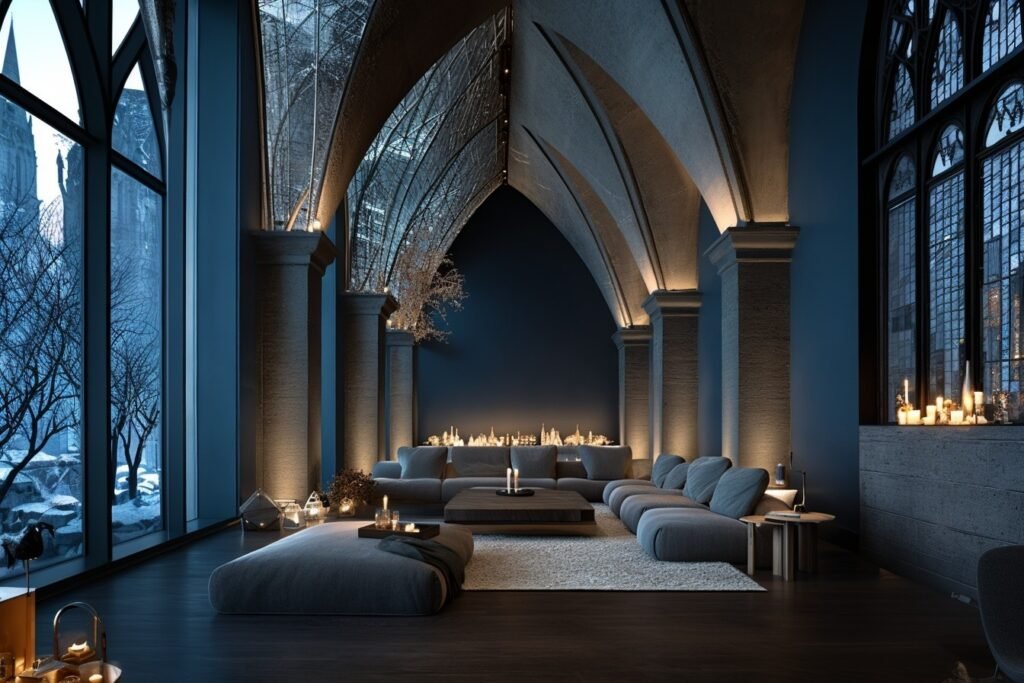
Power used to be expressed through visibility—bigger spaces, brighter lighting, louder signals of achievement. Now, it shows up through control.
The most effective environments aren’t designed to impress at first glance. They’re calibrated to shape behavior: how quickly someone settles, how clearly they think, and how long they stay engaged. If the psychology of prestige dictates that a first impression is formed almost instantly, then the room itself has become part of the message.
It is no longer décor. It is instrumentation.
Quiet Luxury in the Built Environment
The stark, hyper-lit office that once signaled productivity is giving way to spaces that manage energy instead of demanding it.
Lighting shifts throughout the day rather than staying frozen overhead. Materials absorb rather than reflect—wood, stone, and textured surfaces that reduce glare and visual fatigue. The effect isn’t theatrical; it’s stabilizing. People focus longer because the space stops competing for attention. You don’t feel dazzled walking in; you feel aligned.
The Rise of the “Sensory Moat”
Some of the most valuable design decisions are the least visible. Acoustic control keeps conversations contained and eliminates the low-level stress of constant background noise. Subtle scent—often something grounded and botanical—creates recognition without branding it outright.
Environmental systems adjust air, temperature, and occupancy silently. When it’s done correctly, nothing announces itself. The absence of friction is what registers. This “Sensory Moat” ensures that the environment produces success rather than merely hosting it.
Digital Spaces Are Following the Same Logic
The same restraint is showing up online. Constant output has begun to look like overexposure, not authority.
A smaller number of deliberate touchpoints—clear, structured, and intentional—carries more weight than an endless stream of updates. Selectivity reads as confidence. Presence is measured by precision, not volume. In 2026, power isn’t signaled through what you show; it’s conveyed through what you choose to withhold.
Maintenance Is the New Status Signal
What distinguishes these environments isn’t extravagance; it’s continuity. They are tuned, adjusted, and cared for. Light is recalibrated. Air is managed. Materials are maintained instead of replaced. That steady stewardship communicates discipline more convincingly than any visual flourish could.
The space reflects the same philosophy seen in personal upkeep: long-term refinement over episodic overhaul. This standard of precision is a hallmark of elite practice, a principle often emphasized by industry leaders like Behnoush Zarrini of Beverly Wilshire Aesthetics. Just as a sophisticated approach to facial rejuvenation signals a commitment to biological integrity, the maintenance of one’s environment signals the health and resilience of the entire enterprise.
The environments shaping decisions now rarely call attention to themselves. They remove resistance, regulate pace, and let performance surface without interference. The room no longer hosts success.
It conditions it.