As we navigate the opening days of 2026, the digital content landscape has reached a point of no return. We are no longer living in the era of “experimenting” with AI; we are living in the era of AI-native production. The visual economy has become hyper-saturated, and the distinction between a hobbyist and a professional now rests almost entirely on their ability to orchestrate AI-driven tools. For the modern content creator, an AI Image & Video Generator is not merely a utility—it is the very engine of their creative and commercial survival.
Reflecting on the industry just a few years ago, the barriers to entry were formidable. High-quality visual storytelling was a gated community, reserved for those who could afford elite equipment or possessed the esoteric knowledge required to navigate complex design suites. Today, in 2026, those gates have not just been opened; they have been dismantled.
The Great Pivot: From Pixel-Pushing to Vision-Directing
In the pre-AI era, “photo editing” was a synonymous term for labor. It involved hours of manual masking, color matching, and perspective correction. If you were a small business owner in 2023 trying to clean up a product shot, you were likely bogged down by technical debt—learning software just to perform a simple task.
In 2026, the paradigm has shifted from “pixel-pushing” to “vision-directing.” Modern AI Image Editors have matured into intuitive partners that understand intent rather than just commands. We no longer talk about “adjusting exposure levels”; we speak to the AI about “the mood of a rain-slicked neon street at midnight.” This shift is revolutionary because it re-centers the creative process on the human imagination. The machine handles the granular mathematics of light and shadow, allowing the creator to focus on the narrative and the brand identity. This democratization of high-end aesthetics means that the “professional look” is now a baseline expectation, not a luxury.
Economic Sovereignty for the Solo Creator
The most profound impact of AI image editing in 2026 is its role in individual economic empowerment. Let’s look at the current state of e-commerce and personal branding. The overhead costs that once crippled small ventures—studio fees, professional lighting kits, and post-production outsourcing—have effectively been vaporized.
Consider the trajectory of a modern digital entrepreneur. In the past, launching a seasonal collection meant a multi-week lead time for visual assets. Today, a creator can capture a raw image on a standard mobile device and, through a sophisticated AI editor, transform that single frame into an entire marketing campaign. They can swap backgrounds to match global aesthetics, adjust lighting to create consistent “brand warmth,” and generate lifestyle context without ever leaving their desk.
The data from 2025 showed a staggering 90% reduction in visual asset production costs for creators who fully integrated AI. In 2026, this isn’t just a cost-saving measure; it’s an agility requirement. Those who can iterate their visual presence in real-time are the ones winning the battle for the consumer’s increasingly fragmented attention.
Beyond Staticity: The Convergence of Image and Motion
As we progress through 2026, the wall between “image editing” and “video production” has become porous. We have moved past the era of static social feeds. Today’s audience demands movement, and the most advanced AI platforms have responded by integrating multi-modal capabilities.
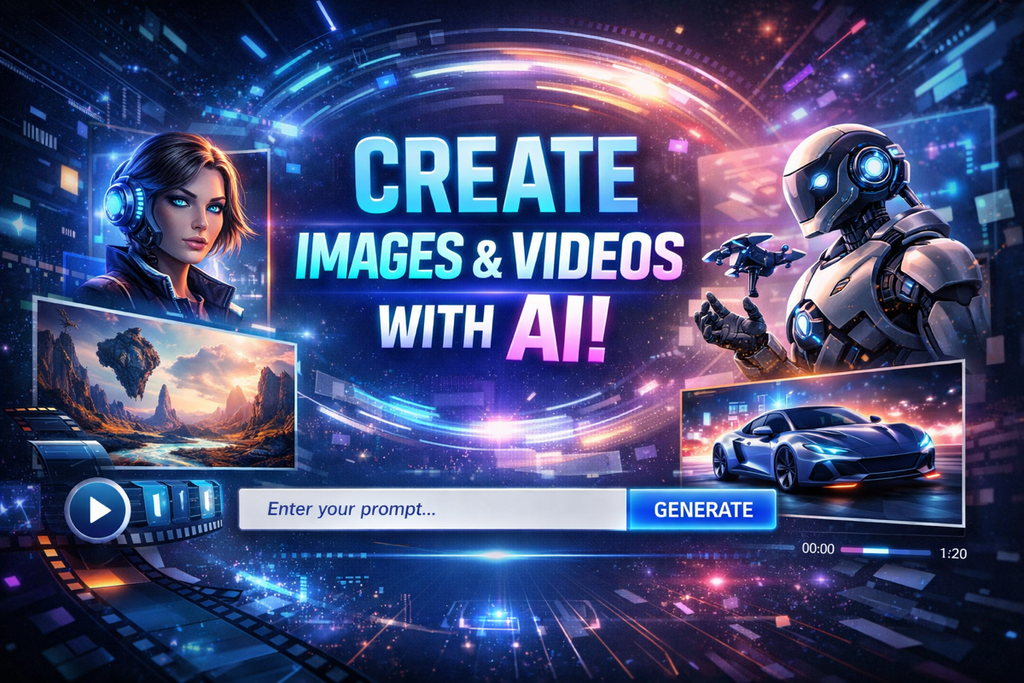
The modern AI Image Editor is now a gateway to fluid media. A creator can take a high-fidelity AI-enhanced image and, within the same interface, animate elements, add cinematic depth, or transform a still product shot into a 15-second immersive “vibe” video. This eliminates the “workflow friction” that used to kill creative momentum. You no longer need to export files across five different programs. This unified workflow is essential because, in 2026, video content is the primary currency of engagement. Being able to generate professional-grade motion graphics from a single image-based starting point allows creators to maintain a presence on platforms like TikTok and Reels without the exhaustion of traditional filming.
The Unlocking of Radical Creativity
There was a fear, during the early adoption phase of 2024, that AI would lead to a “graying” of creativity—that everything would look like a filtered version of the same prompt. However, 2026 has proven the opposite. By stripping away the technical barriers, AI has actually unleashed a “Visual Renaissance.”
When the cost of a creative “mistake” is zero, the willingness to experiment goes to infinity. Creators are now exploring surrealism, hybrid aesthetics, and impossible architecture that would have been too expensive or difficult to photograph in the real world. You can test a concept—”What if my brand looked like 1960s Italian cinema but set on Mars?”—and see the results in seconds. This allows for a level of brand differentiation that was previously impossible. You are no longer limited to what you can find or what you can film; you are limited only by what you can conceive.
Furthermore, these tools are serving as bridge-builders. Illustrators are using AI to incorporate photorealistic textures; photographers are using it to blend their work with digital painting styles. The result is a richer, more diverse visual landscape where “hybrid media” is the new standard.
Lowering the Barrier: The Psychology of Instant Access
In 2026, the “SaaS (Software as a Service)” model has evolved. Creators no longer tolerate steep learning curves or heavy upfront financial commitments for tools they haven’t mastered. The industry standard has shifted toward “Instant-Access” and “Zero-Risk Exploration.”
The best AI Image Editors today allow users to jump straight into the creative process. The removal of mandatory account creation or credit card entry for initial testing respects the creator’s time and fosters a culture of play. This “try-before-you-apply” philosophy has led to a much higher rate of professional literacy.
Daily credit systems have become the backbone of the creator economy. For a student building a portfolio or a grassroots activist creating awareness campaigns, these free daily allocations provide the necessary “creative capital” to compete with larger entities. It creates a meritocratic environment where the quality of the idea determines its reach, not the size of the creator’s budget. As the project’s complexity grows, the transition to premium tiers happens organically, driven by success rather than necessity.
Conclusion: The Strategic Imperative
As we look toward the remainder of 2026, the question is no longer “Why should I use an AI Image Editor?” but rather “How can I afford to wait?” The technology has moved beyond the “wow” factor and into the realm of infrastructure.
Technical skill in 2026 is defined not by how well you can use a brush tool, but by how well you can communicate with an intelligent system to achieve a specific emotional response from your audience. The competitive advantage belongs to those who view AI as a “force multiplier” for their unique human perspective.
Whether you are building a global brand or a personal community, the ability to produce high-quality, high-volume, and deeply creative visual content is non-negotiable. An AI Image Editor is your ticket to this new reality. It is the tool that ensures you spend less time wrestling with software and more time doing what matters: telling your story to the world. In the fast-paced visual market of 2026, staying relevant means staying powered by AI.