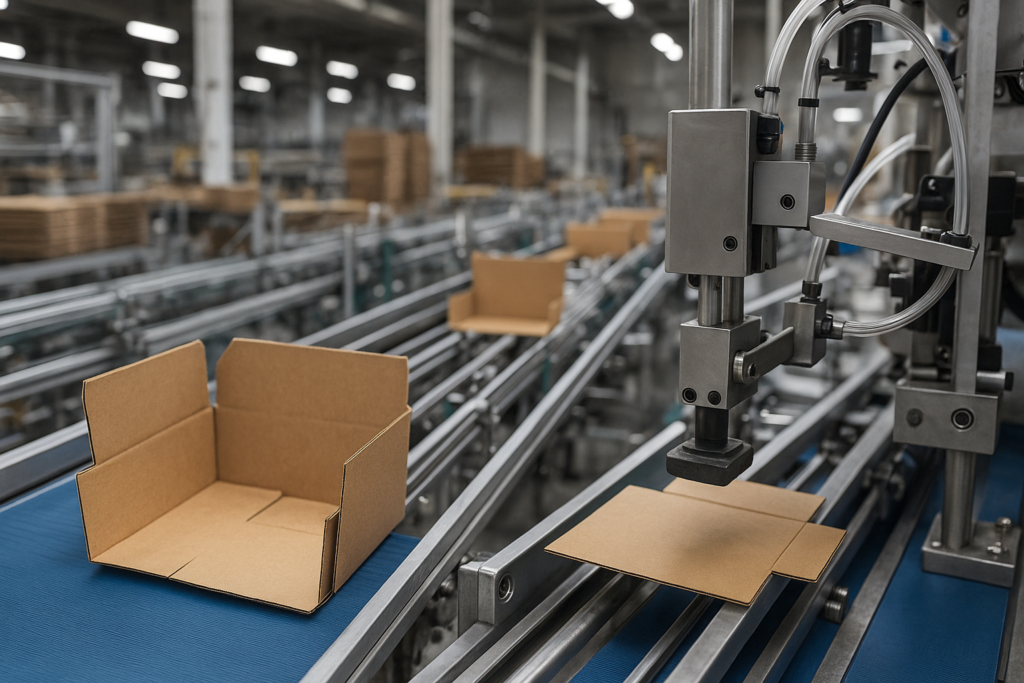
One of the most significant concerns of modern manufacturers today is sustainable packaging. With the increasing pressure on the environmental efficiency of the packaging plant, the demand of the global brands towards greener solutions, and the increasing environmental demands by the governments, the packaging plant is under pressure to minimize the waste, decrease the resource use, and become more efficient. To fulfill such expectations, it takes more than material changes. It requires machinery that can support cleaner processes, reduce errors, and achieve consistent output with minimal scrap.
Modern packaging equipment plays an essential role in this shift. New levels of automation, smart glue systems, vision inspection, and the use of data to control factories enable factories to make more out of less. In this paper, we discuss how the recent technology of machinery directly leads to waste minimization, energy conservation, and sustainability objectives, and how packaging units are able to make sound decisions during the upgrade of their production lines.
Why Machinery Has a Direct Impact on Waste Reduction
The problem of waste in the packaging industry is due to the misfeeds, misalignment, over-gluing, energy loss, and defective cartons that have to be scrapped. Although the operator competence and workflow are important, the machinery is the one that defines the stable performance of the production line.
Machines with precision cut down scrap, as well as can sustain quality at faster rates. Waste is inevitable when equipment is outdated, imprecise, or too manual. More recent automated systems reduce this danger greatly due to the integration of mechanical accuracy and intelligent monitoring.
1. Precision Handling Helps Reduce Material Loss
One of the biggest contributors to wasted board is poor handling accuracy. When blanks shift or fail to feed properly, whole batches may need to be discarded. Modern equipment uses servo-controlled feeders, automatic alignment systems, and stable folding mechanisms to ensure that each sheet enters and exits the machine correctly.
Better accuracy results in fewer misfolded cartons and fewer jams, which means less downtime and dramatically lower scrap generation.
2. Vision Inspection Prevents Defects Before They Multiply
In-line vision inspection has become a key component of sustainable production. These camera systems continuously monitor every carton for defects like glue misplacement, incorrect folds, print misregistration, and board damage.
If something goes wrong, the system detects it instantly, allows early intervention, and prevents hundreds of defective cartons from being produced. This reduces waste, improves customer satisfaction, and minimizes rework.
3. Smarter Glue Systems Reduce Overuse and Rejects
The most typical sources of waste are the glue application. Excessive use of glue causes oozing, failures, and sticky faults, whereas excessively less glue causes weak cartons, which have to be scrapped.
New adhesive systems control the volume of glue in real-time depending on the type of board, temperature, and the running speed. Robotic sensors provide a uniform adhesive drop and limited glue wastage, and rejected cartons. It is particularly helpful when a cardboard box folding machine is used, and the exactness of gluing will influence the quality of the products.
4. Predictive Maintenance Reduces Waste Caused by Breakdowns
Breakdowns in machines lead to loss of time, forced restarts, and rework, all of which are unnecessary wastes. Predictive maintenance is an IoT-driven maintenance approach that detects problems before they fail.
Predictive algorithms enable timely alerting of operators by monitoring vibration, load of the motor, temperature, and glue usage. This contributes to easy operations, fewer breakdowns, and fewer defective productions.
5. Energy-Efficient Components Cut Carbon Footprint Per Carton
Energy usage is a major sustainability metric. Modern packaging machines incorporate:
- High-efficiency servo drives
- Intelligent standby modes
- Low-friction mechanical designs
- Optimized vacuum and airflow systems
These upgrades significantly reduce electricity consumption. When a line uses less energy per carton produced, the environmental impact is lower, even if production output increases. This makes energy-efficient machinery a foundational element of sustainable packaging.
6. Modular Machines Support Long-Term Sustainability
Packaging needs change over time. Instead of replacing entire machines, modular systems allow factories to add or upgrade components such as:
- Inspection modules
- Feeding systems
- Gluing units
- Delivery enhancements
This reduces waste from equipment turnover and extends machine life. It also gives teams the flexibility to adapt to future formats, materials, or sustainability requirements without major financial or environmental cost.
7. Integrated Digital Printing + Finishing Minimizes Setup Waste
Digital printing continues to grow in the packaging industry, but without proper alignment between printing and finishing, waste increases. When finishing equipment syncs perfectly with digital output, fewer test runs are needed, and misaligned cartons drop significantly.
This results in cleaner production, tighter quality control, and less board wasted during setup.
8. Data-Driven Optimization Supports Continuous Improvement
Today’s advanced machines produce detailed data about:
- Run speed
- Glue usage
- Reject rates
- Energy consumption
- Operator adjustments
This data supports continuous improvement initiatives. By analyzing trends, teams can identify waste points and correct them with targeted adjustments. Manufacturers that use machine data effectively often see long-term reductions in scrap, downtime, and energy use.
What to Ask When Choosing Machinery for Sustainability
If you are evaluating new equipment or comparing suppliers, these questions help ensure a sustainable investment:
- What is the average kWh consumed per 1,000 cartons?
- Does the machine include servo-driven adjustment and recipe-based changeovers?
- Are vision inspection modules available as standard or upgrade options?
- What type of sensor data does the machine provide for predictive maintenance?
- Can the machine be upgraded later, or must it be replaced completely?
- How is glue application controlled and optimized?
- What is the estimated scrap reduction compared to conventional systems?
Asking these questions reveals how capable a machine is at reducing waste in both the short and long term.
A Look at Real-World Impact
Even small improvements in accuracy and inspection lead to measurable reductions in waste. For example, reducing rejects from 20 cartons per 1,000 to just 5 cartons results in:
- Lower board usage
- Less adhesive consumption
- Reduced energy per usable carton
- Better overall equipment effectiveness (OEE)
These gains multiply across thousands of runs per year, creating a meaningful sustainability impact.
Final Thoughts
Sustainable packaging is not just related to materials and design. It relies greatly on the equipment that transforms a flat board into finished packaging. Modern machinery introduces accuracy, smartness, and efficiency that enable makers to discard waste, enhance energy output, and more stable quality on a large scale. Regardless of an upgrade or just merely exploring future opportunities, investing in technology that is relevant to sustainability objectives would enhance the performance of the environment and operations.
To the manufacturers that are researching the automation upgrades or the ones that are comparing the suppliers, the ones that seek to know the supplier of the automatic folder gluer machine or a cardboard box folding machine, it is advisable to seek the advice of the seasoned players in the industry. Cenwan helps organisations examine sustainable machinery options and provides counsel on the choice of equipment that suits the modern environmental and production requirements.