Air compressors are fundamental power sources in industrial environments, driving a wide range of pneumatic tools and systems. A reliable compressed air supply is critical for maintaining productivity in maintenance shops, warehouse operations, and manufacturing areas. This article provides an overview of stationary air compressors, focusing on their role, technical considerations, and safe operation for professionals in warehouse management, equipment operation, and logistics.
Introduction and Operational Importance
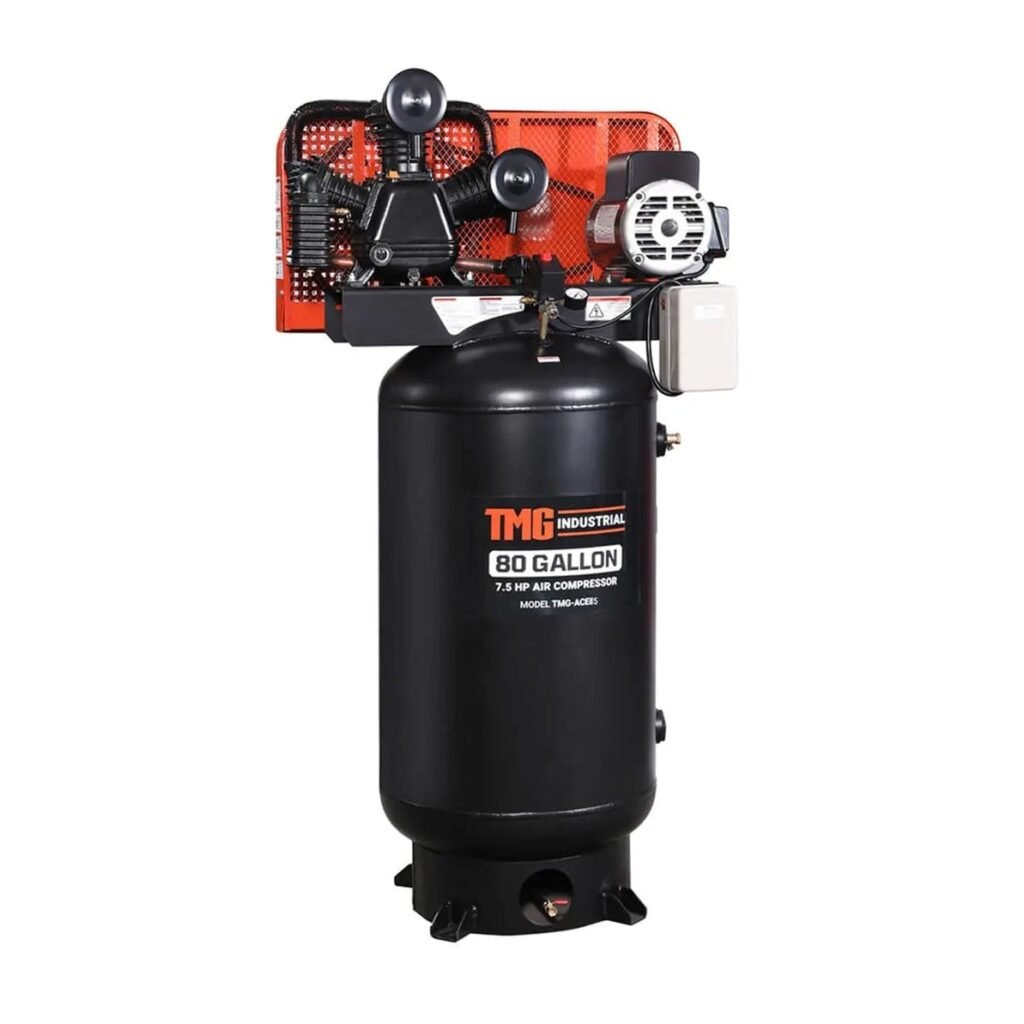
Stationary air compressors convert electrical energy into pressurized air stored in a tank. This air is then distributed to power tools, actuate machinery, and operate control systems. Their importance in logistics and industrial settings cannot be overstated; they are the backbone for tasks like tire inflation, parts cleaning, and operating pneumatic nailers or wrenches. A model like the 80 Gallon 7.5 HP Stationary Electric Air Compressor is designed to provide a high volume of air for continuous operation, supporting demanding workshop environments.
Technology and Application Overview
These compressors typically use a reciprocating piston driven by an electric motor to compress air into a large storage tank. Common industrial applications include:
- Operating impact wrenches for equipment repair.
- Powering air-powered hoists and lifts.
- Supplying air for spray painting booths.
- Running pneumatic staplers for packaging and crate assembly.
The 80 Gallon 7.5 HP Stationary Electric Air Compressor is suited for shops with multiple simultaneous air demands.
Efficiency, Safety, and Productivity
Efficiency relates to the compressor’s ability to deliver adequate air flow with minimal energy waste. Safety is paramount due to high pressure and electrical components. Productivity depends on having sufficient air volume to prevent tool stalls during peak usage.
Technical Foundations and Capacity
Key Specifications
Understanding compressor specifications is essential for selection. Important metrics are tank size, motor horsepower, and cubic feet per minute (CFM) delivery. The 80 Gallon 7.5 HP Stationary Electric Air Compressor offers a large reservoir for sustained tool use and a powerful motor for a high air delivery rate.
System Components
A complete system includes the compressor, air dryer, filters, regulators, and distribution piping to ensure clean, dry air at the correct pressure.
Factors Affecting Performance and Safety
Performance depends on:
- Electrical supply matching the motor requirements.
- Ambient temperature and ventilation.
- Regular maintenance to prevent oil contamination and wear.
Safety Considerations and Best Practices
Critical safety practices include:
- Installing pressure relief valves and checking them regularly.
- Ensuring the unit is grounded and on a stable surface.
- Draining the tank of condensate daily to prevent corrosion.
- Using safety glasses and hearing protection during operation.
Related Equipment and Tools
A stationary compressor system is part of a larger setup including:
- Air hoses and quick-connect couplers.
- Pneumatic tools and accessories.
- Air treatment components like filters and dryers.
Advantages and Limitations
Advantages include reliable power for multiple tools and durability for shop use. Limitations can involve high initial cost, electrical requirements, and the need for regular maintenance.
Real-World Example
A logistics center uses an 80-gallon stationary compressor to power tools for maintaining its fleet of forklifts and pallet jacks. This ensures repairs can be performed quickly in-house, reducing vehicle downtime.
Conclusion and Future Trends
Stationary air compressors are essential for industrial productivity and maintenance. Key considerations are proper sizing, installation, and safety. Future trends point toward more energy-efficient motors and integrated smart monitoring systems to track performance and predict maintenance needs.