Software development is changing faster than most businesses can keep up with. What worked even two or three years ago now feels slow, rigid, or expensive. By 2026, companies that rely on outdated development approaches will struggle to scale, innovate, or compete.
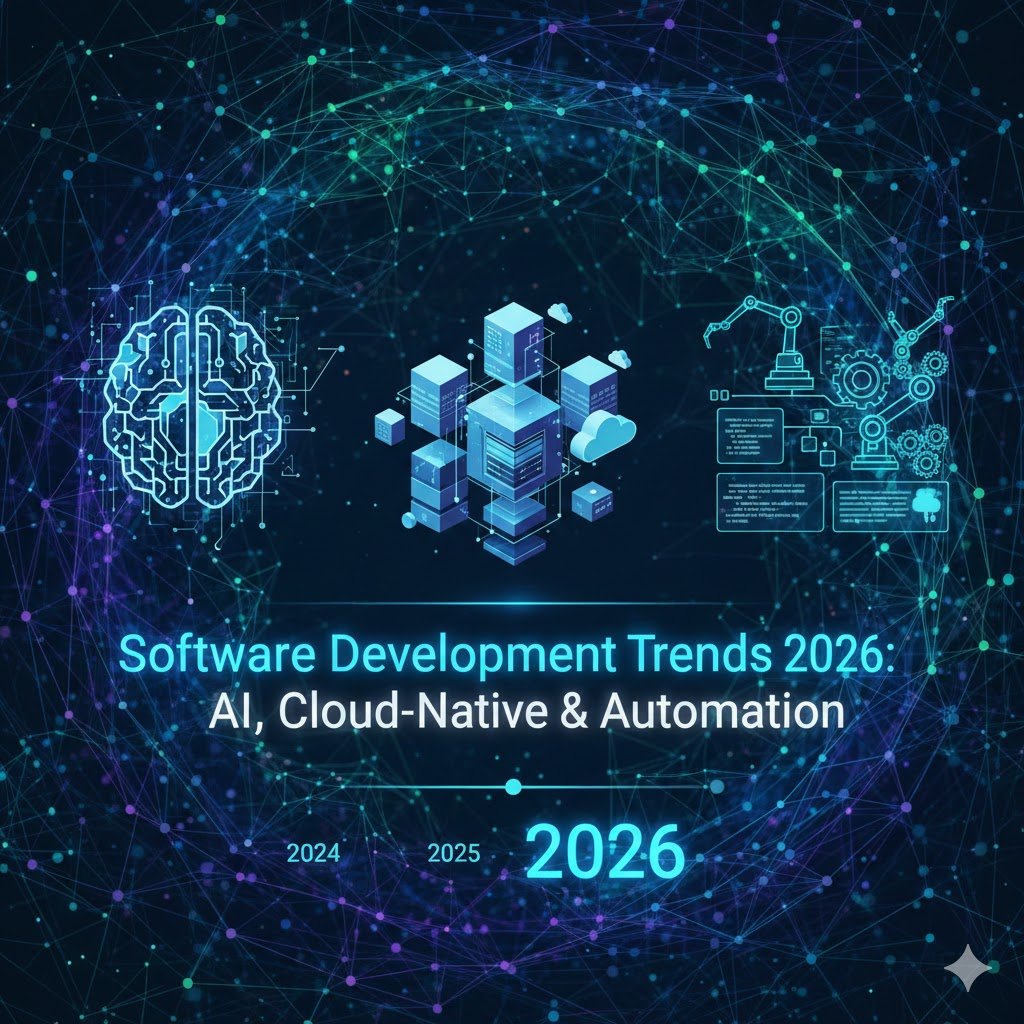
Three forces are shaping this shift more than anything else: AI, cloud, and automation. These trends are not just technical upgrades. They are changing how digital products are designed, built, deployed, and maintained.
This article breaks down the most important software development trends for 2026 in a simple, practical way and explains what they mean for businesses working with a custom software development company. So, let’s get started
Why Software Development Is Evolving So Fast?
Customer expectations are higher than ever. Users want faster apps, smarter features, and seamless experiences across devices. At the same time, businesses need to move quickly, control costs, and keep systems secure. Traditional development models struggle under this pressure. Long release cycles, heavy infrastructure, and manual processes slow everything down. By 2026, the highlighting specialities of successful software teams will be:
- Speed of delivery
- Ability to adapt and scale
- Smarter use of data and automation
- Strong alignment between business goals and technology
This is where AI, cloud-native architecture, and automation come in.
Now, let’s explore the top software development trends shaping the future for businesses in 2026.
- Artificial Intelligence Becoming Crucial
Artificial Intelligence has become a core part of every developer’s toolkit. By 2026, it will become a necessity. According to reports, 84% of developers are already using or planning to use AI tools, which is higher than last year (76%). With tools like GitHub Copilot, Claude, Cursor, and Windsurf, developers get real-time context-aware suggestions, code refactoring, and automated documentation.
Developers in every growth-focused custom software development company use AI to write and debug code, and manage entire workflows from designing architecture and generating tests to deploying and monitoring apps. This transformation has redefined productivity by allowing developers to communicate naturally with their assistants. Earlier, the developers used to build apps in months, but now they only take weeks.
Additionally, autonomous AI agents have emerged as powerful co-workers across industries, handling customer support through AI voice agents, managing CI/CD pipelines, or coordinating backend processes without manual intervention. With the growth of these systems, the emergence of a new era of intelligent and self-directed development becomes inevitable.
- Cloud-Native Helping Businesses Grow
In 2026, cloud-native development will no longer be a modern approach. It will be a necessity. However, it doesn’t only mean hosting an app on the cloud. It means:
- Building software using microservices
- Using containers and orchestration tools
- Designing systems that scale automatically
- Planning for failure and recovery from day one
This approach allows applications to handle growth, traffic spikes, and updates without major rework. Businesses should adopt this trend to get faster releases, better performance, lower infrastructure costs, and easier global expansion.
For startups and enterprises, this flexibility is critical. Many companies now choose digital product engineering services specifically for cloud-native expertise, because retrofitting legacy systems later is expensive and risky.
- Low Code/No Code Development Empowering Non-Tech Citizens
You don’t need to be a developer to build an app. One of the most recent and popular transformations is the low-code platforms and no-code platforms. These softwares allow users to develop software by dragging and dropping blocks or writing very minimal lines of code. According to Gartner, the market for these technologies will grow to $44.5 billion by 2026.
These platforms help with digital transformation and cut backlog quickly. However, applications built by citizen developers often lack security checks or version control. That’s where platform engineering teams come into play. They introduce API rules, automated security scans, and a link to git repositories, allowing every form or report to meet company and compliance standards.
- Product Engineering Over Project-Based Development
By 2026, more businesses will move away from one-time development projects toward long-term product engineering. This shift means that companies now want ongoing improvement, data-driven decisions, and continuous optimization. Product engineering focuses on user feedback, performance metrics, and iterative enhancements.
This software development trend aligns better with fast-changing markets and customer needs. Partnering with a custom software development company such as Essential Designs, that brings strong product engineering thinking, turns the relationship into a strategic partnership rather than just a vendor arrangement.
- IoT Networks Enabling Real-Time Operational Optimization
IoT allows leaders to optimize asset performance, predict maintenance needs, and unlock revenue through data-driven services. Enterprises are adopting IoT to drive efficiency, improve customer experiences, and inform high-impact strategic decisions.
By the start of 2025, about 18.8 billion IoT devices were connected worldwide. This number is twice the number of people on Earth, each one creating data for developers to turn into helpful apps and tools. Statistics predict that the market will reach $41 billion by 2030. This is a big deal for software developers in 2026 because:
- More devices mean more chances to develop digital solutions
- Nonstop data streams help engineers speed up the development process
- IoT developers can get more opportunities and help businesses save time and cost
What do these trends mean for Businesses?
By 2026 and beyond, software development success will depend less on tools and more on mindset. Businesses should:
- Invest in scalable architectures early
- Treat AI and automation as enablers, not shortcuts
- Focus on long-term product value, not just launch dates
- Work with partners who understand both technology and business
Choosing the right digital product engineering services partner will directly impact speed, quality, and ROI.
Final Thoughts
By 2026, these software development trends will no longer be industry talking points. They are strategic levers that an organization must use to strengthen competitive advantage, improve operational resilience, and sustain long-term growth.
When applied with intent, these trends help businesses accelerate innovation cycles, optimize cost structures, and protect critical data assets. Technologies such as microservices and distributed computing enable scalability and high availability at a global level.
At RipenApps, we work as a strategic technology partner to help enterprises translate these trends into practical, business-aligned solutions. Whether you are modernizing legacy systems or architecting resilient digital platforms, our teams bring the expertise and execution depth required to move from strategy to impact.