Introduction
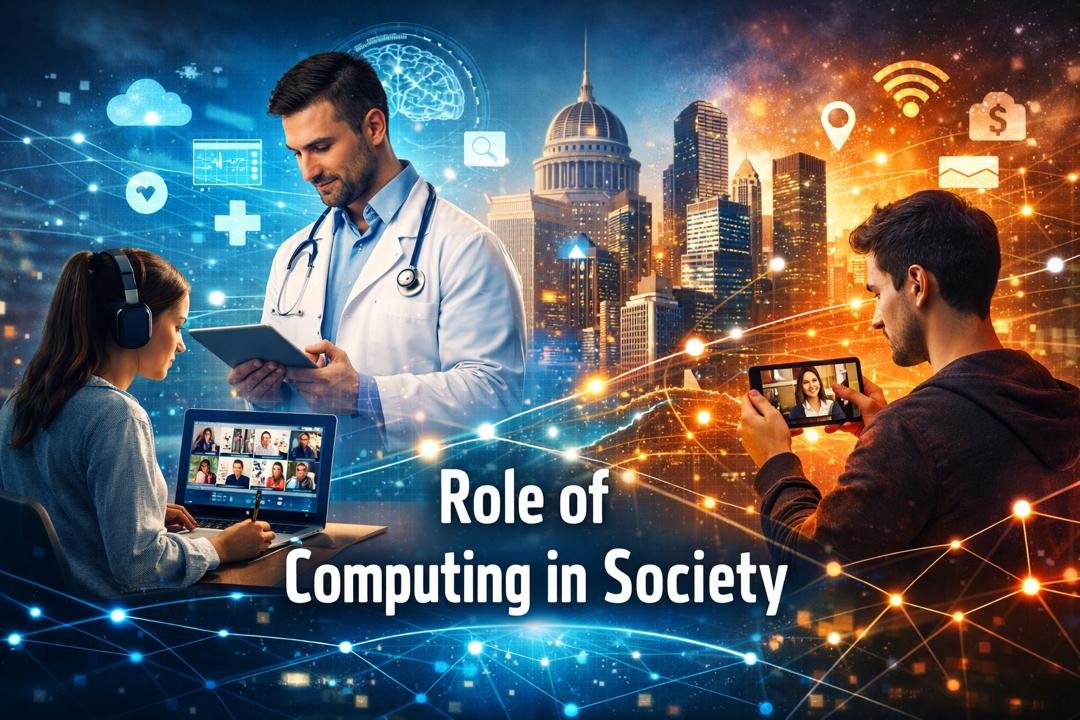
The role of computing in society has become one of the strongest forces shaping the modern world. Smartphones in our pockets and sophisticated hospital systems and online classes are only some examples of computing technologies that have taken over almost every aspect of human life. What started out as simple devices to help in computations has developed into advanced digital networks that take charge of communication, learning, governance, entertainment, delivery of healthcare services, and social interaction. Computers are not limited to business efficiency today but they are also a necessity in social development, service enhancement, and quality of life.
Computing in both developing and developed countries is transforming the ways in which individuals in these countries obtain education, medical services, deal with government, receive entertainment services, and solve daily challenges. Students are able to take online classes even in distant villages, doctors are able to diagnose the patient with the help of digital tools, governments are able to serve the citizens more effectively, and artists are able to reach the world population with their digital programs. These changes demonstrate that computing is no longer optional it is an essential component of the contemporary civilization.
This paper will discuss how the role of computing in society has been applied in different industries like education, healthcare, government, entertainment, agriculture, transportation, and finance. The discussion shows how computing can be used to improve service delivery, inclusion, efficiency, and general living standards by looking at examples of real-world applications of computing, its advantages, and societal contribution.
Understanding Computing in Society
Computing is the process in which computer systems, computer software, computer networks and digital technologies are used to process, store, retrieve, analyze and share information. It encompasses hardware (desktops, laptops, tablets, servers and smartphones) and software applications, databases, cloud systems, artificial intelligence and internet-based platforms.
The incorporation of computing in the society has changed the common lifestyles and patterns of work. Jobs which were once done in weeks can now be done within a few seconds. Intercontinental communication occurs immediately. Heavy data can be saved, retrieved and processed so as to aid in making improved decisions. Above all, computing brings people, institutions, and services together in a manner that was previously unattainable and contributes to the minimization of the distance, time, and cost barriers.
Computing in Education
Computing has had a great influence on changing the area of education. The use of digital technology has transformed the manner in which knowledge is produced, dispatched and evaluated.
Virtual Classrooms and E-Learning
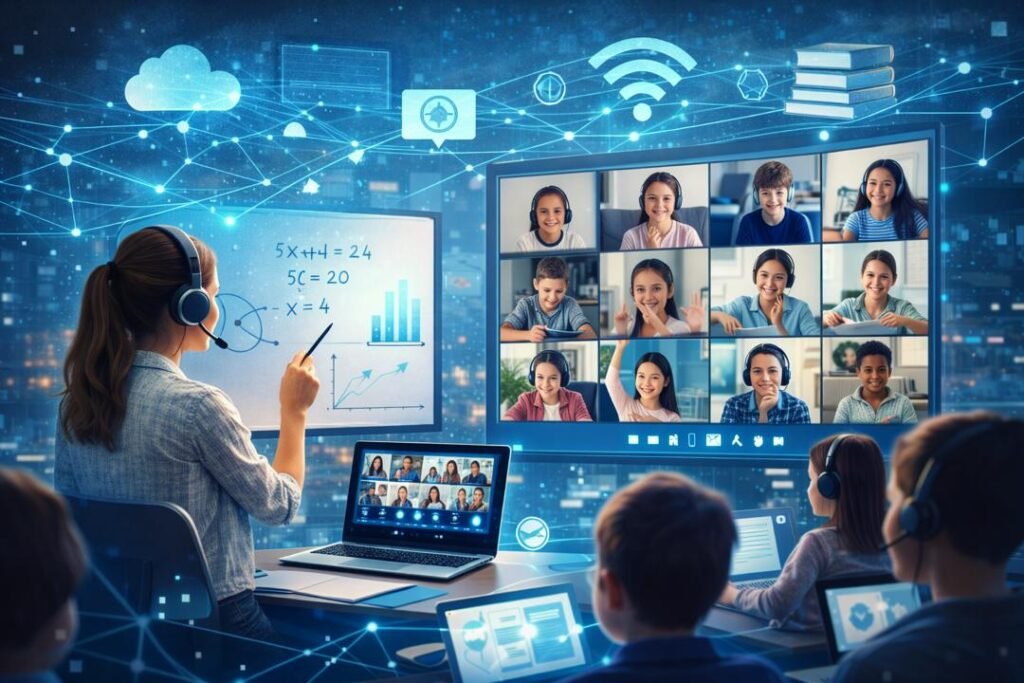
The advent of computers and the internet has made learning not confined to the physical classrooms. Google Classroom, Moodle, Coursera, Zoom, and Microsoft Teams are e-learning platforms that enable students and teachers to communicate with each other at any part of the world. With the COVID-19 pandemic, millions of students were able to resume their education despite school closures since it became possible through computing.
Learners are now able to watch live or on-tape lectures, place assignments, online exams and coordinate with peers using common digital resources. The flexibility is an advantage to learning students living in remote locations, have physical disabilities or who work with their education.
Digital Learning Resources
Computing offers e-books, online libraries, educational videos, simulations as well as virtual labs. Students are not confined to textbooks printed in hardcopy; instead, there is an option of accessing interactive materials, which make learning more practical and entertaining. An example is where simulations are applicable in science courses where students can observe chemical reactions, the movement of planets or biological processes, which might be too harmful, costly, or complicated to do in a real laboratory.
Individualized and responsive Learning
Computing enables individual learning through artificial intelligence and learning management systems. The software can monitor the progress of a student, allow seeing the learning gaps and offer the resources that are suitable to their needs. Digital data helps teachers track learners’ performance and revise the instruction strategies to better suit each learner.
School Administration
School management is also enhanced by computing. Student registration, attendance, grading, scheduling, communication between parents, and financial management are done using digital systems. The systems save time and resources that teachers and administrators can use effectively because of their reduced paperwork, enhanced accuracy and efficiency.
Computer in Healthcare
The role of computing in society has transformed healthcare by enhancing diagnosis, treatment, record maintenance and care of patients.
Electronic Health Records
Electronic health record systems have replaced the use of paper files in hospitals and clinics. Physicians have easy access to the history of patients, laboratory data, prescriptions, and plans of treatment. This minimizes medical mistakes, enhances communication among the healthcare providers, and provides faster and safer care.
Medical Imaging and Diagnosis
Computing is also significant in the analysis of medical imaging of X-rays, CT scans, MRIs, and ultrasounds. High-tech software assists physicians in identifying such diseases as cancer, heart conditions, and brain disorders with more precision. Artificial intelligence systems are able to identify the patterns that human eyes cannot easily identify.
Remote Care and Telemedicine
Video calls and mobile applications together with online portals allow patients to remotely consult doctors with the help of computing and internet technology. This is particularly useful to rural population who cannot access hospitals. Telemedicine is time-saving, cheaper in terms of traveling, and provides patients with chronic diseases with a chance to be constantly observed.
Hospital Management Systems
Computer aids in the running of a hospital like scheduling of appointments, billing, inventory of pharmacies, organizing of staff and monitoring of patients. These systems enhance efficiency and waiting time, as well as, improving the overall experience of the patient.
Computer technology in Government and Public Services
Computing is being used in enhancing transparency, accountability, and civic participation by governments worldwide.
E-Government Services
The citizens are now able to apply passports, paying taxes, renewing licenses, registering business ventures, and accessing information on the government online. These e-government highlight the role of computing by shorten queues, reduce corruption and also make the services provided by the government quick and more accessible.
Digital Identity Systems
Computerized systems are used to maintain national identity card systems, the voter registration and social welfare databases in many countries. Such systems can be useful in deterring fraud, maintaining proper records and aid in equitable distribution of government benefits.
Smart Cities
Driving Smart city computing is used in traffic control, trash management, street lights, surveillance cameras and energy monitoring. The use of sensors, data analytics and artificial intelligence will provide cities with a more efficient and sustainable way of operations.
Computer in Entertainment and Media
Computing technologies have totally transformed the entertainment process. Film, animation, music, video games and visual effects are produced by digital means. Netflix, YouTube, and Spotify are streaming services, which enable viewers to consume content at any moment and everywhere. Gaming, virtual reality, and augmented reality make the user experience immersive to users worldwide.
Computing in Other Sectors
In addition to education, healthcare, government and entertainment, computing still remains a transformative activity in numerous other sectors, which are important in the daily life. These industries are using digital technologies to enhance efficiency and cut costs, improve safety and achieve sustainable development.
Computing in Agriculture
One of the most ancient activities of people is Agriculture, which is currently being re-defined by the new computing. Digital tools can be used to enhance crop production, resource management, and minimize losses among farmers.
Computing is also used in precision farming where sensors and satellite information are utilized to track soil moisture, temperature, crop health, and the weather conditions. Software processes this information to guide farmers in making decisions on when to plant, irrigate, fertilize or harvest. Farmers are also given real-time market prices, weather forecasts, and pest control tips via mobile applications.
Computer powered drones and GPS systems make farmers map their fields and spot areas that need any attention. These tools minimize wastages, maximize production, and promote food security.
Computing in Transportation
Computing plays a vital role in the transportation systems in order to be safe and efficient. In the modern world, computerized systems are used to control the engines, braking, and fuel consumption and navigation systems in modern vehicles.
The GPS navigation software assists a motorist to get the quickest paths, evade traffic, and destinations without difficulty. Traffic systems manage their traffic lights backed by cameras, sensors, and data analytics to avoid congestion, accidents, and control traffic lights.
Passengers and businesses can comfortably plan travel and transport goods on online ride-hailing platforms, ticket booking software, and cargo tracking software. New technologies like self-driving vehicles and electric cars are fully dependent on sophisticated computer systems.
Computing in Banking and Finance
Financial industry is among the highly computerized industries globally. Computing systems help banks to maintain accounts of customers, transact, identify fraud, and deliver digital services.
Mobile banking has enabled customers to send or receive money, pay bills, take loans, and check account balances through mobile banking applications and the Internet. Computer systems also operate automated teller machines (ATM) through which customers can access cash at any period.
This is because artificial intelligence and data analytics can assist financial institutions to detect suspicious activities, minimize fraud, and invest more wisely. Without computing, the contemporary banking would be tedious, risky and slow.
Computing in manufacturing and industry
Computing in factories allows factory workers to control machines, run production lines, and quality control. Computer- aided design (CAD) and computer-aided manufacturing (CAM) software assists engineers to create and manufacture products accurately.
Computer controlled robots also do repetitive or hazardous jobs and enhance the safety and productivity of workers. The inventory management systems monitor raw materials and completed products; hence, seamless operations.
Computing in Communication Social Networking
The current communication is facilitated by computing in the form of email, messaging apps, social media, and video conferencing. Human beings are able to establish instant connections with one another all over the globe communicate and create communities.
Social media depends on computing algorithms to rank information, promote friends and customize user experiences. These instruments have transformed the way individuals interact, l…
Societal Benefits
The role of computing in society fosters communication, lowers cost, improves service accessibility, promotes innovation, and improves quality of life. It makes people powerful and institutions stronger.
Problems and Moral Issues
Cybercrime, privacy of data, online inequality and loss of jobs are only some of the issues that need to be addressed by educating, policymaking, and use of technology responsibly.
Conclusion
The role of computing in society has ceased to be an affair of business, it is an effective wave that is sweeping through the diverse sectors of the society. Digital technology makes the difference in the efficiency, accessibility, and quality of life in classrooms and hospitals, in government offices and entertainment studios. When computing is used in different segments, it can be seen that computing plays a crucial role in creating a smarter, healthier and connected world.
Get more well researched information about the role of computing in different sectors of society here.