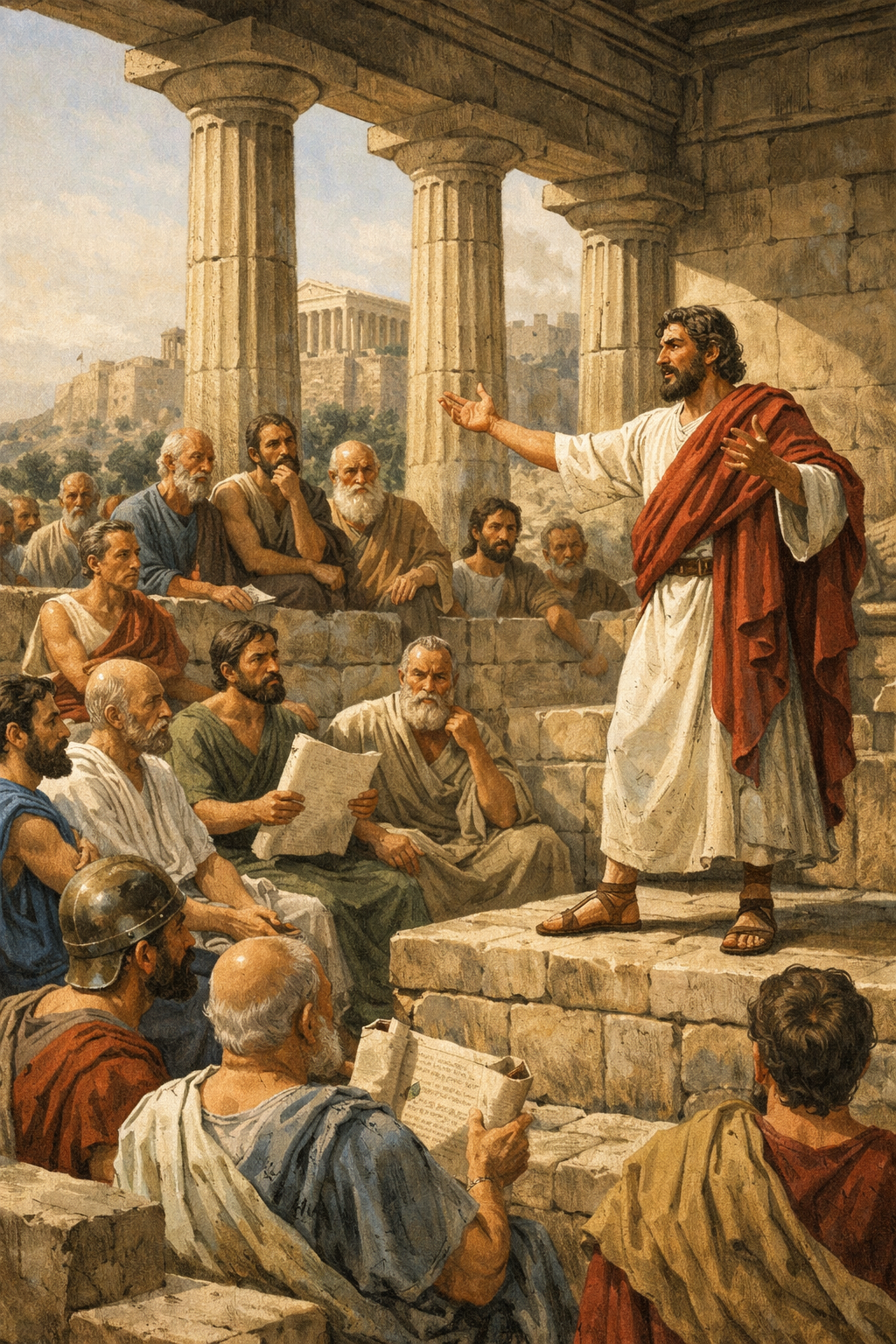
Rhetoric, an art of persuasion, has been used as an element of human communication since thousands of years ago. Its roots go back to ancient societies, where communities understood the ability of language to impact thinking, motivate action, and shape communities. The study of rhetoric in ancient civilizations gives us a clue of how ancient scholars created models that are still relevant in the current communication, politics, and education.
Rhetoric and the Rhetoric of Ancient Greece
Formal rhetoric was studied in ancient Greece which started around 5 th century BCE, the era of lively political action and discussion. The fact of the matter was that in the democratic city-states, specifically Athens, citizens were supposed to engage in civic life by speaking in the assembly as well as in the court. This need was the basis of the systematic study of persuasive communication.
Greek Thinkers and their contributions at the beginning of history
A number of Greek philosophers and teachers were the first to study rhetoric. One of the earliest rules of organizing arguments and instruction in persuasion was developed by Corax of Syracuse and his student Tisias. They also stressed that it is necessary to be clear, logically organized, and strategic in making speeches in a crowd.
Rhetorical theory was further developed by Socrates, Plato and Aristotle. Plato was not opposed to the power of rhetoric but recognized the ability of rhetoric to influence the opinion of the populace as well as the possibility of its misuse. But the father of rhetoric as a discipline is regarded as Aristotle. Aristotle in his masterpiece, Rhetoric, described three forms of persuasion:
- Ethos – Appeals on the credibility and character of the speaker.
- Pathos – Appeals to emotions of the audience.
- Logos – Appeals to the reason and logic.
These ideas offered a basis of understanding and designing effective communication, which still applies in the modern media and leadership.
Rhetoric and Public Life
Rhetoric in the Greek society was not just an academic activity but a civic activity. The practice of persuasion was applied by citizens in political arguments, law courts and even philosophical arguments. The focus on logic, fact and appeal to morality influenced the way citizens judged arguments and decision-making. The introduction of rhetoric at such a young age into society shows that it has remained a significant means to influence the masses.
Roman Rhetoric: Growth and Systematization
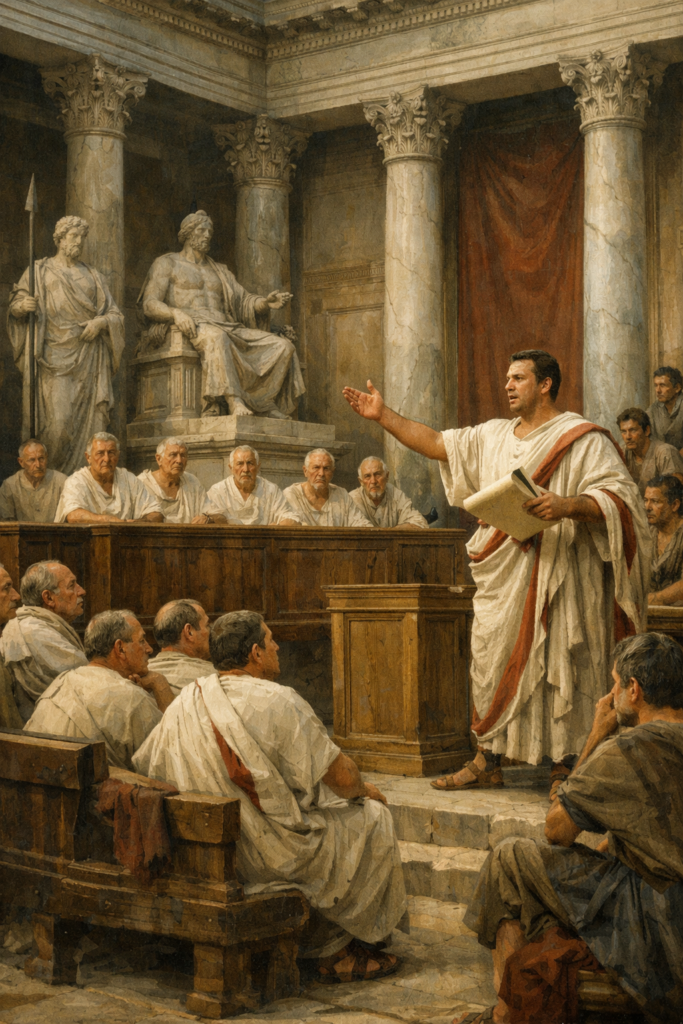
Although the conceptual foundations of rhetoric were laid by Greek philosophers, the Romans developed and institutionalized the practice, making it an important part of law, politics and education.
Key Roman Rhetoricians
Cicero and Quintilian are just some of the Roman personalities whose contributions in the development of rhetorical theory were essential. Cicero also served as a proponent of style and delivery, believing that to be a good persuader a person should not only be a good arguer but also command the use of language and oratory skills. In his Institutio Oratoria, Quintilian concentrated on the education and the makeup of character and believed that a good orator is a good man.
Rhetoric in Roman Society
Public speaking was of great importance to politicians, lawyers and leaders in the Roman Republic and the Roman Empire. The success of both legal action and political campaign depended on the skill of the person speaking in legal and political campaigns respectively, to convince the judge or jury and the people of the choice of words. The rhetoric schools were schools that taught young men the art of persuasion, which was a combination of theory and practice in the fields of declamation, debate, and composition.
The Roman style focused more on the performative nature of rhetoric, where voice modulation, gestures, and emotional connection with the audience were at the forefront, which still has a certain impact on oration practices in the modern world.
Rhetorical Education and Rhetorical Techniques
Greek and Roman societies were both based on education in rhetoric. The students got to study the art of speech analysis, the creation of a speech and how to present and convey it with clarity and style. This education was instrumental in equipping them to live in society as well as teach them to think critically and make ethical judgments.
The Five Canons of Rhetoric
Roman education codified rhetoric teaching with the 5 canons of rhetoric:
- Invention (Inventio) – It involves coming up with arguments and coming with convincing ideas.
- Arrangement (Dispositio) – Making good order.
- Style (Elocutio) – the art of being able to use language in a way that is understandable, beautiful, and memorable.
- Memory (Memoria) – Learning speeches to make them effective.
- Delivery (Pronuntiatio) This follows pronouncing the speech with confidence and expressiveness.
These canons formed a full-scale model of creating the skill of persuasion and are still relevant in the contemporary rhetoric and communication research.
Ancient Rhetoric in the Modern Communication
The values that were set several centuries ago still guide current practice in the areas of media, law, and leadership. The study of the origin of rhetoric can enable contemporary communicators to make a more convincing message, persuasive, and able to analyze arguments.
Rhetoric in Modern Media
Rhetorical strategies are used today by media professionals to attract audiences. Everyday news pieces, advertising campaigns and posts on social media platforms tend to be based on ethos, pathos and logos so as to create credibility, emotion and information in a manner that is persuasive. Speeches made by politicians, advertisements by service organizations and marketing campaign reflect methods that were created by orators in Greek and Roman centuries ago.
Rhetoric in Law and Advocacy
It is common that legal professionals use rhetorical principles when advocacy in a courtroom. To persuade jurors, lawyers build arguments (logos), build credibility (ethos) and address the emotions of their juries (pathos). Such a direct relationship between the rhetoric paradigm of the ancient world and the contemporary law shows the timelessness of early theories.
Persuasive Communication and Leadership
Rhetoric is also used by the leaders in politics, business, and social movements to mobilize communities, inspire, and persuade. A good leadership can be based on an articulation of vision, the development of strategic arguments, and emotional appeal, all of which are based on classics in rhetorical education.
Relating Ancient and Modern Communication
The study of rhetoric in ancient civilizations shows a connection between the human communication in millennia. Although the way technologies and media are developed has changed, the basics of persuasion, which include credibility, emotion, and logic, are at the core. Knowing these tricks will allow people not only to create more convincing messages, but also to analyze the persuasive efforts that they are exposed to on a daily basis, critically.
Ethical Considerations
There are ancient philosophers who cautioned against the misuse of rhetoric. Plato had warned that the skill of persuasion might be used immorally by people whereas Quintilian emphasized on use of morality in communication. The challenges of persuasion are the same in modern communication, which highlights that the ethical persuasion of media, politics, and corporate messages is essential.
Applications in the Present Day
Rhetorical techniques can be used in different situations other than the conventional oratory. The art of writing and creating convincing presentations as well as making effective pitches are based on the principles developed by Greek and Roman rhetoricians. Rhetoric also enhances critical and analytical thinking, which helps one to analyze arguments and make a sound judgment.
Conclusion

Rhetoric as a study of the ancient societies brings out the perennial nature of persuasion communication. Early philosophers worked on theories and techniques of social influence at the assembly halls of Athens to the courts of Rome and influenced the discourse, education, and politics of a population. These rules still affect the contemporary media, law and leadership proving that the art of persuasion remains as applicable nowadays as it was thousands of years ago.
We are able to understand the power of language to influence behavior, ideas and change the society by looking into the roots of rhetoric and its timeless influence. Knowing the origins of persuasion does not only do a service to the intellectual achievements of ancient civilizations, but it also prepares us with the instruments, which will allow us to be more effective and ethical communicators in the modern world.