Introduction
The skill of programming, a problem-solving skill, is perceived as a complex one. Learning to code is not an easy process, as it presents a series of challenges to the learner that demand logical reasoning as well as creativity. Nevertheless, it is normal that new programmers are likely to make some errors when addressing the problem of coding. Such mistakes may result in ineffective solutions, frustration, and a slower learning curve. By making early awareness of these pitfalls and adherence to best practices, programmers can create cleaner code, debug more effectively, and come up with better problem-solving skills.
Here, we are going to consider some of the most common errors in programming problem-solving, such as not understanding problem requirements, complicating the solutions too much, and offering viable solutions to prevent them. These are some of the strategies that you should understand and apply to be a better programmer.
Poor Definition of Problem Requirements
Poor interpretation of the requirements of a given programming problem is one of the most frequent errors that beginners commit. It is a common behavior among new programmers to jump directly into the code-writing without spending enough time analyzing the problem. It may lead to the absence of solutions dealing with the real problem or oversight of the key edge cases.
How to Avoid This Mistake:
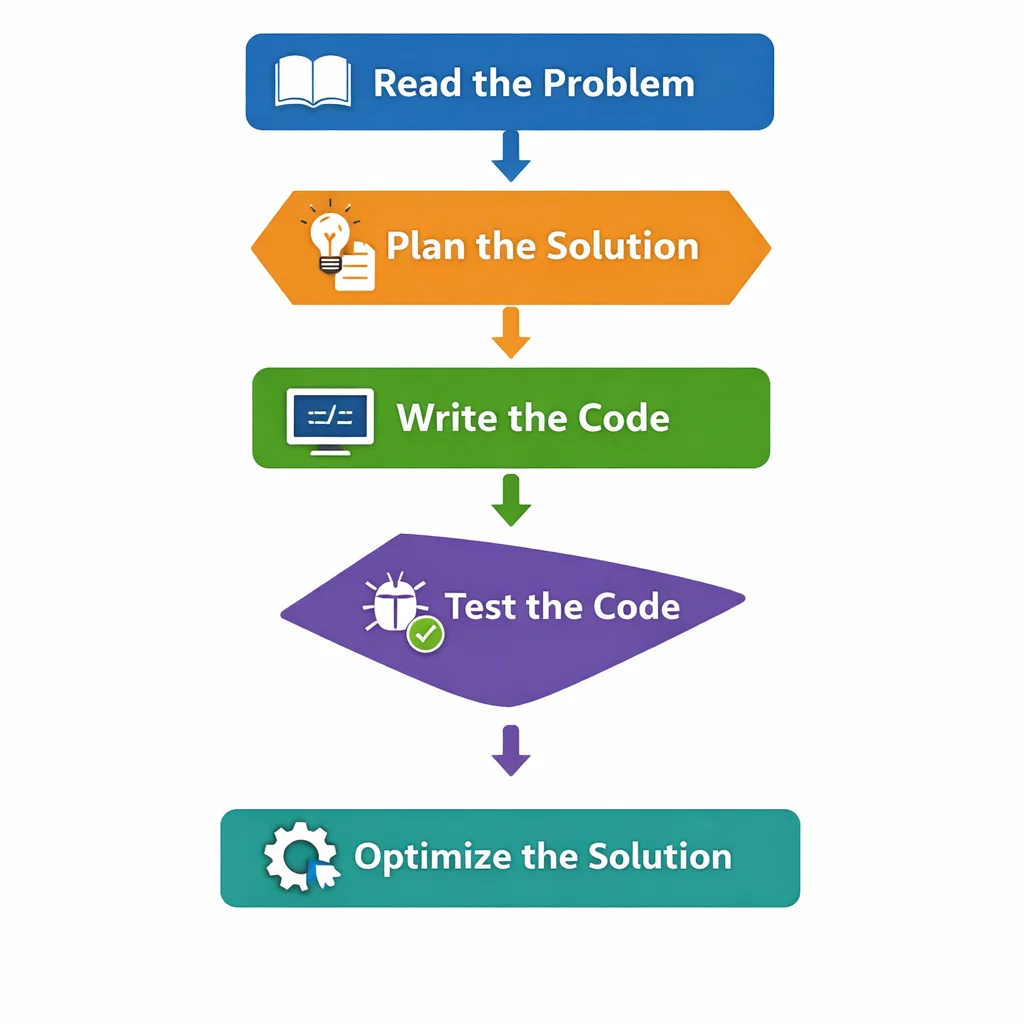
Read the problem statement at the very least before you write a single line of code. Here’s what you can do:
- Bullet points: Indicate important information, including types of input, the expected outputs, and limitations.
- Get clarity: In case any of the sections of the problem is unclear, seek clarity (if it is a team project or an open-source project) or re-read what has been said in order to realize what could be lacking.
- Write a short overview: Summarize the problem in your own words to ensure you are aware of the problem.
Skipping the Planning Phase
You have the urge to dive into the coding process immediately and you are excited about finding a solution to a problem. Nevertheless, failure to take the planning stage may result in a disjointed and ineffective solution. Without planning, you can quickly either forget about edge cases or write your code in a manner that is not very logical.
How to Avoid This Mistake:
Planning your solution: Before you start coding, invest some time in planning your solution:
- Pseudocode/flowcharts: Specify your solution in pseudocode or flowcharts. This will enable you to divide the problem into small manageable steps.
- Select data structures: Select the best data structures that are suitable for your problem. When you have big datasets to work with, say, would arrays, linked lists, or hash tables be the most efficient?
- Be aware of edge cases: What are edge cases that could cause your solution to fail (e.g., empty input, large numbers, negative numbers, etc)?
Making the Solution More Complex
Beginners are likely to overthink or overcomplicate their solutions, particularly when they are attempting to show that they are aware of algorithms and other sophisticated data structures. This may create very complicated code that cannot be easily read, debugged, or maintained. Although it is not bad to seek solutions in alternative ways, the simple ones are more effective.
How to Avoid This Mistake:
Keep things simple:
- KISS principle: Keep it simple, stupid. Attempt to compose the simplest answer that will address the problem in a proper way. Readability and maintainability are brought about by simplicity.
- Write modular code: Divide your solution into smaller reusable functions. This will assist you in maintaining the code in a debuggable form.
- Get it right: Once you have a working code, ensure that it is correct, and then optimize it or add additional features.
Ignoring Edge Cases
Edge cases are the situations that are not within the normal range of input but are still valid inputs. For example, if a program is expected to sort an array, it may not act as expected when presented with an array that only has a single element or no elements at all. Overlooking edge cases may cause bugs and unforeseen code behavior.
How to Avoid This Mistake:
Always test the edge cases when testing your code:
- Extreme values: Test extreme cases: Test the largest or the smallest possible numbers, empty strings, or null values.
- Check boundary conditions: In case you are dealing with arrays or lists, check on those where the array is empty or has a single element and when the array is very large.
- Use assertions: Add assertions to your code to ensure that edge cases give the desired outcome. This proves to be very useful, especially in debugging.
Failing to Optimize
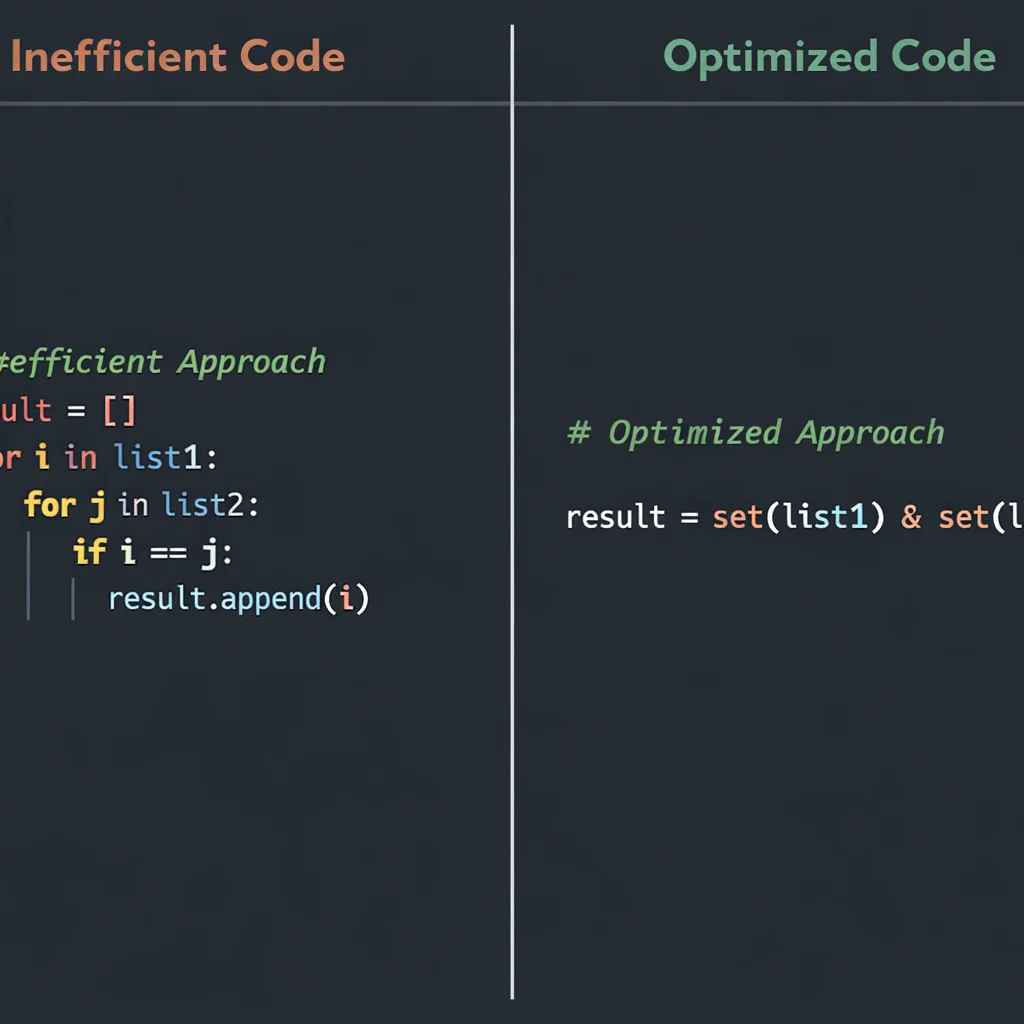
Another mistake often committed is not optimizing a solution once it has been working. Although the first step is to make your code run correctly, you should always go back to it and enhance its performance. Inefficient code is slow and resource-intensive, especially when dealing with big data.
How to Avoid This Mistake:
Once you have your solution working, optimize it:
- Complexity of time and space: Check the time and space complexity of your answer (using Big O notation). Strive to achieve an optimal solution that will minimize both time and space use.
- Minimize unnecessary loops: Do not use too many loops or nested loops in your solution. This may greatly decrease the time complexity.
- Refactor your code: Find redundancy and get rid of redundant calculations or variables.
Not Testing Thoroughly
One can easily think that when the code is running without errors, it is working. Nevertheless, testing is essential to the process of making sure that your solution performs as intended under a range of conditions. Having just one test case may lead to the possibility of missing bugs.
How to Avoid This Mistake:
Test, test, test: Test your code with a variety of test cases at the start. Do not check whether it works at the end of the coding process.
- Unit testing: Unit tests are used to test single functions or methods. This assists in the detection of bugs at an early stage.
- Automate testing: When you can, automated testing frameworks can be used to execute a set of tests whenever you change your code. This would save time and assist in consistency.
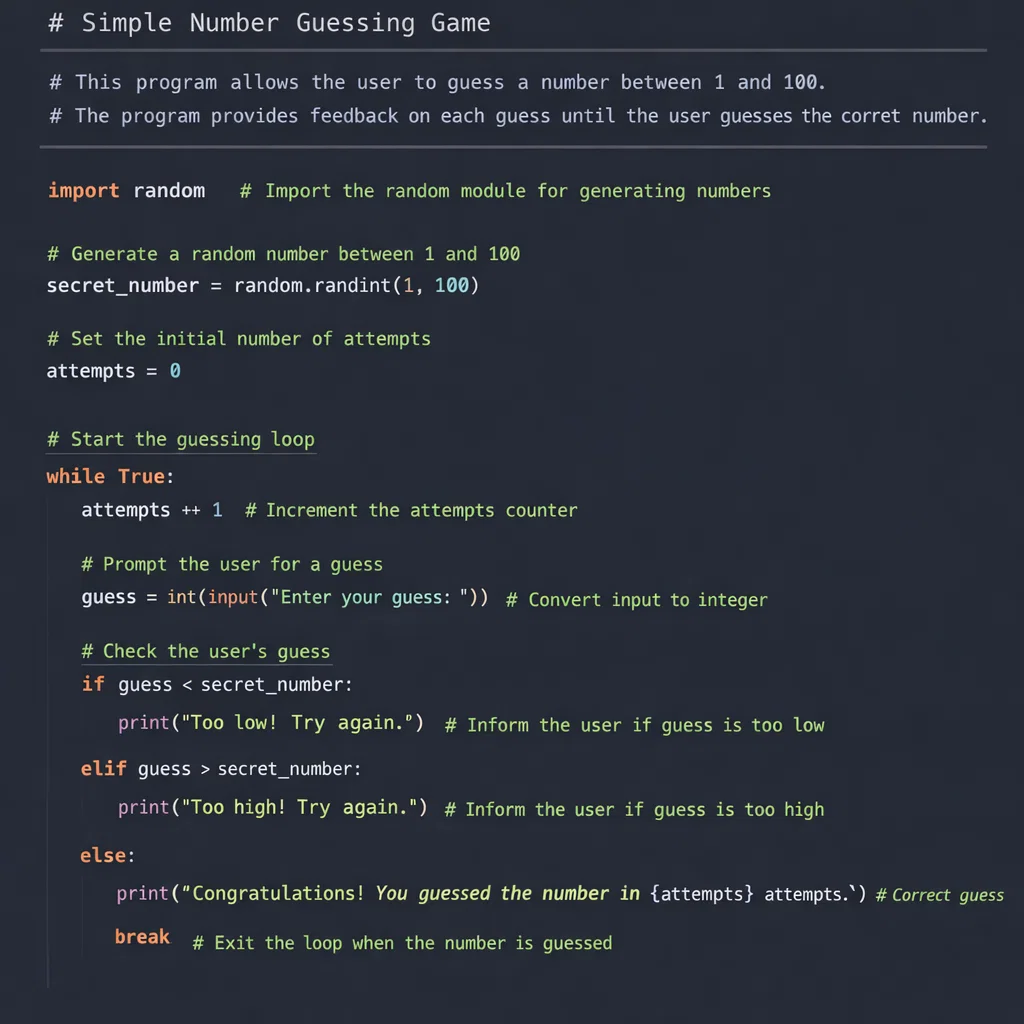
Lack of Documentation and Comments
Even perfectly working code may be hard to maintain or enhance in the future when it is not well documented. Novices also tend to forget to comment or describe the way they think in their code, which complicates reading it later (by them or other individuals).
How to Avoid This Mistake:
Review your code: Place clear comments on your code explaining the logic behind the non-intuitive or complex sections of your code.
- Name meaningful variables: Name the variables descriptively (e.g. count rather than x or data rather than list1).
- Keep documentation: Have a README file or code documentation for large projects. This will assist other people in understanding how your code functions and its use.
Overlooking the Significance of Reading and Learning from Others’ Code
Programming is not only a matter of writing but also a matter of learning. Novices tend to overlook the fact that they can read solutions given by other people to find out what may be more effective or efficient in their approach to coding.
How to Avoid This Mistake:
- Join coding communities: Join some coding communities or forums where you can view the code of others. There are great learning sites such as GitHub, Stack Overflow, and LeetCode.
- Read good code: Read good code and note how experienced developers organize their solutions and solve difficult problems.
- Request feedback: There is nothing wrong with requesting code reviews. Positive feedback will enable you to know the areas where you can improve.
Conclusion
By learning to prevent these pitfalls of problem-solving, novices will be able to form proper coding practices that will help in the long run. Consistency, practice, and willingness to learn through mistakes and others’ feedback are key to improvement. However, it is important to remember that the effective solution of programming problems is a skill that can be developed with time and experience.
To get deeper instructions on how to solve problems in programming, read this article on problem-solving art. Following the tips described in this article, you will be able to avoid most of the pitfalls that beginner programmers fall into and become a better programmer.