Programming is an engaging and yet complicated process. There are no limits to the number of lines of code in one coding project, numerous iterations, debugging, and complex solutions. The process can be initiated by trial and error where the beginners get to test various solutions until something becomes effective. Nonetheless, this method is not efficient, and the outcomes cannot be the best. It is necessary to embrace methodological problem-solving strategies in order to become a competent programmer. This paper will present some of the important techniques that any programmer must be familiar with in order to make the process of development smooth and not fear to face a complex code-writing task.
We will primarily discuss the following main techniques: decomposition, pattern recognition, abstraction, and algorithm design. These (purposely) organized methods, once perfected, allow programmers to leave their trial and error methods of solving problems to devise effective and easily foreseeable solutions.
Table of Contents
- Decomposition: Dissection of the Problem.
- Pattern Recognition: Determining Repeating Patterns.
- Abstraction: Making Complex Systems Simple.
- Design of Algorithms: Efficient Design.
- Application in Practice in Real Life Scenarios.
- Conclusion
Decomposition: Decomposing the Problem
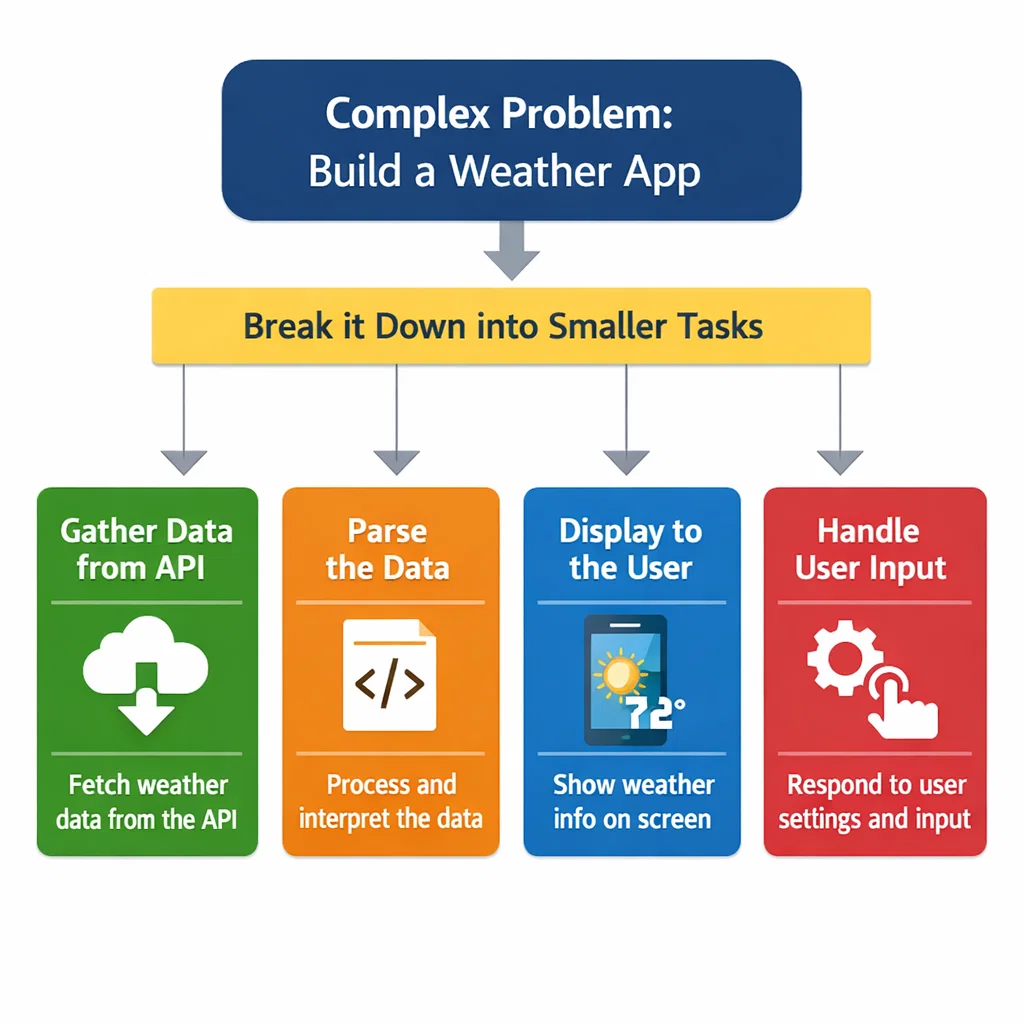
One of the most basic methods of problem solution is decomposition. The concept of decomposition is basically a process of decomposing a complex problem into sub-problems which are less complicated. Imagine it is solving a huge puzzle, you are not solving the whole puzzle, but one piece at a time.
Why Decompose?
The complex task that one has to deal with can make it easy to feel overwhelmed. The solution is however seen better by decomposing the problem into small parts. One can also debug and test small parts of the code as opposed to having to trouble shoot an entire application.
As an example, think of the development of a basic weather app. The job could be very overwhelming however with the problem breaking down, you will be able to divide it into smaller functions:
- Gathering data from an API.
- Parsing the data.
- Displaying it to the user.
- Dealing with location user input.
All these tasks are sub-problems, which can be solved separately. In addressing them individually, you make the general development process easier.
How to Decompose a Problem:
- Determine the Main Goal: Begin by establishing the main objective. What is the final product you want to achieve?
- Break It into Sub-tasks: Name the steps that should be taken in order to accomplish the objective.
- Arrange Tasks in Groups: The related tasks should be grouped together, and the dependencies among the tasks should be taken into account.
- Attack One Task at a Time: Work on the sub-task and then proceed to the next.
The process of decomposition is not only practical in the field of coding, but it is applicable in real-life situations, where it becomes more convenient to manage the project and tasks.
Pattern Recognition: Determining Repeat Patterns
You, being a programmer, will find that you will come across similar patterns of problems repeatedly. Pattern recognition will enable you to recognize the similarities in apparently different issues and use existing solutions. The ability to identify code problems patterns may help save time and eliminate the necessity to recreate the wheel.
Pattern recognition is a strong idea that can be utilized in numerous fields of programming whether in algorithm or design patterns. Through observation, you will be able to use the solutions and methods to solve problems more effectively.
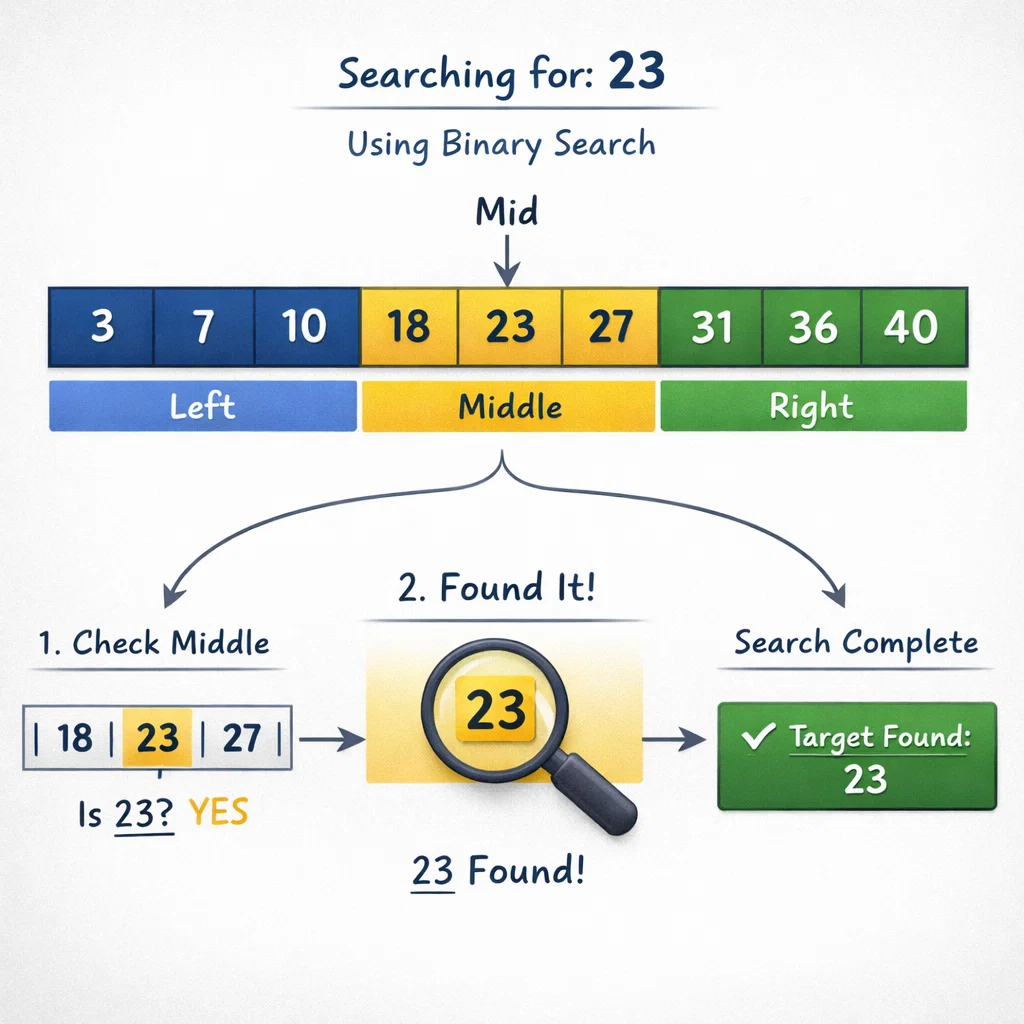
As an instance, think about a program where one should be able to extract certain information in a big database. A typical pattern may be noted in such problems and it is referred to as the searching problem. It doesn’t matter whether you are searching in a list, tree, or graph but the same main idea is to find the most efficient method of searching. When you have the pattern, you can use the search algorithms such as binary search or depth-first search (DFS) to get the solution to the problem.
Pattern Recognition Usage
In coding problems, most are common cases, including:
- Problem sorting (e.g. bubble sort, quicksort).
- Searching issues (e.g., linear search, binary search).
- Problems in dynamic programming (e.g., Fibonacci sequence, knapsack problem).
Accomplishing this is only possible by identifying these patterns at the initial stage so that you can implement the appropriate solution.
Abstraction: Complex Systems to Simpler Systems
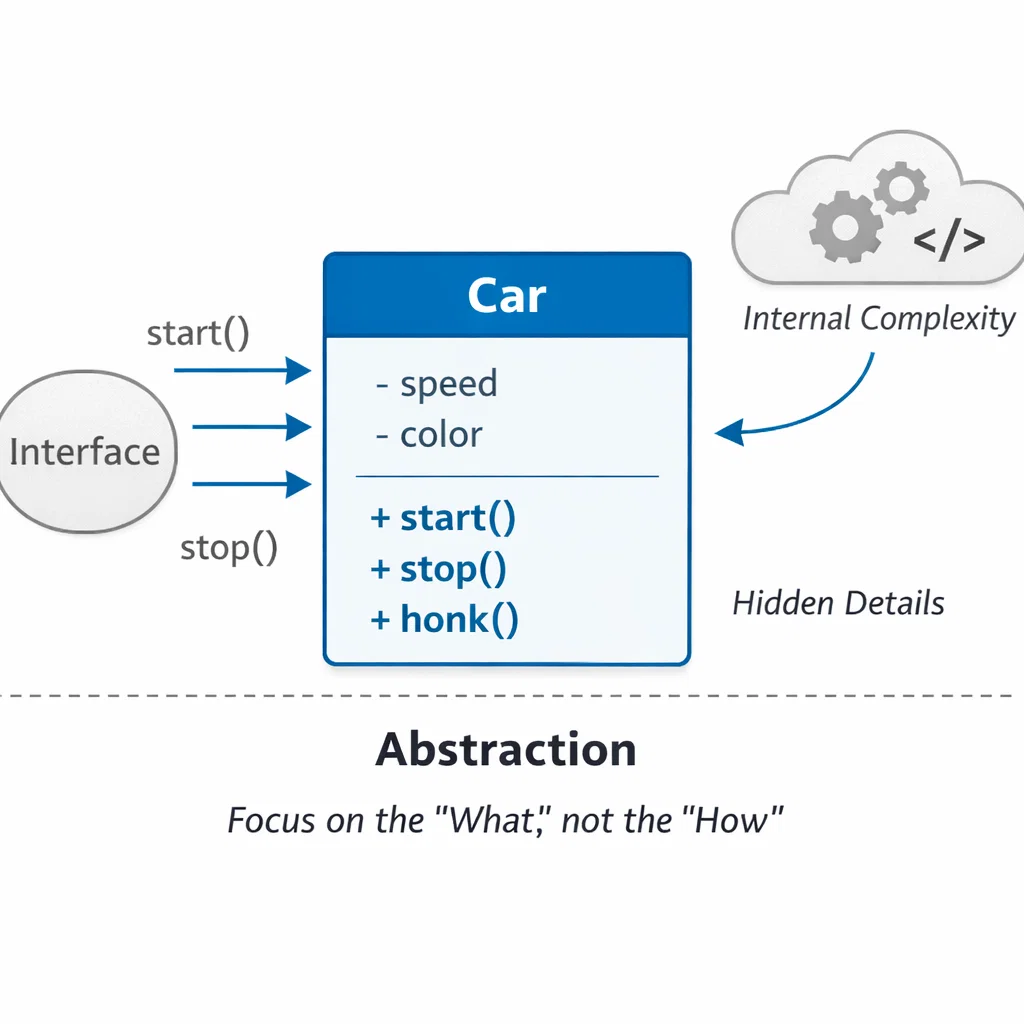
The process of abstraction is aimed at concealing redundant information and revealing only the main characteristics of a system. The concept of abstraction in programming enables you to code on the high-level concept without getting concerned about the low-levels.
Abstraction will make it possible to simplify complex issues and concentrate upon the big picture. As an example, in a computer programming language, you do not have to know how some of its functions, like an object, is implemented. It is necessary to know only how to handle it.
How to Use Abstraction:
- Determine Things That Can Be Cancelled: Think about what can be concealed or lost about the problem.
- Design High Level Interfaces: Have a simplified interface or framework of the system that the user can work with.
- Work at a Higher Level: Concentrate on the business functionality and not on the implementation specifics.
APIs are an example of abstraction in programs. In communication with a weather API, e.g., you do not have to be aware of the approach that the API uses to fetch or process data. All that you need to understand is what data it gives you and how to make use of it.
Object-oriented programming (OOP) also heavily relies on abstraction which enables you to bundle data and functionality into a class and objects thus encouraging reusability and maintainability.
Design of Algorithms: Designing Efficient Solutions
When you have decomposed a problem into smaller sub-problems, identified patterns, and eliminated the irrelevant complexity in a problem, the next thing is to come up with an efficient algorithm. The algorithm design entails coming up with a solution to a given problem step by step with the solution being accurate and efficient.
The most important algorithm design principles include:
- Clarity: The algorithm should solve the problem in an accurate and understandable way.
- Efficiency: How time and space complex is the algorithm? The effective algorithm will reduce the use of resources.
- Scalability: The algorithm needs to be able to process small as well as large datasets.
An often used case in algorithm design is the design of sorting algorithms. Given a list of numbers to sort, you might use a merge sort algorithm or quick sort, or any other algorithm, based on the size of the data and the performance needs. Both algorithms have their pros and cons, and it is based on the situation when one chooses the algorithm.
The Big-O notation is another important concept of algorithm design that provides the programmer with the opportunity to study the time complexity of an algorithm and compare its efficiency with others. This applies particularly in cases where large datasets are involved or application performance is of the essence.
Application in the Real Situations
Now we shall combine all that by considering a real-world example. Suppose you are given the responsibility to create an e-commerce site that would be capable of managing thousands of transactions in a day.
Step 1: Decompose the Problem
- User Interface: This is the design of pages where users can see products and get to purchase them.
- Database Management: User accounts, product information, and transaction records are stored.
- Activities: Adopting secure payment methods.
- Shipping Integration: Processing shipping and tracking data.
All these areas may be addressed separately through the decomposition technique.
Step 2: Recognize Patterns
You may be surprised to find that when making payment, you find that more often than not you are making use of third-party APIs. It is a typical trend of e-commerce applications. Being aware of this enables you to select payment APIs that are well established, which saves time and lowers risk.
Step 3: Abstraction
You do not have to create everything on your own. Web development frameworks and libraries (Django and Python; or Rails and Ruby) can help you to isolate much of the low-level implementation, such as security and routing, as you concentrate on the unique characteristics of your e-commerce system.
Step 4: Design an Algorithm
After decomposing and abstracting the problem, you are able to come up with algorithms to address certain tasks. As an illustration, the method of determining the cost of shipping may include variables such as weight, destination, and shipping method. You may adopt a feature that accepts this as input and delivers the cost of shipping based on a sequence of regulations.
Conclusion
Problem-solving in the context of programming does not only involve trial and error, but tackling work in a systematic and competent manner. Programmers can handle the most difficult code writing tasks with confidence, by mastering such techniques as decomposition, pattern recognition, abstraction, and algorithm design. These tools assist in the disaggregation of the problem, identification of patterns, streamlining of the process, and the development of effective solutions.
Through these methods, you will no longer be a person who fumbles his or her way through the code, but a highly disciplined, strategic developer who is able to tackle any coding problem presented to him or her. Hereby, whether you are presented with the next hard programming problem, keep these steps in mind and solve them in a systematic way!