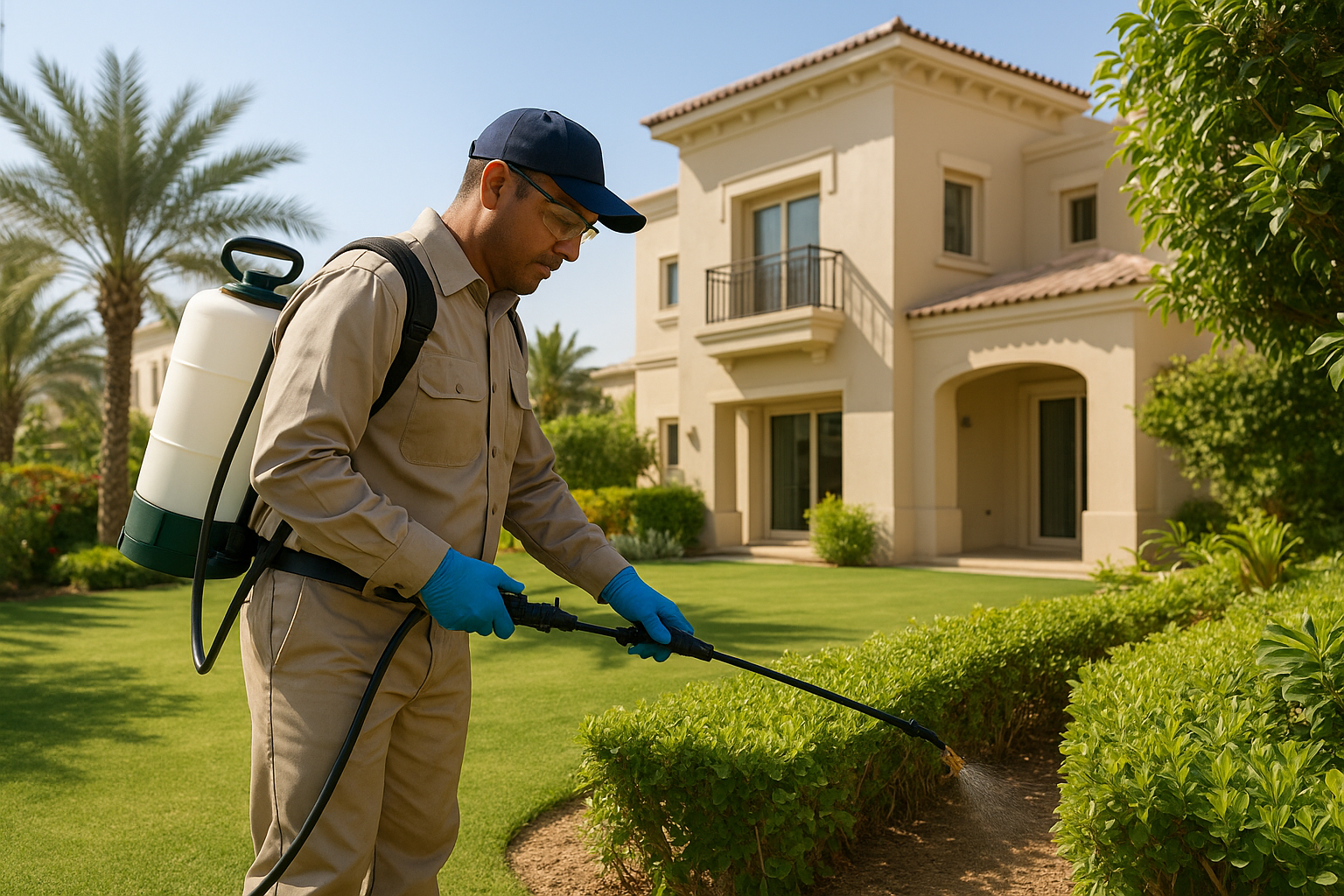
Dubai, UAE. Emaar’s master-planned communities were bare sand and fresh concrete a decade ago. Today they are lush, densely planted neighbourhoods ranked among the most desirable residential addresses in the emirate. That maturity comes with a side effect property owners did not anticipate: a sharp rise in pest activity.
Established communities including The Greens, Downtown Dubai, Dubai Marina, and Arabian Ranches are now reporting pest callout volumes that significantly exceed those in newer developments. The pattern is consistent across operators. As tree canopies thicken, irrigation systems expand, and garden soil accumulates years of organic matter, the conditions for insect and rodent colonisation improve steadily.
“A brand-new community has almost no pest pressure because there is nothing to sustain a population,” said Hassan Al Farsi, senior environmental health consultant at Gulf Urban Ecology Advisors, an Abu Dhabi-based environmental consultancy. “Give that same community 10 to 15 years of irrigated landscaping, restaurant waste, and composting soil, and you have created a habitat. Cockroaches, ants, termites, and rodents will find it.”
Operators providing pest control in The Greens, a community Emaar delivered between 2004 and 2008, report that callout volumes have climbed roughly 30 per cent over the past three years. Cockroach and ant complaints account for the majority of requests, followed by rodent sightings and a growing number of termite cases.
Termites: the Damage That Arrives Quietly
Of all the pest categories affecting Dubai’s residential stock, termites carry the highest financial risk. Subterranean termites are native to the Arabian Peninsula. Dubai’s irrigated developments create exactly the soil moisture levels they require to establish and expand colonies underground.
Providers of termite treatment in Al Quoz, where commercial warehouses and residential properties sit in close proximity, report that treatment requests have more than doubled since 2023. Ground-floor villas and townhouses with direct soil contact are disproportionately affected.
“A termite colony will consume door frames, skirting boards, and wooden cabinetry from the inside,” Al Farsi said. “The exterior surface looks intact. Owners discover the damage only when a frame crumbles under pressure or a technician probes during a routine inspection. By that point, the colony has been active for months.”
Remediation for a structural termite infestation in a villa typically runs AED 10,000 to AED 25,000, depending on the extent of the damage and the treatment method required.
Community-by-Community Pest Profiles
Different communities face different pest pressures, shaped by building age, vegetation density, and proximity to food sources or undeveloped land.
Pest control in Downtown Dubai addresses a profile dominated by ants and cockroaches. High-rise apartments near active construction sites see infestations originating from building service corridors and waste chutes. Cockroach control in Downtown has become a recurring service line for buildings with ground-floor food and beverage tenants. Bed bug incidents also spike in towers with high tenant turnover, where infested furniture or luggage introduces colonies that spread through shared ductwork.
Pest control in Dubai Marina contends with waterfront humidity and one of the densest restaurant clusters in the city. Cockroaches and stored-product pests thrive in these conditions. Marina apartments directly above ground-floor F&B outlets are affected at rates well above the community average.
Pest control in Discovery Gardens, one of Dubai’s most mature mid-market communities, deals primarily with ant colonies and garden pests that have expanded alongside two decades of landscaping growth. The extensive green areas and dense planting make perimeter control particularly important for ground-floor units.
Older commercial corridors present their own challenges. Rodent control in Deira, near the port and traditional souks, addresses rodent populations sustained by decades of food retail activity, dense building stock, and ageing infrastructure with entry points that newer constructions avoid.
Quarterly Prevention Costs a Fraction of Emergency Treatment
Pest management operators consistently recommend scheduled preventive treatments over reactive callouts. The economics are straightforward. A quarterly perimeter treatment for a standard villa costs AED 300 to AED 500. An emergency eradication for an established infestation typically exceeds AED 2,000, and structural pest damage can multiply that figure several times over.
“The most common mistake homeowners make is waiting until they see pests before calling,” said Khalid Mansour, Operations Manager at European Technical. “Properties enrolled in quarterly treatment programmes record 80 per cent fewer emergency callouts than properties without any scheduled service. The preventive cost is a fraction of what a single serious infestation requires to resolve.”
For communities managed by owners’ associations, bulk contracts offer additional savings. Several Emaar communities have adopted community-wide treatment programmes that cover common areas, parking structures, and landscaped zones while offering discounted rates for individual unit treatments. The approach addresses the fundamental problem of pest control in dense residential environments: treating one unit while neighbours remain untreated allows recolonisation within weeks.
Regulatory Tightening Pushes the Industry Toward Targeted Methods
Dubai Municipality’s Pest Control Section governs licencing, chemical approvals, and compliance standards for all pest management operators in the emirate. The municipality banned several broad-spectrum pesticides in 2024, a move that accelerated an existing industry shift toward targeted treatment protocols. Gel baits, insect growth regulators, and bait station systems have replaced blanket chemical spraying in most professional operations.
The regulatory change benefits both residents and the environment, but it also raises the technical threshold for effective treatment. Targeted methods require accurate pest identification, species-specific product selection, and precise application. Operators who relied on broad-spectrum spraying as a catch-all approach have been forced to retrain or exit the market.
“The industry has moved past the era of spraying everything and hoping for the best,” Mansour said. “Modern pest control in Dubai is diagnostic first. You identify the species, understand its behaviour, and apply the treatment that addresses that specific population. It is more effective and far less disruptive to the household.”
European Technical is a Dubai-based home maintenance company providing AC, plumbing, electrical, painting, and general maintenance services across Dubai and Abu Dhabi. Licensed by Dubai Municipality, the company serves residential and commercial clients with same-day emergency response. For more information, visit europeantechnical.ae or call 800 031 10015.