Modern firearm customization represents the merging of mechanical refinement with shooter intent. From AR-style rifles to precision bolt-actions, each upgrade affects handling, consistency, and accuracy. Every component, from the barrel to the stock, contributes to the rifle’s balance, recoil control, and sight alignment. What follows is a deep exploration of the most influential modern upgrades in firearms design and functionality.
The AR Platform and Modern Handguard Innovations
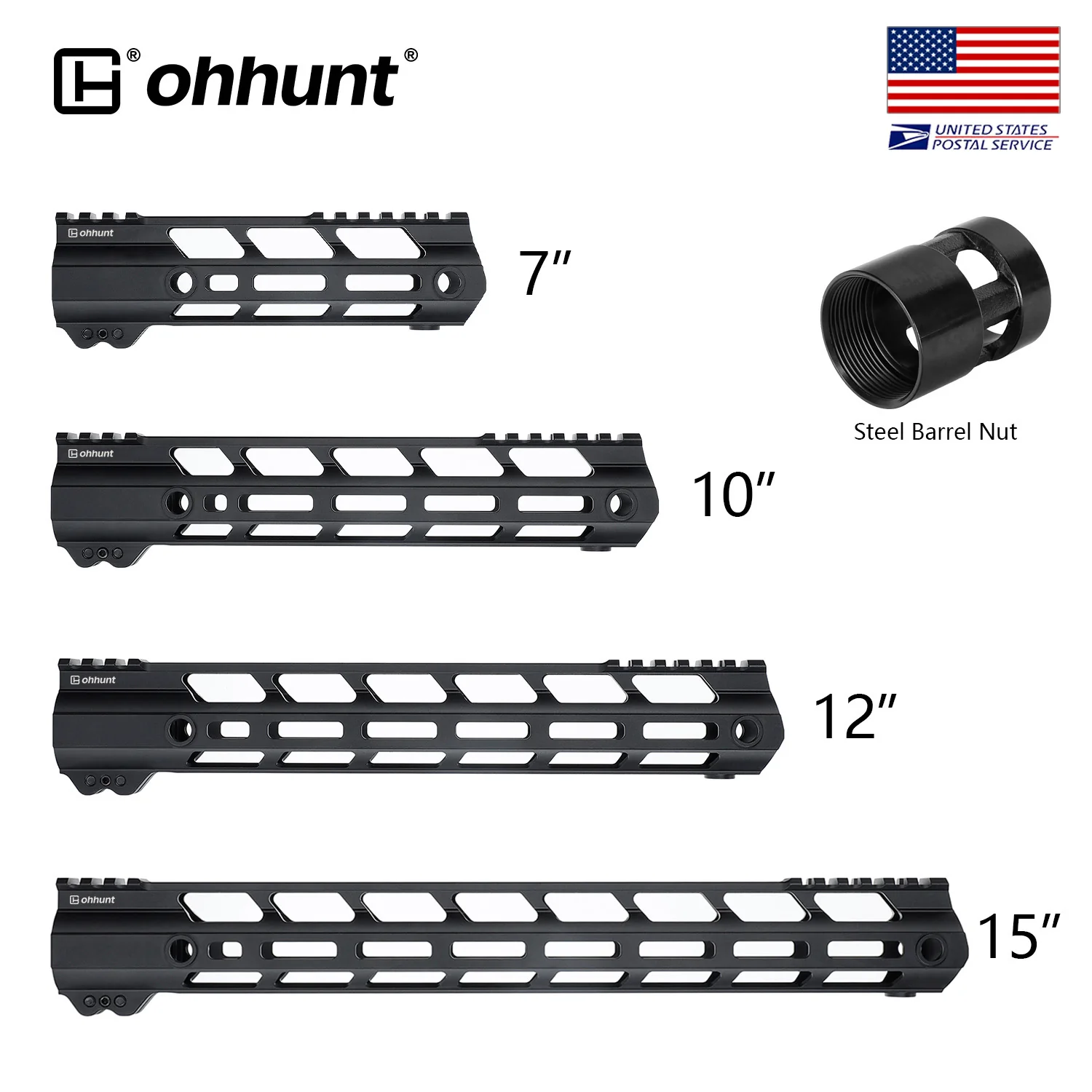
Few firearms demonstrate modularity better than the AR-15 platform. The rifle’s design allows endless customization, enabling shooters to configure systems for tactical, hunting, or precision use. Among the most vital components shaping performance is the AR15 handguard, which influences both ergonomics and ballistic integrity.
Material and Structure
The material of a handguard dictates not only weight but also heat management and stiffness. Aluminum alloys dominate due to their strength-to-weight ratio, while carbon-fiber variants are prized for thermal resistance. A well-machined free-float handguard prevents contact with the barrel, ensuring that sling tension or accessory pressure doesn’t alter barrel harmonics. This isolation promotes repeatable accuracy across long strings of fire.
Mounting Systems
The evolution from heavy quad rails to sleek M-LOK and KeyMod interfaces symbolizes a broader shift toward adaptability. These attachment standards allow direct mounting of optics, lights, and bipods without extra rails, preserving the rifle’s weight balance. Shooters select handguards based on mission profile—longer rails for extended support positions or shorter ones for maneuverability in confined environments. The result is a personalized rifle built around the shooter’s biomechanics.
The Remington 870 and the Role of a Functional Forend
The Remington 870’s reputation for rugged dependability spans decades. Its pump-action system thrives under demanding conditions, and one key element of that reliability is the forend. The Remington 870 forend defines how efficiently the shotgun cycles, how it feels under stress, and how well it transitions between targets.
Grip Geometry and Materials
A textured forend enhances friction under wet or gloved hands. Wood variants provide aesthetic warmth, but polymer and aluminum forends offer precision fit and durability. Many modern forends integrate rail segments or light mounts, enabling use in low-light environments. A solid interface ensures the forend glides smoothly along the action bars, preventing misalignment during rapid firing.
Functional Benefits
The forend directly influences shot cadence. Proper grip placement distributes force evenly, allowing faster, more natural cycling without inducing fatigue. In defensive use, improved control equates to faster target reacquisition and greater confidence under recoil. While seemingly simple, the forend remains the shotgun’s primary human interface, transforming mechanical reliability into instinctive usability.
Savage Axis and the Value of a Stock Replacement
Among entry-level bolt rifles, few offer as much tunability as the Savage Axis. Its core action is dependable, but its factory stock leaves room for optimization. Upgrading to a Savage Axis stock replacement introduces structural rigidity and ergonomic adaptability that the original configuration lacks.
Bedding and Rigidity
Precision accuracy begins with proper bedding. Factory synthetic stocks can flex under torque, altering point of impact. A stiffer laminate or aluminum chassis ensures consistent bedding pressure between receiver and stock. This reduces harmonic distortion, especially under repeated recoil. When torqued correctly, the rifle maintains zero even after extensive firing or environmental shifts.
Ergonomics and Adjustability
A custom stock provides the shooter with control over length of pull, cheek height, and grip angle. These adjustments align the optic naturally with the eye, minimizing strain and maximizing consistency. For precision hunters or long-range competitors, this repeatable alignment is vital. Replacing the Axis stock transforms it from a budget bolt-gun into a platform capable of sub-MOA precision.
Mossberg 500: Tradition with Tactical Potential
The Mossberg 500’s design has earned a reputation for toughness and modularity. It’s one of the few shotguns that transition smoothly from the duck blind to the tactical range. Customizing it with a Mossberg 500 stock defines how it handles recoil, mounts to the shoulder, and recovers between shots.
Material Selection
Traditionalists still appreciate walnut for its balance and warmth, but modern polymers deliver durability in field conditions. Adjustable stocks now allow shooters to modify length of pull or add cheek risers for optic alignment. Each modification serves a purpose—improving control, reducing recoil fatigue, and tailoring the shotgun to its intended mission.
Tactical Enhancement
For defensive roles, pistol-grip and collapsible stocks improve maneuverability indoors. Hunters, however, often prefer full-length stocks for stability and follow-through. This adaptability cements the Mossberg 500 as both a classic and a contemporary platform. A stock upgrade not only changes handling—it redefines how the shooter connects with the firearm.
The Mossberg 590S: Adaptation in Action
Building on the foundation of the 500, the Mossberg 590S demonstrates how incremental design evolution yields substantial performance gains. The Mossberg 590S incorporates refinements for tactical consistency and shell versatility.
Mechanical Improvements
Dual extractors, twin action bars, and steel-to-steel bolt lockup ensure smooth and secure cycling. The key feature, however, is its compatibility with multiple shell lengths—2¾, 3, and 1¾ inches—without adjustment. This allows shooters to alternate between standard loads and mini-shells, boosting capacity without changing receiver dimensions.
Customization and Control
The 590S thrives when enhanced with custom furniture. Shooters often replace factory stocks and forends to improve ergonomics and reduce recoil shock. Accessory rails, optics mounts, and side-saddles increase utility while preserving balance. This adaptability underscores Mossberg’s philosophy: evolution through usability rather than reinvention.
Precision Builds and the Savage .308 Concept
The .308 Winchester remains the benchmark for precision shooting. Its predictable trajectory and manageable recoil make it a versatile cartridge for both competition and hunting. The Savage .308 custom platform highlights how incremental modifications refine precision performance.
Barrel and Trigger Optimization
Barrel quality dictates accuracy. Custom builders often install match-grade barrels with tighter tolerances and improved crown geometry. Combined with an adjustable trigger system, these upgrades enhance consistency in lock time and break weight. Each refinement eliminates mechanical variance, allowing shooter skill to become the dominant variable.
Real-World Application
A properly tuned .308 excels in both target and field settings. With correct bedding and optic alignment, it delivers consistent sub-MOA groups. Custom chassis systems provide rigidity and adjustability for diverse shooting positions. For precision enthusiasts, this platform remains a timeless balance between power, control, and predictability.
Ruger American Ranch and the 300 Blackout Advantage
Compact bolt-actions have found renewed purpose with modern cartridges. The Ruger American Ranch 300 Blackout illustrates how efficient cartridge engineering pairs with smart rifle design.
Cartridge Performance
The 300 Blackout was designed for suppressed fire, using heavy subsonic bullets that stabilize in short barrels. When combined with a bolt-action system, it eliminates gas blowback and maintains whisper-quiet operation. Its effective range complements predator hunting, hog control, and discreet shooting applications.
Rifle Design and Adaptation
The Ranch model’s lightweight construction and threaded barrel make it ideal for field portability. Custom stocks can further enhance recoil management and improve sight picture consistency. It’s an example of modern cartridge synergy—a rifle engineered not for raw velocity but for precise efficiency in specialized contexts.
CZ457: Modern Rimfire Precision
Rimfire rifles remain foundational in marksmanship training. The CZ457 takes this concept further, offering modularity usually reserved for centerfire platforms.
Design Evolution
Its redesigned bolt system reduces stroke length, resulting in faster follow-up shots and improved smoothness. Interchangeable barrels let shooters switch calibers or lengths with ease, maximizing the rifle’s versatility. Factory triggers are adjustable for both weight and creep, enabling fine-tuned control.
Purpose and Performance
For small-game hunters or precision trainers, the 457 bridges the gap between practice and competition. With aftermarket stocks and optics, it consistently achieves target-group performance beyond expectations for its class. It reinforces a key principle: precision isn’t defined by caliber but by mechanical harmony.
Ruger PC Carbine: Adaptability in Compact Platforms
The resurgence of pistol-caliber carbines highlights the demand for compact, modular, and controllable systems. The Ruger PC Carbine stock upgrade demonstrates how ergonomics shape user performance.
Modularity and Maintenance
The takedown mechanism allows the PC Carbine to break down easily for transport or cleaning. Its compatibility with multiple magazine types makes it versatile across platforms. A custom stock enhances rigidity and recoil control, especially when returning to zero after disassembly.
Field Application
Law enforcement, home-defense users, and sport shooters appreciate the balance between maneuverability and accuracy. A well-fitted stock ensures faster follow-up shots and sustained accuracy in rapid strings. Combined with a red-dot optic, the PC Carbine becomes an efficient, intuitive system bridging handgun familiarity with rifle stability.
The 8.6 Blackout Bolt-Action Rifle: A New Ballistic Frontier
Innovation in cartridge design often defines the next frontier of precision shooting. The 8.6 Blackout bolt action rifle exemplifies that progression, delivering heavy-bullet performance optimized for suppression and terminal energy.
Ballistic Design
Derived from the 6.5 Creedmoor case, the 8.6 BLK utilizes a short, fat cartridge loaded with long, heavy projectiles. Fast-twist barrels stabilize these bullets, producing controlled yaw and energy transfer on impact. Its subsonic nature reduces recoil while maintaining impressive downrange effect.
Customization and Use
Builders emphasize suppressor alignment, precision threading, and solid bedding. When configured properly, it delivers exceptional energy retention at moderate ranges, ideal for tactical and hunting roles. The cartridge’s efficiency marks a shift from velocity-driven performance to energy-focused lethality—a modern solution for specialized marksmen.
Conclusion
Customization in firearms has evolved from aesthetic preference to performance science. Each upgrade discussed—from the AR15 handguard to the Ruger PC Carbine stock—represents a mechanical dialogue between precision, comfort, and control. Shooters today approach modification not as a hobby but as a discipline, blending physics, ergonomics, and ballistic understanding.
Every platform—be it the Mossberg 590S’s modular pump system or the 8.6 Blackout’s cutting-edge cartridge—reveals that refinement doesn’t always mean reinventing the weapon. Sometimes, it means harmonizing each component to function as one. For the serious marksman, customization remains not an accessory to skill but an extension of it.