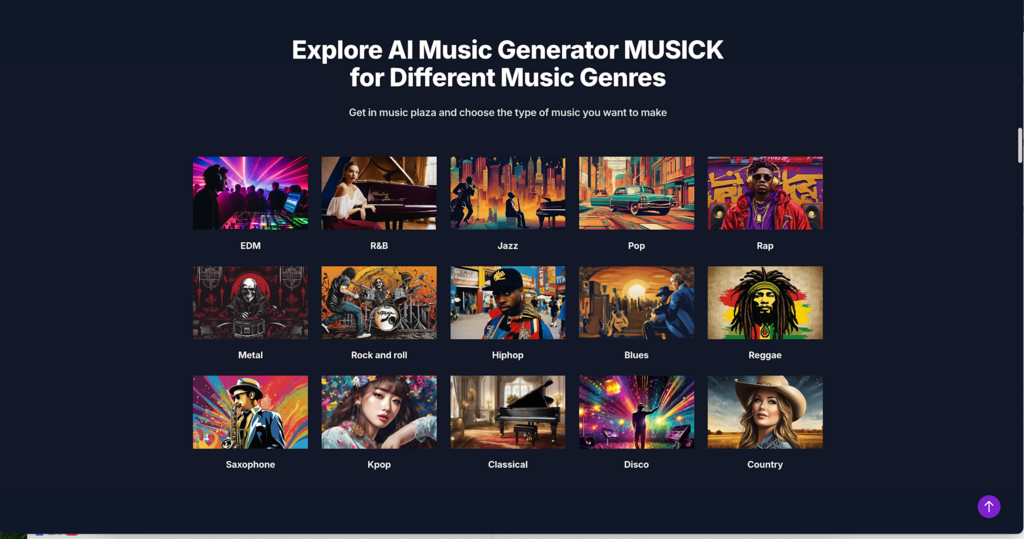
R&B music is rooted in emotion, rhythm, and sophisticated vocal arrangements. Traditionally, capturing the perfect “pocket”—that elusive timing between the beat and the melody—required a team of professional musicians and expensive studio equipment. However, modern tools have simplified this process, making high-quality production accessible to independent creators. By using Musick AI, anyone can translate a musical vision into a polished R&B track. This guide provides a step-by-step roadmap for utilizing an AI Music Generator to produce authentic, soulful songs that stand out.
I. Defining the Creative Vision for R&B
Before interacting with any software, it is essential to establish the mood of the song. R&B is a broad genre that spans from the upbeat, synth-heavy “New Jack Swing” to the moody, atmospheric “Alternative R&B” seen today. To achieve a professional result, one must decide on the tempo and the primary instruments.
Using an AI Song Generator works best when the user provides clear, stylistic boundaries. For instance, a classic 90s R&B track usually features electric piano (Rhodes) and a heavy, syncopated bassline. In contrast, a modern track might prioritize 808 kicks and ethereal vocal pads. Identifying these elements early ensures that the generated output aligns with the desired aesthetic.
II. Setting Up the Project for Success
Navigating the Generation Interface
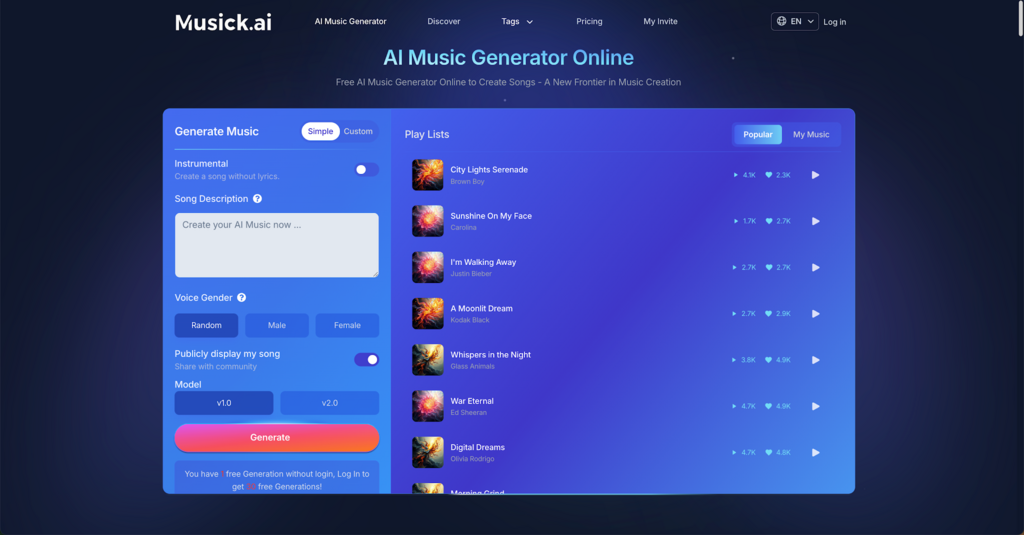
The interface on Musick AI is designed for efficiency, offering a Simple mode for quick ideas and a Custom mode for detailed control. For most creators, starting with the Simple mode is an effective way to test a concept before diving into specific lyric placements.
Mastering the Song Description
The Song Description field is the primary tool for shaping the music. To get a professional R&B sound, avoid generic terms. Instead of typing “R&B song,” use descriptive phrases such as “Smooth 90s R&B, soulful male vocals, mellow tempo, deep bass, 75 BPM.” This level of detail helps the AI Music Maker select the appropriate instrument samples and rhythmic patterns.
Selecting the Optimized Model
Creators have the choice between v1.0 and v2.0 models. For R&B, which requires complex vocal textures and harmonic depth, v2.0 is the superior choice. This model is better equipped to handle the subtle nuances of “soulful” delivery and the intricate chord changes that are hallmarks of the genre.
Refining Voice and Instrumental Settings
The ability to choose a Voice Gender—Male, Female, or Random—is a critical feature for R&B production. If the project requires a silky-smooth tenor or a powerful female lead, selecting the specific gender ensures the AI Song Maker generates a vocal performance that fits the narrative. Additionally, the Instrumental toggle allows creators to generate a pure backing track if they prefer to record their own vocals later.
III. Developing R&B Lyrics and Song Structure
The Narrative Focus
R&B lyrics often center on themes of intimacy, heartbreak, or self-reflection. When preparing text for the generation process, prioritize sensory language. Vivid descriptions of feelings or surroundings help create the “atmosphere” that R&B listeners crave.
Organizing for Flow
A well-structured R&B song typically includes:
- Intro: A four-bar sequence that establishes the groove.
- Verse 1: Introduces the story and the lead vocal melody.
- Pre-Chorus: Builds tension before the main hook.
- Chorus: The most memorable part of the song, often featuring vocal layers.
- Bridge: A departure from the main melody that adds emotional weight.
- Outro: A gentle conclusion, often featuring ad-libs.
By providing the AI Music Generator with clearly defined sections, the system can produce a track that feels like a deliberate composition rather than a repetitive loop.
IV. Advanced Refinement Techniques
Analyzing the Rhythm and “Pocket”
Once the initial track is generated, pay close attention to the drums. In R&B, the drums shouldn’t just be loud; they should “swing.” This means the snare might hit a fraction of a second late to create a relaxed, soulful feel. If the first result is too rigid, adjusting the description to include words like “laid-back” or “swinging rhythm” can help the AI Song Maker recalibrate.
Managing the Public Presence
For creators who want to build a following, the Publicly display my song toggle is a valuable asset. Enabling this allows the track to appear in the community’s Play Lists, where other users can listen to and “like” the work. This visibility can be an excellent way to gauge audience reaction to a new R&B track before committing to a wider release.
V. Managing Technical Quality and Final Exports
Evaluating Audio Fidelity
Quality control is the final step in the production chain. After the AI Music Maker finishes its task, the output should be checked for “headroom”—making sure the bass doesn’t distort and the vocals remain clear. The high-resolution output from Musick AI ensures that the tracks are suitable for various use cases, from personal projects to commercial background music.
Exploring the Popular Playlists for Inspiration
New creators can learn a great deal by browsing the Popular playlist on the site. Listening to tracks like “City Lights Serenade” or “Whispers in the Night” provides insight into how other users are successfully combining descriptions and models to achieve specific moods. This community-driven approach serves as a continuous learning resource for anyone looking to master the AI Song Generator.
VI. Summary of the Creative Journey
The transition from a musical concept to a finished R&B song is a journey of refinement. By utilizing the v2.0 model and precisely configuring the Voice Gender and Song Description on Musick AI, creators can bypass the traditional barriers to entry.
Whether the goal is to produce a radio-ready hit or a simple backing track for a video, the tools provided by an AI Music Generator empower artists to focus on what matters most: the emotion and the story. By following a structured production workflow—from initial style tagging to final community sharing—the process of making music becomes as rewarding as the final listen. The future of soulful music is here, and it is more accessible than ever through the power of an AI Song Maker.