Introduction
In today’s world, small and medium sized businesses believe that if they want to achieve successful marketing, they need to spend large advertising budgets and have to use sophisticated software and teams. Many successful growing enterprises succeed by focusing on consistent, innovative practices and customer relationships, not on big budgets for campaigns. The digital marketing channels provides a lot of opportunity to entrepreneurs that are willing to put in the time and effort instead of laying out a lot of money.
For most SMBs, it’s not the access to marketing channels that is the problem. The problem is that the question is where to invest on limited resources. Chasing a viral trend, as well as trying to jump from one platform to another, or copying others’ strategies for enterprise brands can be easy to get frustrated with and can result in energy wasted.
Every small business with successful growth knows that it’s essential to have a repeatable lead generation system. They are regular, they produce valuable content, they interact with their community and they adjust their messaging accordingly. Small habits add up over time to create a big difference.
If you’re looking for effective marketing strategies that can be pulled off with less budget, don’t aim to do it all. Rather, select a few manageable channels that are good for your audience and objectives. You can gain visibility, attract qualified leads and convert them into sales without having to spend a lot of money on advertising with the following strategies.
Why Consistency Trumps Virality Every Time
Many business owners think that just one viral video or trending post will make their business take off instantly. Though there is a chance of viral success, it doesn’t lead to a solid sales funnel. Viral content tends to appeal to viewers who are interested in learning and want to learn more, but not necessarily looking to purchase.
With consistency, however, comes trust and familiarity. Typically, it takes more than one customer interaction for customers to make purchasing decisions. When prospects are prepared to purchase, they’ll remember your business because of your regular posts, constant interaction, and continuous communication.
A regular marketing process also yields valuable insights. The data helps you understand which messages are successful and which platforms are most successful, as well as what types of content are converting. This data can be used over time to fine tune your efforts and performance without adding to your budget.
Digital marketing can be viewed as an investment, not a quick get-rich scheme that is low-cost. The companies that are dedicated to the sustainable process tend to be a notch better than the ones who stick to paid ads or happen to hit a viral moment.
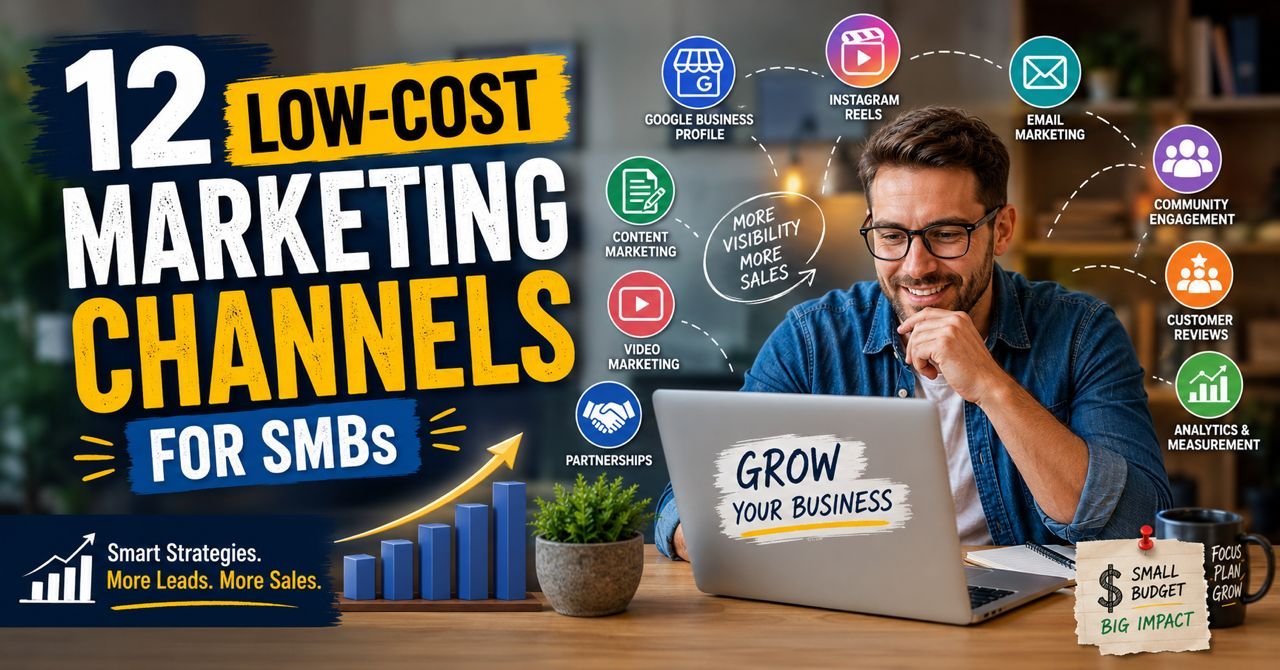
1. Optimize Your Google Business Profile.
Google Business Profile is one of the highest ROI marketing tools for local businesses. Helps customers find your business without spending an ad dollar on advertising, using local search, maps and mobile devices.
Fill out all of your business details, such as categories, contact information, hours, services and quality images. Invite happy customers to give reviews and reply professionally to all reviews, both positive and negative.
Despite the fact that Google Business posts offer a free way to post updates, promotions, events and education directly in search results, many businesses ignore them. Regular posts indicate activity and create an incentive for the target customer to interact with your brand.
People tend to choose to go to a business that is in their vicinity in just a matter of minutes. A full and complete profile enhances credibility and boosts the number of inquiries, website visits and phone calls.
2. Film a video tutorial for the Instagram Reels.
Short-form video platforms have made video content marketing accessible to everyone. Professional production teams are no longer essential to capture attention and build audiences for the businesses.
Content behind the scenes is very successful as it makes your brand relatable. Record product creation, introduce team members, describe daily activities or document business milestones. Clients like to see the people and processes of a company.
It’s better to be authentic than perfect. The videos recorded by a cell phone frequently beat the very polished videos, as they appear authentic and relatable. Be focused on how to solve customer issues, answer their common questions and provide useful knowledge.
Consistency is essential. Three to five short videos a week allow for more discoverability and engagement, than weeks spent with one high budget video. These little things can add up to large organic reach and customer interest over time.
3. Create a Newsletter that you send yourself.
One of the best ways for SMBs to communicate with prospects and customers isn’t through social media algorithms, but rather email marketing, which is one of the most cost-effective methods.
You can find email addresses on your website, at checkout, during events, or by offering lead magnets like a guide, checklist or discount code. In short, concentrate on value rather than on making endless business calls.
Educational tips, company updates, customer success stories, product announcements and exclusive offers are all options you can have in your newsletter. It is repetition that is important, not how often. You’re better off sending one helpful email each week or each two weeks than sending them on a daily basis for a month, and then going away.
Email is also a great tool for retaining customers, as it can help to foster repeat sales and build relationships. Email is a critical part of any cost-efficient marketing campaign as current customers can be more easily and less costly converted than new ones.
4. Buy from local businesses
Community-based marketing is very successful because it isn’t based on the selling approach. In the digital era, there are opportunities to interact with potential customers through local Facebook groups, industry communities, and neighborhood forums.
Don’t use these groups as advertising areas. Rather, ask questions and share knowledge and expertise. By being a trusted resource, you have credibility and practically, you will get business interest.
For instance, a bakery might provide baking tips, a fitness trainer might give some tips on working out, and a financial advisor may have tips on budgeting. After a period of time, your group members start to think of your company as an expert and reliable source.
Engaging with the community takes some time, but the benefits are great! Trust-based referrals will result in better quality leads and client relationships than advertising alone.
5. Work with complementary businesses
As a result of partnerships, SMBs can reach more people across the country without having to spend more on marketing. When you work with companies in your niche that provide products or services different from yours, it’s a win-win situation.
A wedding photographer may work in conjunction with event planners and florists. A gym could partner with nutrition coaches or wellness companies. An online retailer could team up with influencers or content creators within the same niche.
Possible collaboration ideas include social media takeovers, bundled promotions, webinars, freebies, guest content or referral programs. The best part is, choosing someone who has an audience of people that match the ideal audience for your products and services.
Strategic Partnerships can provide businesses with access to new communities, promote their credibility by associating with other business, and provide a sharing of promotional efforts. But, done correctly, partnerships can be a win-win situation for both companies and customers.
6. Use Content Areas for Multiple Purposes
In most businesses, it’s impossible to produce new content daily. By repurposing content, you can get the most out of each idea and share it in various channels.
A blog post can be several social media posts, an email newsletter, a short video, an infographic and a podcast discussion. When divided into smaller pieces, a webinar can produce dozens of content snippets!
Repurposing helps to keep your message alive and conveys it across multiple platforms and saves you time! People like content to be available in different formats, so the same concept is repeated will be more visible and more engaging.
Don’t try to create content all the time, build a framework to turn 1 content into multiple assets. This way, you won’t overburden the limited teams and resources, and you’ll maintain consistency.

7. Build a Website with the SEO Tools.
SEO doesn’t have to be expensive, particularly when it comes to making simple enhancements. The idea is to make these prospective visitors connect with your business whenever they are looking for solutions online.
The first step is to determine what questions customers have and producing content that addresses them. Target keywords effectively in web pages, blogs and product descriptions. Optimize page titles, meta description, and image alt text.
Local businesses should also make sure to have their contact details on the same website in all the directories and review sites. When local SEO is robust, it will help improve the visibility of businesses in local searches, which will help build trust with search engines.
SEO takes time as results will gradually build up. Unlike paid traffic, however, organic traffic can continue to generate leads long after they’ve been published.
8. Encourage User-Generated Content
Recommendations from other customers are more trusted by customers than normal advertising. User generated content benefits in that it offers genuine social proof and saves on content creation efforts.
Ask shoppers to post photos, reviews, and testimonials, or videos of your products or services. Use branded hashtags, organize quick promotions or reward customers for using hashtags.
When posting any sort of customer content, always ask to post it. Incorporating the voices of people who made it to the bar helps to build customer relationships and shows appreciation for their patronage.
User-generated content also enhances the authenticity of the content since it features real customer experiences and not marketing copy. Potential consumers are able to hear from other customers when they are interested in a purchase.
9. The next step is to start a Referral Program
Customers who are happy can be your best marketing tool. Referral programs are great ways to have your existing customers bring in friends, family, and colleagues.
Don’t think that referrals need to be costly! Rewards and incentives such as discount, exclusive access, loyalty points or little rewards are often effective in motivating participation.
Make the process simple. Offer customers referral links, codes or directions on how to participate. Too complicated programs decrease engagement and lower results.
The reason that referrals are usually good leads is that there is already trust established before they interact with you. Those who are recommended by a person known and respected by them are more likely to purchase from the business.
10. Add comments to the code.
If you don’t measure your marketing then you are wasting your time. Thankfully, there are a number of analytics tools that can offer valuable insights without a lot of expense.
Monitor website visitors, email effectiveness, social interaction levels and conversion rates. When you know where leads are coming from, you’ll be better able to focus your time and money.
Monitor performance regularly and look out for trends and opportunities. What type of content does the audience responds to the most? What are the best lead generation channels? What messages do best convert to?
Little things add up over the years. Regularly checking data and tweaking your approach can help boost performance while reducing costs.
11. Organize Educational Live Sessions and Webinars
Live content provides the opportunities to engage and build relationships in real-time. A business can lead an education session on a social network, video conferencing or community group.
Emphasize solutions to customer problems, rather than sales presentations. Serve up some “how to” tips, respond to inquiries and give actionable tips that prove expertise.
Interactive presentations create trust, audiences can interact with your business during live sessions. These events will also generate more content for blogs, video and email that can be repurposed.
With content to the point of addressing problems that resonate with your viewers, and continued engagement, you can get some results even if you have a limited audience.
12. Create and make use of a Simple Content Calendar.
Planning marketing activities in advance makes it easier to be consistent. With a basic content calendar, there’s no guesswork involved, and you always have a way to communicate with your audience regularly.
First, determine the themes of your customers that are relevant to them. Develop a plan that features educational and customer stories, behind-the-scenes updates, promotions and community engagement pieces.
Monthly planning helps to eliminate the stress and helps to avoid too much idleness. It also provides an efficient channel of communication to coordinate various channels to help deliver a consistent message.
It’s not difficult to keep up a calendar. Topic, deadlines, responsibilities are usually managed in a spreadsheet or shared document.
Conclusion
The main thing that all the best ‘low budget’ marketing strategies have in common is that they focus on ‘relationships’ rather than ‘reach’. Do not pursue vanity metrics, rather build value for specific audiences in the context of regular communication and real engagement.
Select 3-4 channels that are representative of your customers, and stick with them for a minimum of 90 days. Track outcomes, adjust strategy and increase efforts based upon resources available.
Don’t forget that all successful marketing systems begin with a small size. The small components of a weekly email newsletter, regular Facebook posting or participating in the Google Business group, and regular short-form videos can have a cumulative impact. These activities combine to form a strong ecosystem that helps drive leads and establish trust.
Businesses don’t need to be constrained by budgets to grow. When it comes to strategy, discipline, resourcefulness and creativity have won over the expensive campaign many times in the past when done over the long term.
If you’re not ready to spend more money or just hoping for a viral hit, work on establishing habits that produce consistent results. Successful businesses don’t always have to invest the most. They are the ones who are showing up again and again, solving real customer problems and making every interaction into a lasting relationship.
Get a well researched information about low-cost digital marketing for SMBs here.