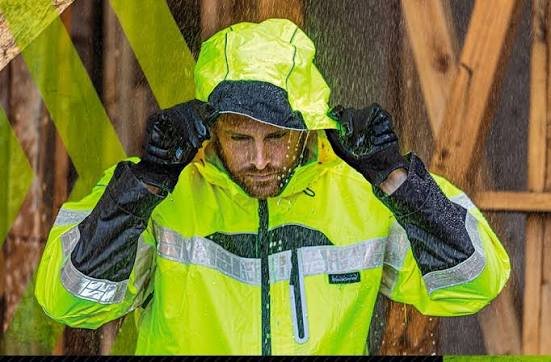
High-visibility rain jackets for industrial use must deliver more than compliance. They need to support comfort and safety through long, variable shifts. Achieving this requires careful attention to layering, ergonomic design, fit adjustments, and ventilation while maintaining waterproof protection and visibility.
The right combination can help reduce worker discomfort, fatigue, and non-compliance associated with restrictive or poorly ventilated gear. This article examines how design choices in hi-vis rain jackets affect usability, helping procurement teams specify jackets that workers can wear throughout the workday.
Balancing Waterproofing and Breathability in Hi-Vis Rain Jackets
Selecting a high-visibility rain jacket for industrial use requires balancing waterproof protection, ventilation, and all-day comfort. Buyers should review the manufacturer’s documentation for waterproofing, breathability, construction, and intended conditions rather than assuming a particular fabric or coating will perform the same way in every design.
Heavier or more insulated jackets may provide greater protection in cold, wet weather but can feel less comfortable in warm or humid conditions. Site supervisors and PPE buyers should therefore assess fit, layering room, ventilation options, and freedom of movement alongside visibility and weather protection.
For additional guidance on specifications and selection considerations, see PPE for industrial rain protection.
- Selecting a high-visibility rain jacket for industrial work requires balancing waterproof protection with breathability and mobility. A shell that limits water entry may also restrict moisture and heat from escaping, while breathable materials and ventilation features can affect cost, durability, and protection. Buyers should compare waterproofing, ventilation, fit, and abrasion-resistance specifications and assess whether the jacket suits the expected work activities. Evaluating PPE for industrial rain protection as part of the complete layering system helps support worker comfort and consistent use.
- Selecting a hi-vis rain jacket requires balancing waterproof protection with ventilation and room for layering. Look for a shell that accommodates the intended base and midlayers without restricting movement, along with practical ventilation features that help manage heat and moisture during extended outdoor work. Test the jacket with the layers, gloves, and equipment workers will actually use, and check that fit and visibility remain effective when reaching, bending, or climbing.
- A high-visibility rain jacket must balance waterproof protection with breathability during extended outdoor work. A sealed outer shell can restrict airflow and trap heat and moisture, while vents, breathable materials, and moisture-managing layers may improve comfort when conditions allow. Procurement teams should evaluate how these features work together so workers can adjust ventilation and layering without compromising visibility or rain protection.
Layering Techniques for Temperature Control on Job Sites
Layering techniques for temperature control on job sites should support comfort, mobility, and consistent use as conditions change. Procurement teams should evaluate whether a high-visibility rain jacket leaves enough room for appropriate base and midlayers without becoming restrictive or excessively bulky.
In colder, wet conditions, additional layers may provide needed warmth. In milder weather or during physically demanding work, a lighter combination may help limit discomfort and overheating. Features such as adjustable cuffs, hems, and ventilation options can help workers manage fit and moisture while preserving the jacket’s protective function.
Buyers should also consider whether the outer shell works with standard workwear and whether removable liners or changing layer combinations affect visibility, movement, and day-to-day usability. Balancing waterproof protection, insulation, weight, and freedom of movement can help organizations select jackets suited to changing outdoor conditions.
- Layering a suitable base layer and insulating midlayer under a hi-vis rain jacket can help workers adjust to changing temperatures on job sites. Select a jacket with enough room for the intended layers while maintaining visibility, waterproof coverage, and unrestricted movement. Workers can add or remove layers as conditions change, helping reduce discomfort from excessive cold or heat.
- Layering starts with a moisture-managing base layer, followed by a thermal midlayer when additional warmth is needed. The outer hi-vis rain shell should provide enough room for these layers without restricting movement, while adjustable cuffs, hems, and openings help workers adapt as temperatures and activity levels change.
- Layering for temperature control on industrial job sites starts with choosing a high-visibility rain jacket that fits comfortably over expected base and midlayers without restricting movement. Removable liners can provide flexibility as conditions change, provided they remain secure and the jacket stays practical for the work being performed. Selecting an outer shell that accommodates common work clothing helps support comfort and usability during shifts with varying temperatures.
- Layering for temperature control on industrial job sites works best when the rain jacket accommodates the full clothing system. A moisture-wicking base layer can help manage perspiration, while a lightweight midlayer can provide additional warmth without excessive bulk. Before selecting a jacket, confirm that its cut allows these layers without restricting movement at the shoulders, elbows, or waist. Removable liners may offer additional flexibility as temperatures change, but the jacket should remain comfortable and functional in both lined and unlined configurations. These checks help support wearability throughout a variable work shift.
- Layering under a high-visibility rain jacket can help workers adjust clothing to changing temperatures and job demands. A moisture-wicking base layer may help manage moisture next to the skin, while a removable midlayer can provide additional warmth during colder shifts. The jacket should allow these layers without restricting movement or compromising visibility, waterproof protection, or comfortable wear throughout the shift.
Essential Ergonomic Features for All-Day Range of Motion
Ergonomic design in a high-visibility rain jacket is central to maintaining comfort and productivity during long industrial shifts. Workers in warehousing and logistics need a jacket that supports lifting, reaching, and bending without creating pressure points or reducing mobility.
Key ergonomic features include articulated elbows, gusseted underarms, and extra room across the shoulders, which help preserve a full range of motion as tasks change throughout the day. A drop-tail hem can offer better coverage when bending or stretching, while adjustable cuffs and hems help limit water entry and provide a more precise fit.
Proper pocket placement and hood compatibility with helmets also support usability without interfering with movement or safety gear. When evaluating jackets, consider these features alongside visibility and weather protection requirements to identify garments that support consistent use by minimizing discomfort and movement restrictions.
This approach helps procurement teams select PPE that workers are more likely to wear properly, supporting workplace safety and compliance on demanding job sites.
Fit Adjustments That Enhance Comfort and Compliance
Fit adjustments in a high-visibility rain jacket are critical because they help align the garment with real-world job demands and compliance requirements.
- Adjustable Closures and Sizing: Adjustable cuffs, hems, and waistbands let workers adapt the jacket to different body shapes, layers, and tasks. These features help prevent water entry and keep loose fabric from snagging on industrial equipment. A customizable fit also encourages proper wear, supporting comfort and compliance on busy job sites.
- Customizable Closures and Hem Adjustments: Adjustable cuffs, drawcord hems, and hook-and-loop fasteners allow a high-visibility rain jacket to fit securely over layers or gloves. These features help reduce gaps where water or wind could enter. A close but non-restrictive fit also encourages proper wear throughout the shift, supporting compliance.
- Adjustment Limits for Compliance: Adjustable hems, cuffs, and hoods support a closer fit and help seal out rain, but constant readjustment may frustrate users or interfere with gloves and other PPE. Too many adjustment points can also make it harder for workers to maintain a secure, properly fitted garment throughout the shift.
Ventilation Options to Prevent Heat Stress and Moisture Build-Up
Ventilation in a high-visibility rain jacket can help limit heat and moisture build-up during long or physically demanding shifts. Waterproof construction may restrict airflow, so buyers should look for practical options such as underarm zippers, back vents, or breathable fabric systems.
These features should work with the jacket’s waterproof design and allow adjustment as weather and work intensity change. Procurement teams should also consider whether vents remain accessible over base layers and whether opening them could reduce weather protection.
A jacket that balances ventilation with visibility, fit, and waterproof performance is more likely to remain comfortable and practical throughout outdoor work.
Selecting Weight and Insulation for Seasonal Industrial Demands
Selecting the right weight and insulation in a high-visibility rain jacket is key to matching seasonal industrial demands. Lightweight options made from ripstop polyester or similar materials can reduce bulk during active work, while heavier, lined jackets may offer more warmth in cold, wet conditions.
HiVis Supply notes that lined rain jackets are suitable for chillier temperatures, while light, streamlined designs help maintain comfort when heavy insulation is unnecessary. Procurement teams should match insulation levels to expected weather, exposure duration, and physical activity.
Over-insulated jackets may cause overheating and discomfort in mild or high-exertion conditions, while an unlined shell might not provide enough warmth during cold shifts. Adjustable or removable liners can help balance warmth and flexibility, allowing teams to adapt jackets for changing seasons while maintaining required visibility and protection.
- Insulation level and shell weight in a high-visibility rain jacket must match the season and work pace. Lighter, uninsulated shells can reduce overheating during active or warm-weather shifts, while insulated jackets may suit cold, lower-activity conditions. A mismatch can lead to discomfort and increase the risk of heat-related illness or cold exposure.
- Weight and insulation level should match the worksite’s seasonal temperature changes and task intensity. Lightweight shells offer flexibility during warmer months or active jobs, while insulated parkas provide additional thermal protection in winter. Excessive insulation can cause overheating, especially indoors or during high-exertion periods.
- A rain jacket with more insulation may keep workers warm in winter, but excess bulk can restrict movement and cause overheating during active tasks. Lightweight shells offer greater flexibility yet may not provide enough warmth for extended exposure to low temperatures. Matching jacket weight and insulation to seasonal conditions and job demands helps address these trade-offs.
- Is the insulation level suitable for the temperature range and task duration expected on site? A shell that is too lightweight may leave workers exposed to cold, while excess insulation can cause overheating and discomfort during active labor.
- Weight and insulation in high-visibility rain jackets should match seasonal demands and work intensity. A lighter shell with minimal insulation can help limit heat build-up in warm conditions but may not provide sufficient protection during cold spells. Heavier, insulated options add warmth but can increase overheating risk during active shifts.
Hi-Vis Striping Placement and Visibility During Active Movements
Hi-vis striping placement on rain jackets directly affects worker visibility during active movements. Reflective tape should provide appropriate coverage across the torso, shoulders, and sleeves so the wearer’s outline remains visible from different angles when arms are raised, workers reach, or equipment is carried.
RushOrderTees.com reports that proper 360° reflective tape placement is important for outlining the human form and supporting visibility, especially at night or near vehicles. Striping that covers only flat surfaces or fails to extend across moving limbs may become less visible as workers bend or stretch.
When reflective tape wraps around the sleeves and torso, it can help maintain visibility during movement in daylight and low-light conditions. Procurement teams should verify that the garment’s design and reflective material meet the applicable ANSI/ISEA 107 requirements for the intended application.
This design approach helps workers remain recognizable during changing postures and tasks. Proper placement of hi-vis striping addresses the need for visibility during active shifts rather than relying solely on how the jacket looks when worn in a stationary position.
- Hi-vis striping must remain visible during lifting, reaching, and bending, making placement across the torso, shoulders, and arms important. Reflective tape that wraps around the sleeves and torso can help maintain visibility when workers raise their arms or crouch. Visibility may decrease if striping shifts or becomes blocked by folds, equipment, or other PPE, so buyers should assess placement under realistic working conditions.
- Striping that wraps around the torso, sleeves, and shoulders can remain more visible as workers lift, reach, or bend. Placement at key movement points helps reduce the chance that reflective material will be obscured during activity, supporting visibility in dynamic job-site conditions.
- Striping placement on a high-visibility rain jacket can lose effectiveness when arms are raised or the body is bent. If reflective bands do not extend appropriately around the sleeves or torso, parts of the visibility pattern may become obscured during lifting, reaching, or climbing. This can reduce worker conspicuity, especially in low-light or high-traffic areas.
- Is the striping still visible when a worker raises their arms, bends, or turns? Placement should account for these movements so reflective bands remain visible from different angles. Buyers should verify garment performance against the applicable visibility requirements and the conditions in which the jacket will be used.
A high-visibility rain jacket designed for industrial use must balance waterproof protection, breathability, ergonomic movement, and fit to remain wearable through extended shifts. Restrictive or poorly ventilated jackets can contribute to heat build-up and discomfort, potentially affecting consistent PPE use.
Features such as articulated elbows, gusseted underarms, and adjustable closures support a full range of motion and a more secure fit, while ventilation systems such as underarm zippers and back vents can help manage heat and moisture when conditions permit.
Suitable layering options, removable liners, and well-placed reflective striping further improve usability. For procurement teams, evaluating these factors alongside technical specifications, applicable visibility standards, availability, and service support helps ensure that selected PPE meets the practical demands of industrial work.