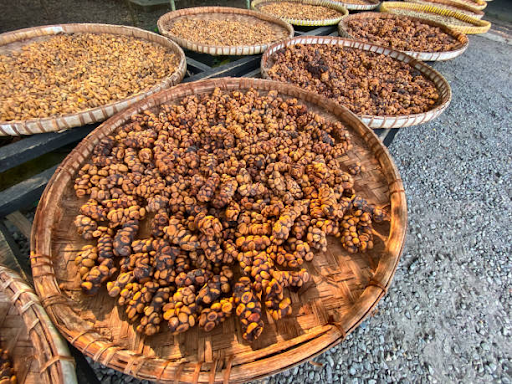
If you’re seeking premium wild Luwak coffee, look no further than Indonesia Specialty Coffee (ISC), a trusted supplier of authentic wild Kopi Luwak from Indonesia. Today, Indonesia is renowned for producing the best Kopi Luwak in the world, making it the premier destination for those seeking this luxurious and distinctive coffee.
Kopi Luwak, also known as civet coffee, stands out in the world of specialty coffee due to its unique production process. This luxurious coffee is considered one of the most expensive globally, and its distinctiveness lies in the way it’s made.
The term “Kopi Luwak” comes from Indonesia, where “Kopi” translates to coffee and “Luwak” refers to the Asian palm civet, an animal native to the region.
The preparation of Luwak coffee begins with civets consuming ripe coffee cherries. The beans inside the cherries pass through their digestive system, where enzymes break down certain compounds, enhancing the flavor profile of the coffee.
After passing through the civet’s digestive tract, the beans are collected from their droppings, cleaned, sun-dried, and roasted at high temperatures to produce coffee that is widely regarded for its smoothness and low acidity.
Historical Roots of Kopi Luwak
The origin of Kopi Luwak is intertwined with Indonesia’s colonial history during the 18th and 19th centuries. During Dutch rule, coffee plantations were established on the islands of Java and Sumatra. However, local farmers were not permitted to harvest coffee cherries for their personal use.
Observing the wild civets eating only the ripest coffee cherries, local workers discovered that the beans passed through the civet’s digestive system intact. They began collecting these beans, cleaning them, and roasting them to make their own coffee.
This practice allowed the workers to circumvent the colonial restrictions and eventually led to a unique coffee that gained a reputation for its distinctively smooth and less bitter taste compared to traditional coffee varieties.
Today, Indonesia is renowned for producing the best Kopi Luwak in the world, making it the premier destination for those seeking this luxurious and distinctive coffee.
The Science Behind Kopi Luwak Distinct Taste
What sets Luwak coffee apart is not only its unique production method but also the biochemical changes that occur as the beans pass through the civet’s digestive tract. Research suggests that the enzymes in the civet’s stomach break down proteins in the coffee beans, which significantly reduces their bitterness.
Additionally, the civet’s natural selection of only the ripest cherries further enhances the quality of the beans, contributing to the exceptional aroma and taste that Luwak coffee is known for.
This unique fermentation process has made Kopi Luwak a subject of scientific interest, with studies revealing that Luwak coffee beans contain a distinct set of volatile compounds compared to regular coffee beans, offering a richer and more complex aroma.
Ethical Concerns in the Kopi Luwak Industry
While the allure of Luwak coffee is undeniable, its production has raised significant ethical concerns. Traditionally, wild civets would roam freely and consume coffee cherries, providing the beans used in authentic Kopi Luwak.
However, with increasing demand, many producers have turned to farming civets in captivity. These farmed civets are often kept in cages, fed a controlled diet, and are sometimes subjected to poor living conditions, which raises animal welfare concerns.
The ethical debate surrounding Luwak coffee has led to calls for greater transparency and ethical sourcing. The Specialty Coffee Association (SCA) and animal rights groups have advocated against the use of caged civets, urging consumers to be cautious and seek out responsibly sourced Luwak coffee.
How to Identify Authentic Kopi Luwak
With the rise in popularity of Kopi Luwak, there has been an influx of counterfeit and low-quality versions flooding the market. To ensure you’re purchasing genuine Luwak coffee, there are several things to look out for:
- Source and Traceability: Ethical suppliers such as Indonesia Specialty Coffee (ISC) offer clear information about the origin of their beans, ensuring they come from wild civet populations in specific regions like Sumatra or Java.
- Price: Genuine, wild-sourced Luwak coffee is expensive due to the labour-intensive collection process. A lower-than-usual price is often a red flag that the coffee may not be authentic or has been sourced from caged civets.
- Bean Appearance: True Luwak coffee beans typically have a bluish-green or brown hue before roasting. They are also shinier compared to regular beans because of the natural polishing that occurs during the civet’s digestive process.
- Taste: Authentic Luwak coffee is known for its smooth, rich flavour, often described as having low acidity and a complex aroma. It should not have an overly fermented or harsh taste.
The Global Demand for Kopi Luwak
Despite its niche status, Kopi Luwak remains highly sought after worldwide, particularly in markets in East Asia, the Middle East, and among coffee connoisseurs in Western countries. The high price of authentic Luwak coffee, which can reach several hundred dollars per kilogram, reflects the labour-intensive process involved in its production.
In conclusion, Kopi Luwak is not just a coffee; it is a product with a fascinating history and a unique production process. While it offers a flavour unlike any other, consumers must be mindful of the ethical issues associated with its production.
If you’re looking to experience authentic Kopi Luwak, make sure to choose a supplier that prioritises ethical sourcing. Discover the true taste of Luwak coffee by exploring Kopi Luwak coffeeat Indonesia Specialty Coffee (ISC).