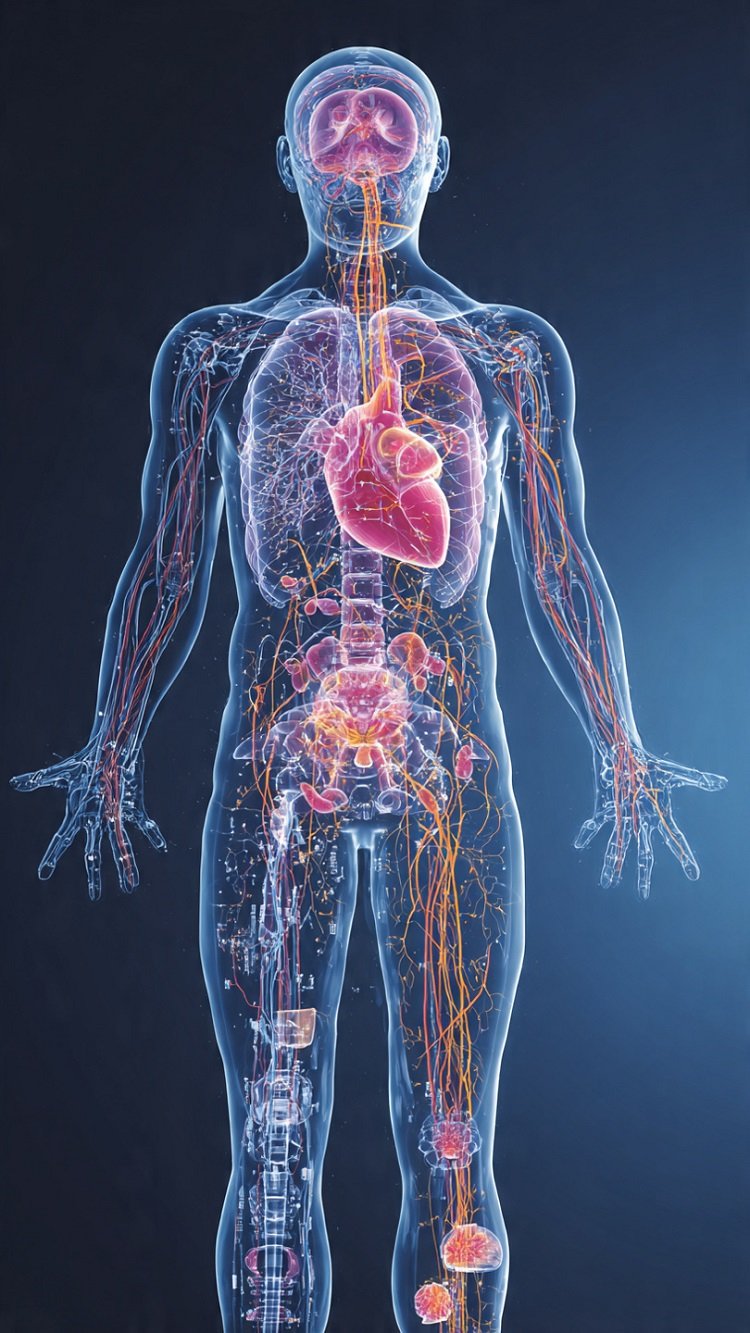
The science that involves the study of the functioning of the human body is known as human physiology. It examines the behavior of organs, tissues, cells and molecules singly and in concert with each other to provide life. Whereas anatomy deals with structures, bones, muscles, organs and tissues of the body, physiology deals with how these structures work, communicate and change in response to the body to external changes. These two are the cornerstones of any health sciences.
This article presents the fundamental concepts of human physiology in an easy-to-understand manner so that the beginners may learn about the systems of the body, the phenomenon of homeostasis and the necessity of the relationship between structure and function.
What Is Human Physiology?
Human physiology studies the biological functions that enable human body to operate. Such processes are breathing, digestion, circulation, movement, thought, hormone regulation, immunity and so on. Physiology does not just involve the identification of organs; it inquires:
- How does the heart pump blood?
- How do muscles contract?
- How do nerves send signals?
- What is the way the body can be balanced?
Physiology is a dynamic science, and it continues to research on the response of the body to changing conditions like exercise, stress, disease, aging, and change of environment.
The differences between Physiology and Anatomy
Physiology and anatomy are two closely related areas as they deal with different parts of the human body.
Anatomy
- Focuses on structure.
- Examines body parts, tissues and organs.
- Responds to questions like: Where is the liver? or What is the shape of the femur?
Physiology
- Focuses on function.
- Deciphers the mechanism of body parts working and interacting.
- Respond to questions like How does the Liver clean-up of the bloodstream? or How do bones store minerals?
It is imperative that one learns about the two as the two are closely intertwined. The form, the size and the structure of an organ enable it to perform its duties efficiently. As an illustration, the walls of capillaries are thin to allow an exchange of nutrients, whereas arteries have thick walls that resist high pressure.
The importance of Human Physiology
The knowledge about physiology in human beings is crucial to health and disease. It helps individuals:
- Understand the impact of lifestyle on organs and systems.
- Learn the symptoms and health issues.
- Informed health choices.
- Be thankful about the adaptation and the healing of the body.
- establish health sciences careers.
The physiological knowledge would make the processes of disease and treatment far more difficult to articulate without it.
The Body as Systems in Systems
Physiology sees the human body as an association of interrelated organ systems. Every system has certain functions, but they all require each other to balance and sustain life.
Systems that were studied in human physiology are listed below.
- The Nervous System
Communication over the body is made possible through the nervous system. It consists of:
- The brain
- The spinal cord
- Peripheral nerves
- Sensory receptors
Functions
- Getting of sensory information.
- Stimuli processing and interpretation.
- Replying to and sending movement messages.
- Controlling consciousness, memory and emotion.
The cells and organs can communicate very fast using electrical impulses and chemical neurotransmitters.
- The Endocrine System
This system is involved in the regulation of long-term processes by the hormones.
Key Functions
- Growth and development
- Reproductive functions
- Metabolism regulation
- Stress response
The hormones are spread via blood, affecting the organs and tissues over a long period but with a slow effect.
- The Cardiovascular System
This system carries the oxygen, nutrients, hormones and waste products in the body.
Major Components
- Heart
- Blood
- Blood vessels
Functions
- Circulation
- Temperature regulation
- Healing and clotting
- Immune transport
Healthy heart systems are very necessary in supplying energy to the cells and elimination of waste materials in the tissues.
- The Respiratory System
Respiratory system maintains the supply of oxygen in the body and removes carbon dioxide.
Major Organs
- Lungs
- Trachea
- Bronchi
- Diaphragm
Functions
- Gas exchange
- pH regulation
- Sound production
- Assisting smell
Breathing is involuntary and voluntary, and this means that the body has the capacity to change the amount of oxygen it breathes.
- The Digestive System
This system dismantles food, takes out nutrients and releases waste.
Key Organs
- Mouth
- Stomach
- Small and large intestines
- Liver
- Pancreas
Functions
- Digestion- mechanical and chemical.
- Nutrient absorption
- Energy distribution
- Waste elimination
Physiology demonstrates the way of how enzymes, acids and hormones make digestion organized.
- The Muscular System
Movement is made possible by the muscular system.
Three Types of Muscle Tissue
- Skeletal muscle
- Smooth muscle
- Cardiac muscle
Functions
- Movement and locomotion
- Posture maintenance
- Heat production
- Circulation (contraction of the heart and tone of the vessels)
The contraction of the muscular depends on the sophisticated interactions between the ions and the proteins, as well as the nerve signals.
- The Skeletal System
Bone system gives us the skeletal support.
Functions
- Protecting organs
- Storing minerals
- Producing blood cells
- The movement system is a lever system.
Bones are living tissues which are in a condition of constant remodeling according to physiological requirements.
- The Integumentary System
This system comprises of the skin, hair and nails.
Functions
- Protection
- Temperature regulation
- Sensory perception
- Vitamin D production
The physiology of the skin describes the healing, sensation, and immune protection.
- The Immune System
Pathogens are guarded by the immune system.
Major Components
- White blood cells
- Lymph nodes
- Spleen
- Antibodies
Functions
- Detecting foreign intruders.
- Inactivating or eliminating the pathogens.
- Building long-term immunity
Physiology demonstrates the mechanisms of work of inflammation, fever, and immunity itself.
- The Urinary System
This system eliminates the wastes in the blood and controls fluid balance.
Major Organs
- Kidneys
- Ureters
- Bladder
Functions
- Filtering blood
- Regulating pH
- Balancing electrolytes
- Maintaining fluid levels
Physiology involves the kidneys in the explanation of blood pressure and hydration.
- The Reproductive System
Reproductive physiology covers the mechanisms of body support of fertility and development.
Functions
- Synthesizing reproductive cells.
- Supporting fertilization
- The maintenance of pregnancy (in females).
- Producing sex hormones
Physiology explains the menstrual cycles, sperm production and control of hormones.
Core Concept: Homeostasis
Homeostasis is a process through which the body can have a stable inner condition irrespective of external changes.
Examples include:
- Maintaining body temperatures of approximately 37 C.
- Normalizing blood sugar levels.
- Maintaining proper pH
- Regulating blood pressure
Negative Feedback Loops
Majority of the homeostatic control is done by negative feedback.
Example:
- Sweating cools the body temperature when it increases.
- Insulin releases when the level of sugar in the blood is elevated.
These loops suppress changes in order to bring about equilibrium.
Positive Feedback Loops
These enhance reactions in the short term.
Example:
- The contractions of labor become more intense up to the birth.
- Factors that cause clotting become elevated until blood ceases to flow.
This process is called homeostasis, and it is the main emphasis of human physiology to represent the process by which the body maintains itself alive.
The Correlation of Structure and Function
Physiology lays much more stress on the relation between construction and functioning of a structure.
Examples:
- The red blood cells are concave so as to move easily through the vessels.
- There are fast neurons with long axons.
- The lungs have alveoli which are thin-walled to permit the exchange of gases.
- The pumping force is provided by the muscular walls of the heart.
The knowledge of this association explains the reason why organs and tissues operate as they do.
The use of Human Physiology in Understanding Disease
The breakdown of normal physiological processes is usually accompanied by disease.
Examples
- Diabetes arises when the regulation of insulin is unsuccessful.
- The cause of hypertension is the impaired control of blood pressure.
- Asthma has an impact on breathing and gaseous exchange.
- Osteoporosis is a disorder that is characterized by alterations in bone remodeling.
- The neurological diseases interfere with the communication between neurons.
Physiology aids in the study of symptoms, treatment, and prevention.
Physiology Applications in everyday life
Physiological knowledge is helpful even in the absence of a medical background.
Examples
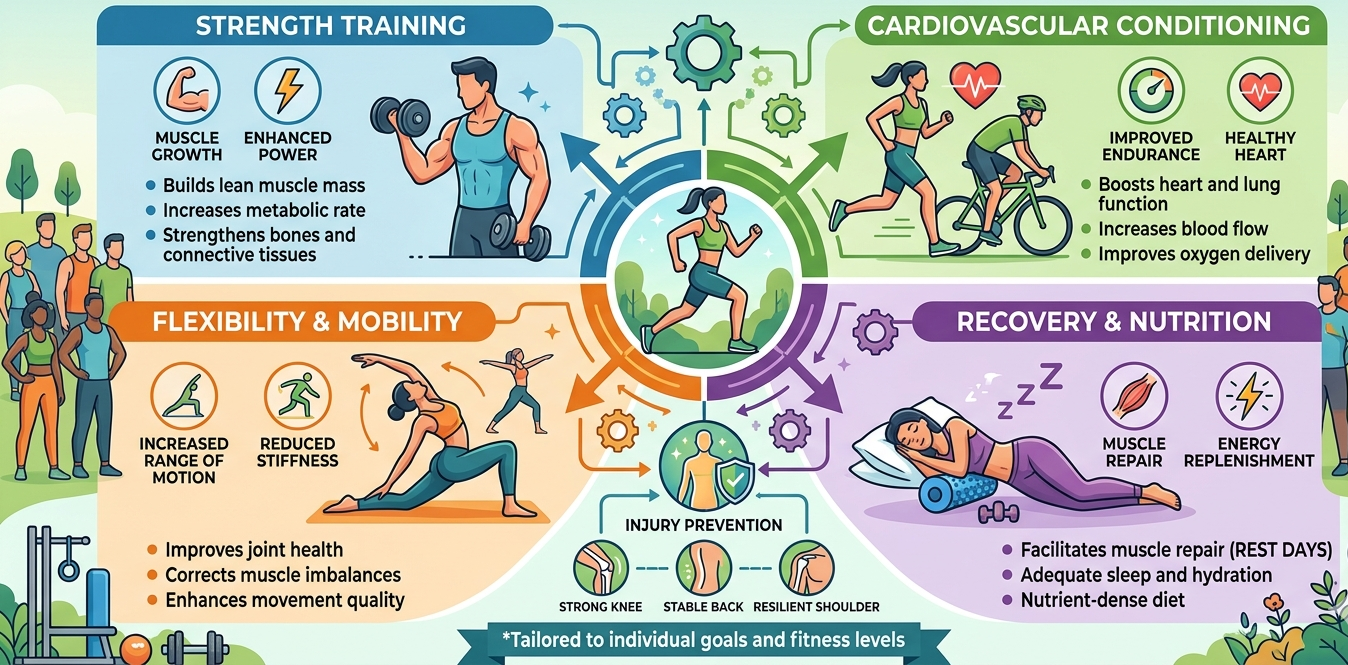
- Learning the benefits of exercise on the heart.
- Understanding the symptoms of dehydration.
- The reason why sleep influences mood and memory.
- Creating good choices about food.
- Learning about stress responses.
Physiology relates scientific information to the common health decisions.
Human Physiology Health Education and Careers
The basis of physiology is:
- Nursing
- Medicine
- Sports science
- Physical therapy
- Pharmacology
- Nutrition
- Public health
Experts in these disciplines use the physiological principles to diagnose, treat and educate.
Conclusion
The science of how the body works, adapts and finds equilibrium is human physiology. Beginners can use the understanding of organ systems, homeostasis and of structure and function to get a solid background in health and disease. Learning about human physiology does not only enhance an understanding of the body but also gives people the ability to make decisions that are informed and help them to live well throughout their lives.