Improve Indoor Air Quality Naturally is essential for maintaining a healthy lifestyle. Common pollutants that can cause chronic health conditions, fatigue and respiratory issues are often present without their knowledge in many homes, including dust, mold spores, volatile organic compounds (VOCs), and allergens. Air purifiers are useful, but can be costly and impractical for all rooms. The good news is that there are natural, environmentally friendly and affordable solutions which can greatly enhance the quality of indoor air. In this article, we’ll be discussing 6 ways to improve indoor air quality that doesn’t involve just machines, and help you to create a healthier, fresher, home environment.
Method 1: Proper Ventilation
A fundamental element of good indoor air quality is ventilation. Pollutants can build up if there is not enough ventilation which results in a stagnant environment. Frequent opening of windows and doors will help fresh air to flow and dilute contaminants such as VOCs, dust and carbon dioxide. Air conditioning units do not have to be used to ventilate a house; adequate cross-ventilation can be achieved by opening the windows on opposite sides of a room in order to create a natural breeze that carries the stale air out and fresh air in.
Exhaust fans are a must in bathrooms and kitchens in urban areas, where the air could be polluted outside. They eliminate moisture, odors and smoke, they prevent mould and they decrease the amount of harmful particles. Also, if you clean your HVAC system filters and ducts, it will prevent dust and allergens from being recirculated. Any measure taken to keep the air fresher, such as opening windows for 10-15 minutes each day, can make a huge difference! Ventilation is not only about comfort – it’s about achieving a dynamic exchange between the interior and exterior air and thus optimizing long-term health.
Method 2: Houseplants as Natural Purifiers

Another method for purifying the air is to plant indoor plants. House plants are nature’s air purifiers! In addition to their decorative value, plants remove toxins from the environment like benzene, formaldehyde and carbon monoxide and produce oxygen. Popular plants include spider plants, peace lilies, snake plants and aloe vera. These plants are low maintenance and can be kept indoors and are highly tolerant of human neglect.
Plants also control humidity by emitting moisture into the air; this decreases the respiratory irritation and dryness. By planting multiple plants in one area, a “green zone” is formed that continually purifies the atmosphere, making for a more effective plant. But, it is still crucial to choose pet and child friendly plants. Plants can help absorb some pollutants, but they also enhance other clean air strategies by providing beauty, natural filtration and psychological benefits: research has demonstrated that plants relieve stress and improve mood. Incorporating houseplants is easy and highly effective ways of improving indoor air quality.
Method 3: Humidity Control
Having a balanced humidity is crucial for indoor air quality. Too damp and too dry will lead to the growth of mold, dust mites and bacteria, as well as to irritation of the skin, throat and respiratory system. The optimum level of indoor humidity is in the 30-50% range.
Mold growth is prevented in damp places, such as basements, by dehumidifiers. Humidifiers are used in dry climates to help provide the moisture that is essential to the body and can help to decrease static electricity and discomfort with breathing. Humidity can also be naturally controlled with simple practices like fixing all of the leaks, venting bathrooms and drying laundry outside. A hygrometer can be used to measure the humidity to keep it in the healthy range.
A well-balanced humidity level can create a more comfortable atmosphere while helping to eliminate allergens and pathogens that can survive at extreme humidity levels. This balance will help minimize the chance for pollutants to thrive, which will keep you healthy and your home in good shape.
Method 4: Regular Cleaning Practices
With this Method, the cleaning is done through regular cleaning practices.
Common household dust, dander from pets and indoor debris are common indoor pollutants that can build up rapidly. One of the easiest and most effective ways to improve the air quality is by regular cleaning. A HEPA filter vacuum removes fine particles that can be released back into the air by traditional vacuums, and traps them in the carpet or upholstery.
Cleaning bedding, curtains and rugs with a damp cloth or putting dust on surfaces will help remove the allergens and help them not fly. Decluttering helps to limit dust build-up by limiting surfaces for dust to settle. Regular cleaning and maintenance of litter areas, as well as regular grooming of pets can help minimize dander and odors for households with pets.
Even the most unobtrusive surfaces like ceiling fans, vents and baseboards can contain dust which can float around in the air. You can literally minimize pollutants in your home by maintaining a regular cleaning plan before they can proliferate and cause any problems, and allow your home to be fresh and breathable.
Method 5: Reducing Indoor Pollutants
There are a wide variety of sources of indoor pollutants that are related to everyday household activities. Volatile organic compounds are also emitted from synthetic cleaning products, scented candles and aerosol sprays, which have a detrimental effect on the quality of the air. Using vinegar, baking soda and lemon juice for cleaning helps to avoid chemical exposure.
- Consider using unscented or soy candles instead of paraffin candles to reduce the amount of toxic emissions.
- It is important to refrain from smoking indoors, and to limit the use of harsh chemicals, to make the air fresher.
- Pollutants are also created during cooking, and by opening windows or using exhaust fans to help disperse smoke and odors during cooking.
If you’re aware of the products and habits that can increase the amount of pollution inside your home, you can significantly lower the amount of harmful particles. This proactive measure will help keep your home safe, clean and comfortable.
Method 6: Smart Use of Natural Light and Air Flow
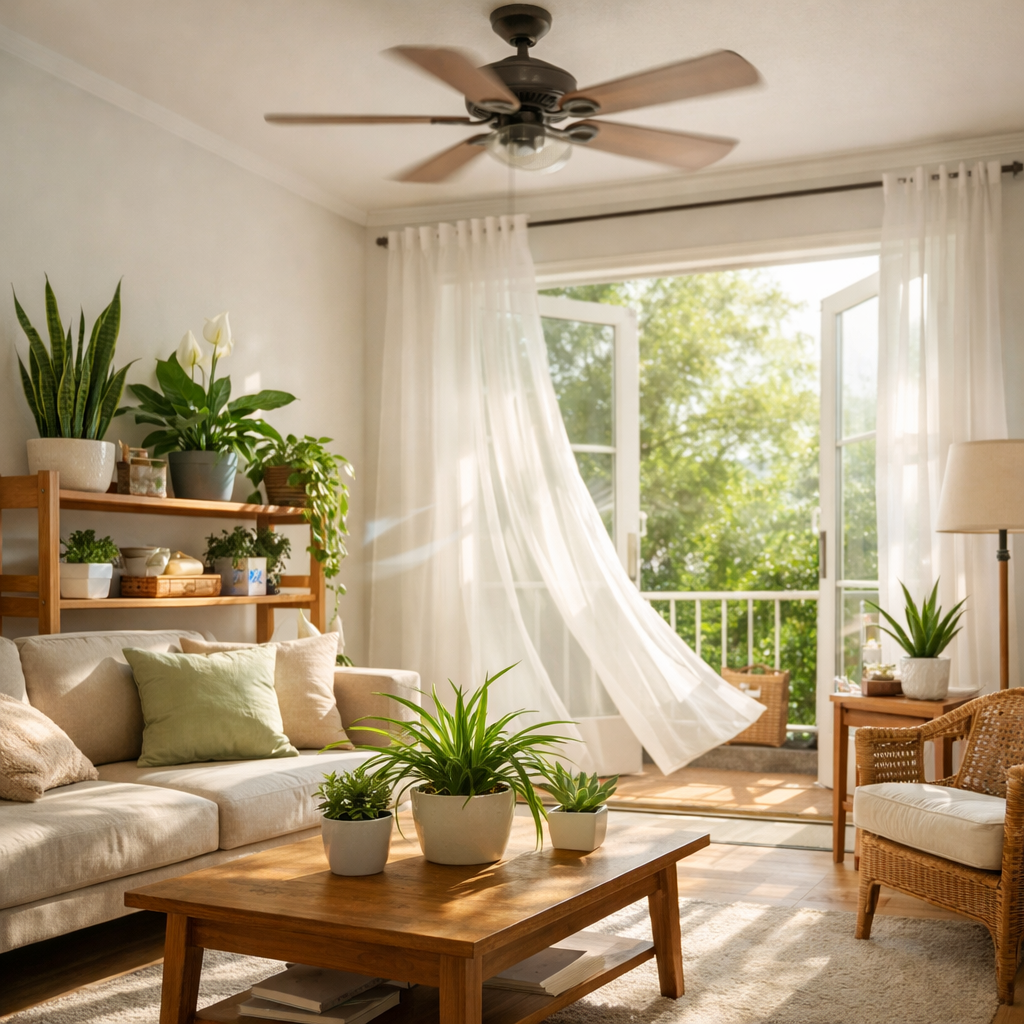
The power of the sun is a natural disinfectant which can help to minimize the growth of moulds and bacteria. Opening up your home to natural light will improve the air quality, as well as lighten up the interior. Furniture should be placed to not block the windows, thus allowing the best amount of light and airflow possible.
- Light colored drapes to let light in and still be private.
- Ceiling fan and portable fans improve the circulation of the air inside to avoid dead spots.
When allowed the natural light, combined with the movement of air, it’s a well-balanced environment in which pollutants are not able to flourish. This is an easy, yet practical way that can be used in addition to ventilation and cleaning to keep your home fresh, inviting and naturally cleaned.
Further Advice for Long Term Air Quality
- DIY cleaning recipes – Avoid using chemicals when cleaning with natural ingredients.
- Discover plants suitable for the home and pet-friendly plants.
- Humidity management: Make plans accordingly for the seasons.
- Ventilation strategies: How to maximise the ventilation of houses in various layouts.
- Reduce VOCs: Determine sources of VOCs and find substitutes that are safer.
Conclusion

There’s no need to buy fancy equipment to improve indoor air quality—it’s actually a matter of thoughtful practices, and using natural solutions. With ventilation, houseplants, humidity control, cleaning, minimizing pollutants, and maximizing natural light you make your home a healthier environment to live in and with your family.
These are easy, inexpensive and sustainable and can be used by all. The key to it: consistency – little steps add up over time to contribute to greater health and well-being. Use one technique today, and slowly add others in, until you have a haven of fresh, clean air in your home.