
In the modern world of quick-paced digitalization, companies turn to hybrid cloud platforms with the aim of capitalizing on the promises of on-premise infrastructure and the scaling capabilities of the public cloud-based environment. Although the benefits of hybrid cloud are numerous, including increased flexibility and cost-saving, it also comes with a distinctive difficulty: the increasing lack of skill in IT departments. As the complexity of working with a multi-cloud environment and guaranteeing their perfect integration is increasing, there is no wonder that companies are stumbling to provide their teams with the relevant skills to succeed in the activities of a hybrid cloud environment.
This paper discusses the hybrid cloud skills gap and offers practical measures that companies can implement so as to train and up-skill their IT departments to be victorious. Concentrating on cloud certifications, practical laboratories, and cloud provider collaborations will enable organizations to create well-constructed learning journeys that equip their teams to handle the operations of multiple clouds effectively.

Learning the Hybrid Cloud Skills Gap
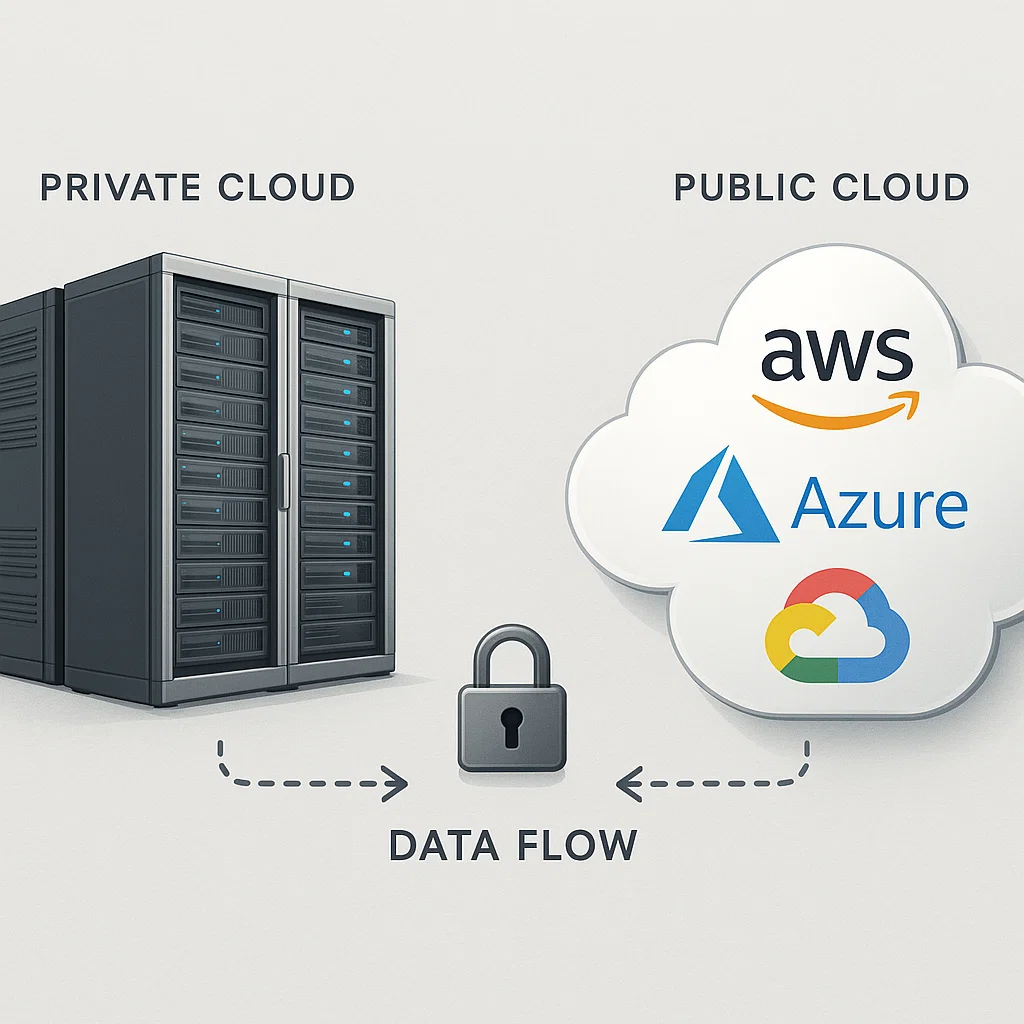
The hybrid cloud model is an integration of the private and public cloud environment and provides businesses with flexibility and agility. Nonetheless, the management and integration of various cloud platforms is not an easy task that demands technical expertise. The need to hire resourceful specialists knowledgeable in the ability to streamline the operations of clouds, coordinate workloads, and provide security in different platforms has increased exponentially as companies shift to hybrid cloud.
As it is stated in one of the recent reports, the shortage of cloud-skilled professionals is reported in almost 60 percent of organizations around the globe, and the adoption of hybrid cloud has become one of the most urgent fields. Such a gap contributes to the sluggish process of cloud adoption, security vulnerabilities, and inefficiency in IT operations. The expertise that is required to work with hybrid clouds cannot be learned easily, and the standard IT training programs do not tend to master the specifics of multi-cloud infrastructures and cloud-native technologies.
Why Training is the Key to Hybrid Cloud Success
Since the nature of hybrid cloud environments is quite complicated, it is evident that training is the key to success. Organizations that do not invest in an extensive training program are likely to lose out on the digital race. Professional IT teams will also be able to operate in a multi-cloud environment more effectively, reduce the risks of security, and achieve the maximum of hybrid cloud infrastructure.
Training is not only enhancing technical expertise but also instilling confidence among the teams and hence enhance quick decision-making and more effective problem-solving. In addition to this, a well-educated workforce has a higher chance of being innovative such that the company remains ahead of the trend in the industry.
The Process of Bridging the Hybrid Cloud Skills Gap through Training
To cope with the skills gap in the hybrid cloud adoption process, companies should invest in different training techniques which can offer both the theoretical and practical knowledge. Three important strategies to be considered are below:
Cloud Certifications: Developing Believability and Expertise
Cloud certifications are a well-known method of IT professionals proving their knowledge in particular cloud platforms. The certifications of such significant cloud providers as AWS, Microsoft Azure, and Google Cloud do not only confirm the abilities of a particular individual, but also give organizations a clear insight into the abilities of their own teams.
Indicatively, a certificate such as AWS Certified Solutions Architect or the Azure Solutions Architect Expert is offered to individuals who would like to specialize in the design and management of cloud solutions. These certifications provide career tracks with a systematic approach to learning about cloud security and cost optimization and multi-cloud management.
Certifications do not necessarily translate into success, but they offer a base of knowledge that can be expanded with actual experience. Organizations provide their employees with the latest cloud technologies and best practices by motivating them to obtain certifications.
Hands-On Labs: Hybrid Cloud Operation in the Real World
Although certifications are important, they are usually theoretical and not practical and hands-on. In order for IT professionals to actually gain insight into hybrid cloud operations, there must be avenues where cloud technologies are actually handled. This is where practical laboratories come into play.
Labs on-hand offer simulated environments where IT teams get to experiment with cloud configurations, test deployment strategies, and troubleshoot in real-life situations. These labs may be self-paced or instructor-led, and the participants get to have an experience with as many cloud tools and techniques as possible.
A wide range of cloud providers also provide so-called sandbox environments to learn, among them AWS Cloud Labs, Azure Labs, and Google Cloud Skills Boost. Such labs enable the teams to train on activities like deploying virtual machines, networking between clouds, and cloud-native security. Offering such hands-on experiences, organizations enable their teams to acquire the problem-solving skills, which would be used in the realization of effective hybrid cloud administration.

Collaborations with Cloud Providers: Outsourcing Knowledge
Another helpful approach in mitigating the skills gap is the cooperation with cloud providers. Cloud providers can also provide specialized training programs, workshops, and certifications in cloud computing that are regularly updated to capture the cloud changes. Such alliances can assist organizations in making sure that their IT staff remain on the front-line.
As an example, IBM Cloud provides various training materials devoted to hybrid cloud management. Through these resources, companies are able to equip their teams with the latest knowledge and tools to streamline the operations of the clouds. Also, most of the cloud vendors are able to provide enterprise-level services which come with specific training and consulting services and this adds even more expertise to the cloud among the organizations.
These partnerships also enable IT teams to have access to vendor-specific best practices and insights into the industry that are extremely important in ensuring a successful cloud integration and security.
Best Practices Learning Packs of Hybrid Cloud Skills
Organizations ought to establish planned learning journeys for their IT teams in order to close the skills gap successfully. These journeys are to cover all aspects of hybrid cloud management, such as cloud architecture, security, automation, and optimization of performance.
An average learning process could follow the following steps:
- Background: Introduction of cloud computing and hybrid cloud concepts. They could be cloud models (IaaS, PaaS, SaaS), cloud deployment patterns, and multi-cloud structures.
- Middle-level Skills: Prepare to move to more advanced training, including multi-cloud orchestration, best practices in achieving hybrid cloud security, and cost management. At this point, such certifications as AWS Certified Solutions Architect or Azure Fundamentals will allow the professional to learn more.
- High-level skills: In the case of more experienced professionals, it will be necessary to have advanced training in such areas as cloud-native applications, Kubernetes, and serverless computing. These technical subjects will make IT departments prepared to address complicated hybrid cloud issues.
- Constant learning: Cloud technology advances at a high pace hence there is a need to learn continuously. Inspire the staff to utilize webinars, internet forums, and conferences in the industry in order to keep abreast with the new cloud features and capabilities.
Organizations can make IT teams able to handle the operations of a hybrid cloud by providing them with structured learning paths.
Case Studies: Organizations Ahead of Their Time
A number of companies have been able to overcome the skills gap in hybrid clouds by investing in cloud skills and training. Indicatively, Cisco has collaborated with major cloud providers such as AWS and Azure to provide its IT teams with specialized training services. This alliance has enabled Cisco to come up with a well-trained workforce that can handle its hybrid cloud infrastructure effectively.
In the same way, Capital One has made significant investments in cloud certifications and practical laboratories, and its IT specialists are well-equipped to address the challenges of managing a hybrid cloud. Such initiatives have resulted in the enhanced efficiency of operations and a more responsive IT setup.
Verdict: Hybrid Clouds: Power IT Teams to Success
The increasing divide in the expertise of hybrid cloud adoption is a big problem for organizations. Nevertheless, with training, certification, practical experience, and collaboration with cloud providers as their top priorities, organizations can prepare their IT departments with the competencies that they would need to succeed in the hybrid cloud environment.
Investing in organized learning not only increases technical competence but it also creates a culture of life-long learning and innovation. Organizations can enhance the potential of hybrid cloud activities to achieve efficiency, security, and business expansion by enabling IT teams with the knowledge and tools to achieve their full potential.