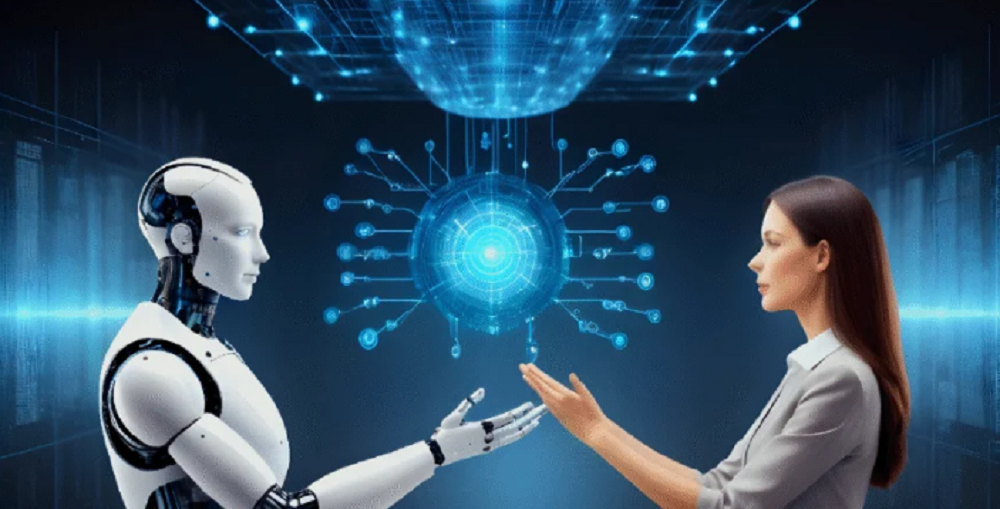
With artificial intelligence now influencing major decisions, from economic policy to healthcare and routine activities, a crucial evolution is underway: human-in-the-loop AI (HITL). Rather than leaving machines to operate in an opaque vacuum, HITL combines the computational efficiency of algorithms with the discernment, ethics, and contextual awareness of human analysts. This partnership is reimagining what it means to “work with data”, giving rise to more robust, balanced, and impactful insights.
Students enrolling in a data science course in Bangalore today are not just learning machine learning techniques in isolation—they are preparing for a world that values critical interplay between human expertise and algorithmic power.
What is Human-in-the-Loop AI?
Human-in-the-loop AI refers to systems where interactivity between human and algorithm is not a lucky chance, but a deliberate design choice. These systems integrate humans at critical junctures of data preparation, model training, verification, interpretation, and decision-making. The rationale? Humans excel where machines stumble: understanding nuance, catching anomalies, and making ethical decisions.
Consider the well-publicised use in medical diagnostics. Machine learning can flag abnormalities in thousands of radiology images, but it requires human specialists to verify, interpret, and contextualise results—especially in cases where lives hang in the balance. HITL ensures that AI’s impressive recall and speed are fully harnessed, but never at the expense of safety, empathy, or experience.
The Mechanics of Collaboration
The heart of HITL is feedback: analysts interact with algorithms through iterative cycles, guiding them towards greater accuracy and relevance. At the outset, humans define problems and select features, curating data that reflects real priorities. During training, analysts inspect intermediate outputs—highlighting errors, correcting mislabelling, and suggesting new data sources.
Once deployed, HITL systems enable live intervention. For instance, in financial risk modelling, analysts can override automated outputs that ignore market context or regulatory shifts. In content moderation on social platforms, AI tags harmful posts, but human review is essential to avoid misjudgment or culturally insensitive outcomes.
Professionals emerging from a data science course in Bangalore are increasingly equipped with skills not only in Python, deep learning, and cloud tools, but also in collaborative AI workflows, annotation tools, and interpretability frameworks—all indispensable for effective HITL adoption.
Why HITL Matters in the Age of AI
The rush to deploy autonomous AI in everything from customer service to criminal justice has revealed a stark reality: high-speed computation cannot replace moral reasoning, expert judgement, or local knowledge. Every algorithm is “trained” on data, yet data always carries traces of human subjectivity, error, and cultural bias. When left unchecked, those traces can become fault lines—resulting in discriminatory outcomes, misclassification, or outright failures.
Human-in-the-loop is more than a technical safeguard; it’s an ethical imperative. It ensures that algorithms serve human values, not the reverse. In sensitive tasks such as credit scoring or predictive policing, HITL workflows are now seen as essential for building public trust, enabling oversight, and maintaining compliance with evolving legal standards.
Applications Across Domains
HITL’s reach is growing rapidly:
- Healthcare: From cancer detection to personalised medicine, human oversight turns raw AI output into decisions that fit the patient, not just the pattern.
- Finance: Fraud detection and algorithmic trading demand rapid action, balanced with human intervention during high-stakes events or regulatory uncertainty.
- Manufacturing: Predictive maintenance algorithms flag component failures; skilled engineers then diagnose complex mechanical issues that data alone cannot explain.
- Agriculture: AI-powered drones survey crops, but farmers interpret anomalies and guide strategic responses, ensuring technology works for local realities.
Across these domains, the “loop” closes not simply with accuracy, but with adaptability, explainability, and public acceptance. Even advanced models can struggle with ambiguous cases, rare events, or rapidly shifting contexts—all instances where human partnership is indispensable.
Challenges and Pitfalls
Human-in-the-loop, while promising, is not without its hurdles. Integrating human expertise into algorithmic workflows demands investment in training, process design, and communication. HITL can slow down decisions if not carefully optimised—even a short lag in financial markets or emergency services can have consequences. There’s also a risk of cognitive biases creeping in, where humans may inadvertently reinforce flawed patterns or overlook subtle signals.
Technological solutions alone cannot address these issues; organisational culture must embrace continual learning and cross-disciplinary dialogue. Data science course providers in Bangalore are responding by fostering teams where statisticians, engineers, and domain experts frequently interact, questioning and enhancing each other’s analyses.
The Future: Towards Symbiosis
Forward-looking organisations are blending HITL with automated learning, seeking the sweet spot: algorithms that adapt promptly to human feedback, and humans who gain deeper, clearer insights into how the algorithms work. This vision of AI is neither dystopian nor utopian—it is deeply practical, shaped by lived experience and ongoing innovation.
Emerging frameworks allow transparent logs—tracking where human corrections were made, what decisions were overridden, and why. Enhanced interfaces allow analysts to probe models, test edge cases, and spot dangerous shortcuts in logic. The best outcomes arise when humans and machines respect each other’s strengths and limitations.
Conclusion
Human-in-the-loop AI is more than a technical pattern; it is a new paradigm for responsible, adaptive, and context-aware decision-making. It invites us to rethink the boundaries between machine efficiency and human wisdom, blending them into a kind of collaborative intelligence that is greater than the sum of its parts.
As this field advances—fuelled by the inexorable rise of AI and a growing recognition of its limitations—the role of experts trained in both technical and ethical dimensions becomes ever more vital. Those undertaking a data science course in Bangalore are stepping onto this frontier, learning not just the algorithms but the art of productive collaboration. Their task? To ensure the loop remains open, the dialogue is ongoing, and the outcomes are always oriented towards better, fairer, and more insightful futures.

Your blog is a true hidden gem on the internet. Your thoughtful analysis and in-depth commentary set you apart from the crowd. Keep up the excellent work!