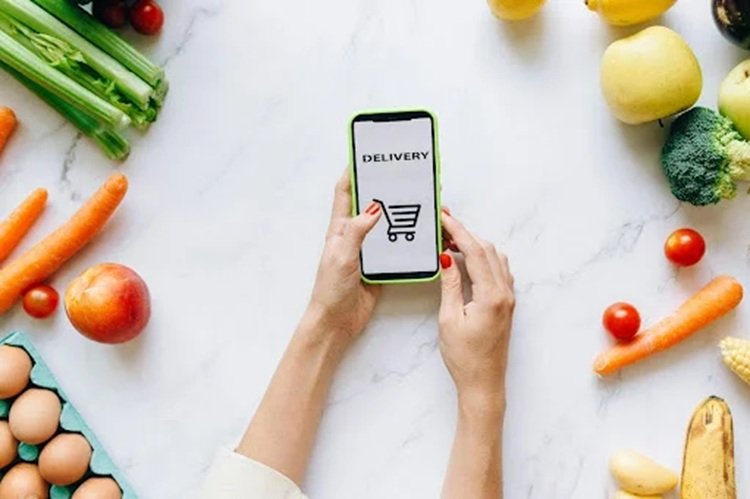
Getting made to express in this manner is, in reality, not just a trend, but a business option in many markets. The existing situations of lifestyle in-flexibilities, online luxury, and instant, contactless shopping-are a bird in the hand and surely would walk away with major profit opportunities for an entrepreneur. There can be many types of grocery delivery apps, from a big marketplace to a small neighborhood delivery app; hence whether one is to build any of these, knowledge of grocery delivery app solution becomes essential.
Here are some key steps, insight to launch a successful grocery delivery business, including guidelines for selecting the correct technology platform to handle your operations.
1. Research & Validate the Market
- Know your customers. Who do they belong to? Busy professionals? Elderly? Families? What are their grocery shopping habits? Delivery expectations? Are they willing to pay anything for that?
- Analyze competition. Who are the major players in your area? For instance, the UK online groceries market is a large one (~USD 23.4 billion in 2024) and is projected to go steady with growth.
- Choose your business model. Some common ones:
- Marketplace model — connect customers to multiple grocery stores (you take commissions).
- Single-store model — own inventory, deliver directly.
- Hybrid model — mix of owned inventory + partner stores.
2. Plan Your Business & Operations
- Business plan ideas: Define your mission statement, financial projection, marketing approach, pricing formulation, personnel requirements, and delivery logistics.
- Legal & regulatory compliance: Licences, food safety, permits, purchasing of ingredients, taxes. Make sure you satisfy all health and safety requirements, particularly those affecting perishables.
- Suppliers & inventory: Find reliable suppliers. For perishables, check storage facilities (cold rooms etc.). If the partner stores are used, an important aspect will be synchronisation of stock (real-time or near real-time).
3. Develop the Technology: Online Grocery Application & App
This is where the online grocery app, grocery delivery software, and grocery delivery app development come into play:
- Features to include:
- Search, browse by category (fruits, vegetables, dairy etc.)
- Product details with images & stock status
- Cart & secure payments
- Real-time order tracking
- Push notifications / order updates
- Ratings & reviews
- Mobile + Web presence: Many users prefer a grocery eCommerce mobile app. A responsive web application, however, can reach those who do not use apps.
- Option: pre built grocery store software or custom development. A pre-built solution will accelerate the launch; custom development offers more customization options and uniqueness.
- Role of Grocerzy: Platforms like Grocerzy can facilitate a very strong grocery marketplace development platform that offers you ready-made tools for building your grocery eCommerce app or grocery app solution with many of the essential features already engineered.
4. Logistics, Delivery & Fulfillment
- Define delivery area and zones. Start small so that you can control quality and delivery times.
- Logistics model choices: Own fleet, third-party couriers, hybrid. Also consider “dark store” or micro-fulfilment centres for speed.
- Order picking, packing & storage: Proper handling of perishable goods, efficient packing, clean storage.
- Route optimization & delivery scheduling: To reduce transit times and costs.
5. Customer Acquisition & Marketing
- Branding & positioning. What makes YOU different? Is it faster? Is it organic produce? Is it: lower costs? Is it: exclusive focus on a certain neighborhood?
- Digital marketing channels: SEO (focus on keywords like “online grocery application,” “grocery e-commerce app,” etc.), social media, content marketing, paid ads.
- Local & referral marketing: Build relationships with communities; give discounts for first orders and referral bonuses.
- User experience & retention: Make ordering frictionless yet take up all challenges with delivery, seek for feedback and act on it when needed. These happy customers will do your marketing for you.
6. Financial Planning & Revenue Models
- Cost components: App/software development or licensing, inventory (if purchased), logistics (vehicles, fuel, drivers), warehousing, and staff, marketing.
- Revenue streams:
- Product margin (markup on goods)
- Delivery fees
- Commission from partner stores (if marketplace)
- Subscription or membership models (free delivery above X or monthly/annual fee)
- Pricing strategies: Price should be competitive but profitable-with the value to customer and cost and margin to be accounted for.
7. Scaling & Continuous Improvement
- Collect and act on data. Order patterns, popular products, delivery delays, customer feedback.
- Optimize inventory & catalogues based on demand, reducing wastage.
- Expand delivery zones gradually. Maybe start with a few neighbourhoods, then grow.
- Add features over time: scheduled orders, express delivery, loyalty programs, premium services.
- Technology upgrades: Ensure your online grocery delivery software remains secure, scalable, and offers good UX as the user base grows.
Conclusion
Starting a grocery eCommerce mobile app or online grocery store is both offering a lot of excitement and packed with logistical challenges, requiring astute planning, impeccable technology, concerted logistics, and dedicated marketing, leaving it fairly plausible, almost always, to make a lot of profit. Whether you decide to build from scratch, or start it with a ready-made grocery store software platform like Grocerzy, anything else really just boils down to the execution: Is it reliable, fast, does the product have good quality, and is the customer satisfied