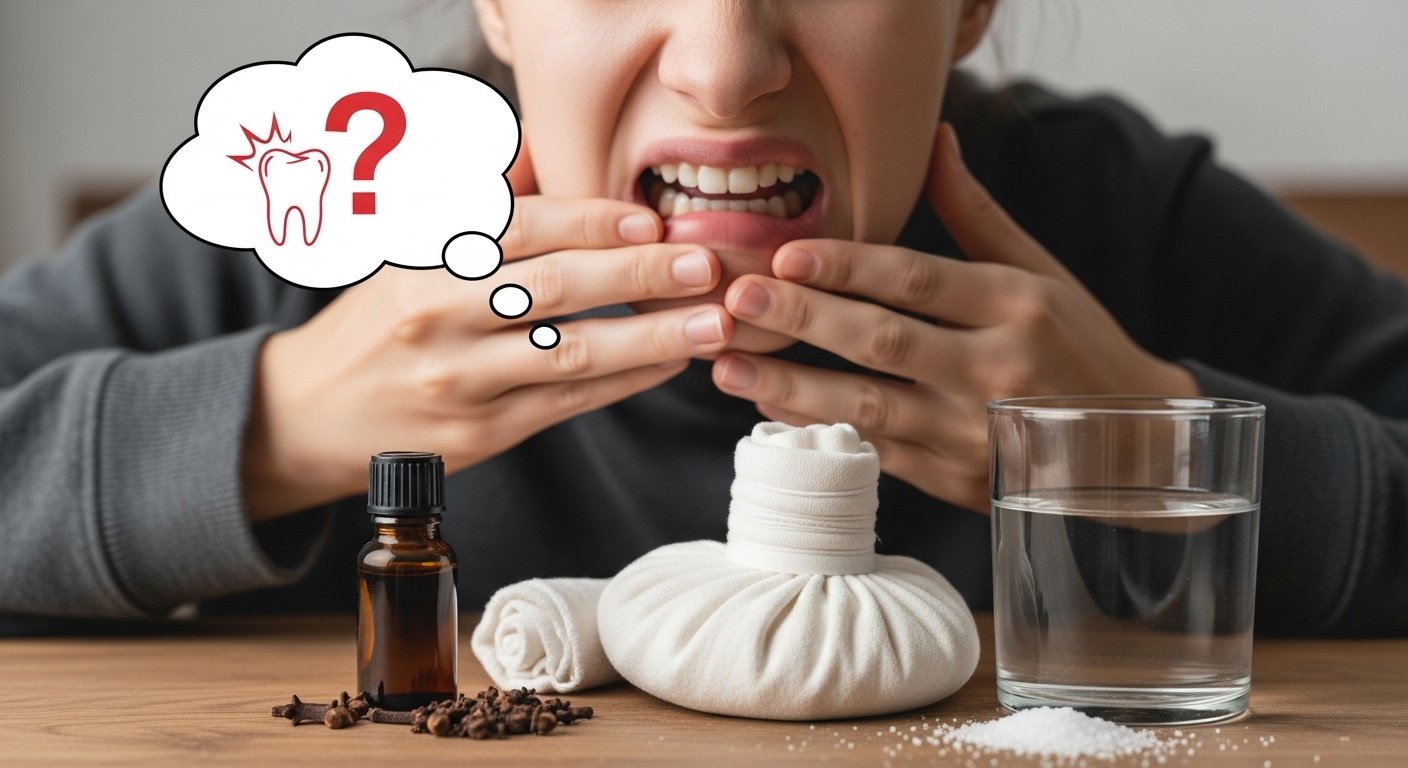
Wisdom tooth pain can range from mild discomfort to sharp, throbbing agony. While professional dental care is the only way to resolve the underlying issue permanently, there are safe, evidence-based strategies you can use to reduce pain quickly and temporarily. Here’s a practical guide to help you manage it effectively.
1. Rinse With Warm Salt Water
A warm saltwater rinse is one of the simplest and most effective ways to relieve wisdom tooth pain.
Why it works:
- Reduces bacteria in the mouth
- Soothes inflamed gums
- Helps flush out food particles trapped around the tooth
How to do it:
- Mix ½ teaspoon of salt in a cup of warm water
- Swish gently around the sore area for 30 seconds
- Spit out and repeat 2–3 times a day
This method is recommended by the National Health Service (NHS) as a safe way to calm gum inflammation around wisdom teeth.
2. Use a Cold Compress
Cold therapy can significantly reduce pain and swelling.
How it works:
- Narrows blood vessels
- Slows nerve signal transmission
- Reduces swelling
How to use it:
- Wrap an ice pack or frozen vegetables in a towel
- Apply to the outside of your cheek for 15–20 minutes
- Take a 20-minute break, then repeat as needed
Tip: Never place ice directly on your skin to avoid frostbite.
3. Take Over the Counter Pain Relievers
Medications like ibuprofen or acetaminophen can provide fast relief.
Why it helps:
- Ibuprofen reduces both pain and inflammation
- Acetaminophen relieves pain but does not reduce swelling
Important: Follow package instructions and avoid combining medications unless advised by a doctor. Overuse or misuse can cause serious side effects.
Reference: Mayo Clinic confirms that NSAIDs like ibuprofen are effective for dental pain when used correctly.
4. Apply Clove Oil for Temporary Numbness
Clove oil contains eugenol, a natural compound with mild anesthetic and antibacterial properties.
How to use it safely:
- Dilute one drop of clove oil with a carrier oil (like olive oil)
- Apply gently to the sore area with a cotton swab
- Avoid swallowing or using undiluted clove oil
Note: This is a temporary relief method; it does not treat infection or impacted teeth.
5. Maintain Oral Hygiene
Even when your mouth hurts, cleaning around the wisdom tooth is essential.
Tips:
- Brush gently with a soft-bristled toothbrush
- Floss carefully around the back teeth
- Use an alcohol-free antibacterial mouthwash if recommended
Keeping the area clean reduces bacterial buildup, which can exacerbate pain.
6. Avoid Irritating Foods
Certain foods can make wisdom tooth pain worse.
Foods to avoid:
- Hard foods (nuts, chips)
- Sticky foods (caramel, gum)
- Very hot, cold, or spicy foods
Better choices:
- Yogurt, mashed vegetables, smoothies, and soft soups
- These reduce mechanical irritation and inflammation
7. Elevate Your Head When Sleeping
Pain often worsens at night due to increased blood flow to the head when lying flat.
Solution:
- Use an extra pillow to keep your head elevated
- This simple adjustment can reduce throbbing and help you sleep
8. Manage Stress and Jaw Tension
Jaw clenching or grinding can aggravate wisdom tooth pain.
What helps:
- Apply a warm compress to jaw muscles (avoid swollen areas)
- Practice relaxation exercises
- Avoid chewing gum or hard foods
Reducing muscle tension lowers pressure on the wisdom tooth and surrounding gums.
9. Know When to See a Dentist
These home remedies relieve pain temporarily but do not treat the underlying problem. See a dentist promptly if you experience:
- Severe or persistent pain
- Swelling that spreads to your jaw, face, or neck
- Fever or general illness
- Difficulty opening your mouth
- Pus or persistent bad taste
According to the American Dental Association (ADA), untreated wisdom tooth issues can lead to infection, cysts, or damage to nearby teeth.
Quick Recap: Fast Pain Relief Tips
- Warm saltwater rinse – reduces inflammation and bacteria
- Cold compress – calms swelling and numbs pain
- OTC pain relievers – ibuprofen or acetaminophen
- Clove oil – temporary numbing and antibacterial effect
- Gentle oral hygiene – keeps the area clean
- Soft diet – avoids irritating foods
- Head elevation – reduces nighttime throbbing
- Jaw relaxation – reduces pressure from clenching
Bottom Line
There’s no instant cure for wisdom tooth pain at home, but the combination of anti-inflammatory care, pain relief, and oral hygiene can help you manage discomfort until you receive professional treatment.
Persistent or severe pain is always a signal to visit your dentist early evaluation prevents more serious complications and can make treatment simpler and less painful.