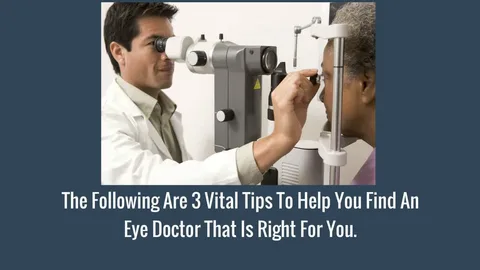
Finding a good eye doctor is not something most people think about until they need one. Vision gets blurry, a contact lens starts feeling wrong, or it has simply been too long since the last exam. Then the search begins, usually in a hurry, with no real framework for what to look for.
Nashville has no shortage of eye care options, but more choices does not always make the decision easier. What matters is finding a practice that handles your specific needs well, whether that is routine exams, contact lens fitting, managing an eye condition, or care for the whole family. Practices like eye doctor in Nashville Barnes Talero Eye Care provide comprehensive vision care for the whole family, from routine eye exams to contact lens fittings and treatment of eye conditions. The practice is committed to keeping your vision clear, comfortable, and healthy at every stage of life.
This guide covers what to actually look at when choosing an eye doctor in Nashville, so the decision is based on something more reliable than whoever shows up first in a search result.
Know What Kind of Eye Care You Actually Need
Not all eye care providers are the same, and the distinction matters more than most people realize. Optometrists handle routine eye exams, prescribe glasses and contact lenses, and diagnose and manage common eye conditions like dry eye, glaucoma, and diabetic eye disease. Ophthalmologists are medical doctors who can perform surgery and manage more complex conditions.
For most people looking for regular vision care, an optometrist is the right fit. If you have a diagnosed eye condition that requires surgical treatment or specialist management, an ophthalmologist may be involved. Many practices work with both, which is worth asking about when you call.
Knowing what you need before you search helps you filter options faster and avoid booking with a provider who does not actually offer what you are looking for.
What to Check Before You Book
Credentials and Licensing
This is the starting point. Any practicing optometrist in Tennessee must hold a Doctor of Optometry degree and be licensed by the Tennessee Board of Optometry. You can verify a license through the state board website. A provider who is current with continuing education will also be more familiar with recent developments in lens technology, diagnostic tools, and treatment options.
Board memberships like the American Optometric Association are a positive sign. They indicate the provider is engaged with the broader professional community and committed to staying current in their field.
Range of Services
A practice that only offers basic exams and sells frames is a different experience from one that provides contact lens fittings, dry eye treatment, pediatric care, and management of conditions like macular degeneration or diabetic eye disease.
Think about what your household actually needs. If you have children, pediatric experience matters. If you wear contacts, you want a practice with strong fitting protocols and a range of lens options. If you have a family history of glaucoma or other eye conditions, you want a provider who takes preventive monitoring seriously.
- Routine eye exams for adults and children.
- Contact lens fittings including specialty lenses for conditions like astigmatism.
- Dry eye evaluation and treatment options beyond basic drops.
- Monitoring and management of chronic eye conditions.
- Access to advanced diagnostic technology like retinal imaging.
Technology in the Exam Room Matters
Eye care technology has improved significantly in recent years. Digital retinal imaging allows a provider to see the back of the eye in detail without dilation in some cases. Optical coherence tomography gives a cross-section view of the retina that helps detect early changes in conditions like glaucoma and macular degeneration before they affect vision.
A practice still relying entirely on older equipment may miss early indicators that more current tools would catch. When you call to book, it is completely reasonable to ask what diagnostic technology the practice uses. A practice confident in its equipment will answer that question easily.
Location and Availability Are Practical Factors Too
Nashville traffic is real. A practice on the other side of the city from where you live or work adds friction to every visit. If an appointment runs long or you need to come back for a follow-up, distance becomes a real inconvenience.
Look for a practice with hours that work for your schedule. Evening and Saturday appointments matter if you cannot easily take time off during the week. Same-day or next-day availability for urgent issues, like a lost contact, a sudden change in vision, or eye irritation that is not improving, is something worth asking about before you need it.
Online booking and a responsive front desk also tell you something about how organized the practice is. If reaching someone is difficult before you are a patient, it is unlikely to improve after.
Insurance and Cost Transparency
Eye care costs vary more than most people expect. A basic exam at one practice may cost significantly less than the same exam at another. Insurance coverage for vision care is also more limited than many people assume. Routine exams may be covered under a vision plan, but contact lenses, specialty fittings, and certain diagnostic tests may not be.
Before booking, confirm that the practice accepts your insurance plan and ask what the out-of-pocket cost will be for the specific services you need. A transparent practice will give you a clear answer. Vague responses about costs before an appointment are a warning sign.
Read Reviews With Some Nuance
Online reviews are useful but need to be read carefully. A practice with hundreds of four and five star reviews over several years is a different signal from one with a handful of recent reviews. Look at what people specifically mention. Wait times, how questions were handled, whether prescriptions felt accurate, how staff treated children if that applies to you.
Negative reviews are worth reading too. One or two complaints among many positive reviews is normal. A pattern of the same complaint repeated across multiple reviews, especially around billing, wait times, or dismissive care, is more meaningful.
Your Eyes and Your Overall Health Are Connected
A good eye doctor does more than update your prescription. A thorough eye exam gives a provider a view of blood vessels, nerve tissue, and retinal health that can surface early signs of conditions well beyond the eye itself. High blood pressure, diabetes, and autoimmune conditions can all show early markers during a routine eye exam.
This connection goes further than most people expect. There is documented research on the link between cardiovascular health and visual symptoms. This article on whether heart problems can cause visual disturbances explains how changes in blood flow and arterial health can affect vision in ways that look like eye problems but originate elsewhere. Regular eye exams catch these signals early, which is one more reason not to put them off.
Choosing a Nashville eye doctor is not just a logistical decision. It is a health decision. The right provider gives you accurate vision correction, monitors your eye health over time, and notices changes that matter. Taking the time to choose carefully is worth it.