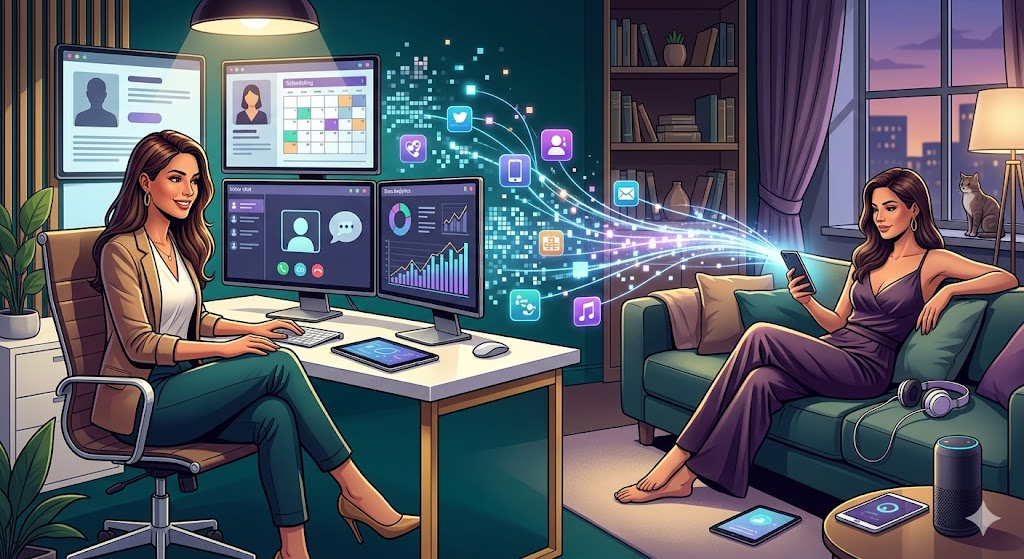
The “Digital Dating” era, once defined by the simple swipe-and-match mechanics of early apps, has evolved into a sophisticated, AI-driven landscape. As traditional boundaries between casual dating, the creator economy, and professional companionship blur, the industry is undergoing a radical transformation. No longer reliant on shadowy classifieds or word-of-mouth alone, the modern landscape is adopting cutting-edge technology to prioritize safety, transparency, and hyper-personalized experiences. This shift represents a broader cultural movement toward the “experience economy,” where the quality of interaction is prioritized over mere convenience.
Here is how the sector is adapting to the demands of 2026, navigating a world where digital presence is just as important as physical reality.
1. The Integration of AI and “Digital Twins”
One of the most significant shifts in the digital dating era is the rise of the “Digital Twin.” In 2026, many independent providers and agencies are utilizing AI-driven personas to manage the initial stages of client interaction. These are not mere chatbots; they are persistent, interactive representations of a provider’s brand, trained on their specific conversational style and preferences.
By automating the preliminary steps of an escort service, these digital twins can handle initial vetting, engage in natural language conversations to screen potential clients, and synchronize with real-time availability. This reduces the “ghosting” and scheduling friction common in traditional dating apps, ensuring that clients receive immediate responses at any hour. Furthermore, these AI assistants can remember client preferences—such as a favorite restaurant or a preferred conversational topic—ensuring that every subsequent interaction feels more personalized and thoughtful than the last.
2. Advanced Safety and Privacy Infrastructure
Safety has always been the cornerstone of the industry, but the digital era has introduced new threats—and new solutions. In 2026, the reliance on “gut feeling” is being replaced by robust, data-backed verification systems that protect both the provider and the client.
Biometric and Blockchain Verification
To combat the rise of “catfishing” and deepfakes, many platforms now utilize biometric authentication. Providers and clients alike use facial recognition or fingerprint scans to verify their identity. Furthermore, blockchain-based identity tokens (often referred to as “Self-Sovereign Identity”) allow users to prove they are verified and of legal age without revealing sensitive personal data like their home address or full legal name to the other party. This “Zero-Knowledge Proof” technology is a game-changer, providing a level of privacy that was physically impossible in the pre-digital era.
Real-Time Geo-Safety
Modern apps designed for professional companionship often include “dead-man’s switch” features and GPS-linked safety protocols. These tools share a provider’s location with a trusted third party or agency during a booking, automatically triggering an alert if a check-in is missed. In 2026, these systems are often integrated into wearable tech, allowing for discreet SOS signals that can be triggered without the client’s knowledge. This level of technical oversight offers a layer of security that traditional dating apps still struggle to implement effectively.
3. The Move Toward “Hyper-Personalization”
In the saturated world of digital dating, generic profiles no longer suffice. Clients today expect a tailored experience that aligns with their specific lifestyle, interests, and emotional needs. The “Digital Dating” era has turned everyone into a curator of their own life, and companionship is no exception.
Providers are adapting by moving away from static photo galleries toward video-first profiles and lifestyle portfolios. By showcasing their personality, hobbies, and conversational style through short-form video, they differentiate themselves in a crowded market. A high-end companion offering is often marketed more like a premium lifestyle brand than a simple transaction, emphasizing “emotional intelligence” and “social companionship” as key deliverables. This involves a deep understanding of psychology and social dynamics, allowing providers to offer support that ranges from executive presence at corporate events to empathetic listening during personal transitions.
| Feature | Old Industry Standard | 2026 Digital Era Adaptation |
| Initial Contact | Phone calls or SMS | AI-filtered encrypted messaging |
| Vetting | Blacklists/Manual searches | AI behavioral analytics & ID tokens |
| Payments | Cash-heavy/Discreet | Crypto or biometrically-locked transfers |
| Profiles | Static photos | 4K Video, VR previews, and AI Chatbots |
4. Diversified Revenue Models and the “Metaverse”
The digital dating era has taught the industry that physical presence is not the only way to monetize companionship. Inspired by the success of platforms like OnlyFans and the growth of the creator economy, the industry is embracing a multi-tiered revenue model that accommodates various levels of intimacy and budget.
- Virtual Dates: Using VR and AR technology, providers can offer immersive “metaverse” experiences. This allows for safe, long-distance connection that feels more personal than a standard video call. Clients can “walk” through a digital park or “attend” a virtual concert with their companion, bridging the gap between physical and digital worlds.
- Subscription Tiers: Many providers now offer “loyalty memberships” where clients pay a monthly fee for priority booking, exclusive digital content, or direct access via encrypted “inner circle” channels. This creates a stable income stream for providers and a sense of exclusivity for clients.
- Micro-Transactions: Instead of large, upfront commitments, platforms are experimenting with tokenized experiences, allowing clients to pay for specific blocks of time, such as a 15-minute morning wake-up call or a digital “check-in” during a stressful workday.
5. Navigating “Shadowbanning” and SEO
As mainstream social media platforms become increasingly restrictive with their algorithms, the industry has become a pioneer in Answer Engine Optimization (AEO) and niche community building. The struggle against “shadowbanning” has forced providers to become more creative with their digital footprints.
Since traditional SEO is being eroded by AI-generated search results, providers are focusing on appearing in “Answer Engines.” They ensure their data is structured so that when a user asks an AI for recommendations, the AI can pull from trusted, verified directories rather than cluttered, unverified web results. Furthermore, the industry is migrating toward community-first platforms—private, invite-only digital spaces where reputation is the primary currency. These decentralized networks use peer-review systems and “reputation scores” to ensure that both clients and providers are held to a high standard of conduct.
6. The Rise of “Niche-Specialization”
In the current era, being a “generalist” is no longer a viable business strategy. The digital dating world rewards those who find their niche. We are seeing providers specialize in very specific areas, such as:
- Travel Companionship: Experts in international logistics and cultural etiquette who accompany high-net-worth individuals on global tours.
- Wellness and Platonic Touch: Focusing on the therapeutic benefits of companionship and physical presence without the expectation of traditional intimacy.
- Intellectual Companionship: Providers who hold advanced degrees or specialized knowledge, hired specifically for their ability to engage in high-level discourse on philosophy, tech, or art.
Conclusion: The Professionalization of Connection
The digital dating era hasn’t replaced the need for human companionship; it has simply raised the bar for how that connection is facilitated. By embracing AI, blockchain, and immersive tech, the industry is shedding its “underground” image in favor of a professional, tech-forward service model. The focus has shifted from the “transaction” to the “transformation”—how a provider can improve a client’s quality of life through presence and connection.
The adaptation is clear: the future is one of high-tech vetting and high-touch interaction. As we move deeper into 2026, the boundaries between the digital and the physical will continue to melt away, ensuring that while the tools we use are digital, the human connection remains authentic, professional, and, above all, safe. The industry is no longer just surviving the digital age; it is defining it.