Every student loves to feel seen, valued, and appreciated. And their confidence and motivation grow when you recognize their effort. That’s why you need to turn the certificate of achievement for students into a motivational tool as a teacher and trainer.
It reminds them that they can see some progress from their hard work, and you’re celebrating that. Even more, your recognition encourages students to keep improving.
So, in this guide, you’ll see how to design meaningful certificates. You’ll also explore creative ways to use these certificates to get better learning outcomes, motivate students, and improve engagement.
Let’s get started.
How Certificates of Achievement Improve Learning Outcomes
Recognition feels good and can change how your students learn and perform. And just as a BSc certificate is important, you can use a simple certificate of achievement for students to strengthen motivation, increase participation, and build lasting confidence.
Even more, when you acknowledge your students’ progress, they’re more likely to stay engaged. So, you can use these certificates as a form of positive reinforcement to encourage good habits and tackle other factors affecting academic performance.
To add to that, it helps you shift your students’ focus from fear of failure. Instead, they start chasing progress and recognition.
Let’s say you’re a training instructor, for instance, and you noticed low completion rates in your online course. Here, you can introduce “Milestone Certificates” after each completed module. This can motivate your students to reach the next milestone.
Another thing: you can use certificates to build a growth mindset with your students. You reward them for their persistence and curiosity, so they start seeing learning as an enjoyable task.
| Recognition helps you create a feedback loop where effort earns acknowledgment, acknowledgment inspires effort, and the cycle continues. |
What Makes an Effective Certificate of Achievement for Students
For your certificate of achievement for students to be meaningful, it needs to be personal, thoughtful, and timely. This way, you recognize your students’ efforts and make them feel proud and accomplished.
So, here’s how to make your certificate of achievement for students effective.
Personalize It
Generic templates can feel empty. So, include the student’s name, the specific achievement, and your signature, like this:
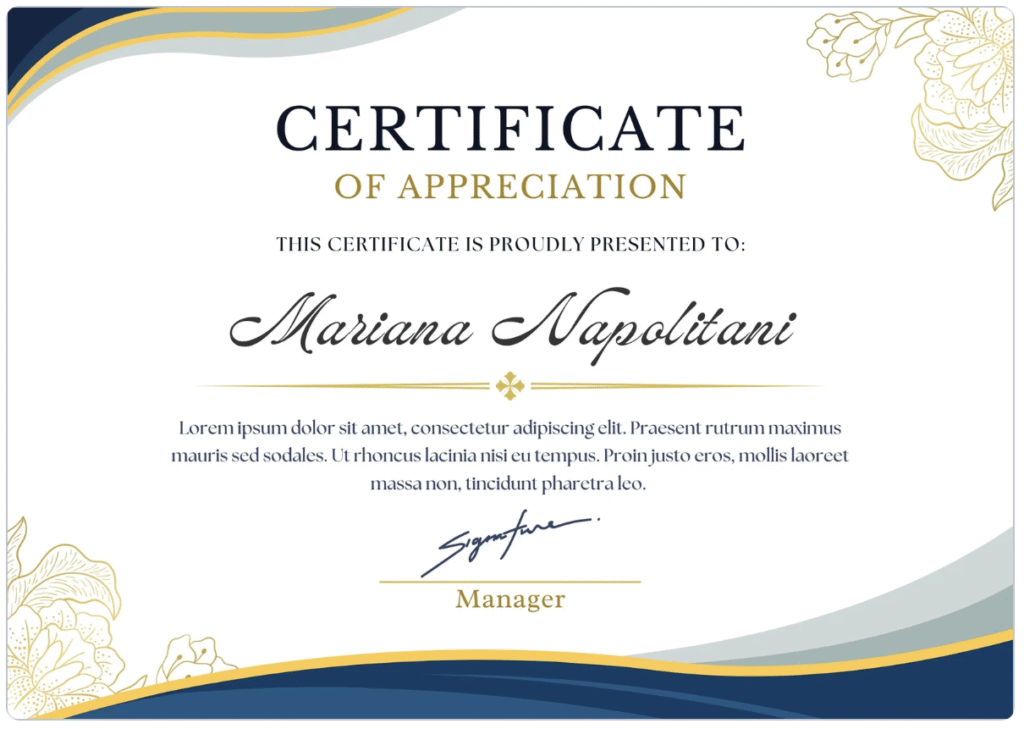
Image via Canva
For example, you can say, “Presented to Maya Thompson for demonstrating creativity and resilience in Science Lab Projects.” That shows your student that you noticed that they succeeded and how they succeeded.
Use Proper Design and Presentation
Visual appeal increases the emotional impact of your certificate of achievement for students. So, use school colors, readable fonts, and a clean layout. You can even add simple touches like a logo or gold border to give a sense of prestige.
Moreso, if you’re printing it, use quality paper. But, if it’s digital, make sure the image is high-resolution and shareable.
Make the Wording Meaningful
You should avoid vague phrases like “Good Job.” Instead, focus on the exact behavior or skill you’re recognizing.
For instance, you can use something like, “For showing leadership and empathy during group discussions.” This way, your recognition is memorable and credible.
Time It Properly
Your recognition can have the most impact when it’s fresh. So, present the certificates to your students right after an achievement. This way, you create a connection between your students’ efforts and the reward you’re giving.
Be Sincere
How you give the certificate of achievement for students matters as much as the certificate itself. So, use a few genuine words of praise. This turns that small award into a big motivator.
| When thoughtfully designed and delivered, certificates can change how students see themselves from passive learners to active achievers. |
Creative Ways to Use Certificates in the Classroom or Training Programs
The good thing is: Your certificate of achievement for students doesn’t have to be limited to end-of-year awards or final grades. You can use them to celebrate growth, encourage collaboration, and make learning more enjoyable right in your class.
So, let’s see a few ideas to bring recognition to your classroom or training.
Milestone Certificates
You can use milestone certificates to celebrate progress and as an interactive teaching tool.
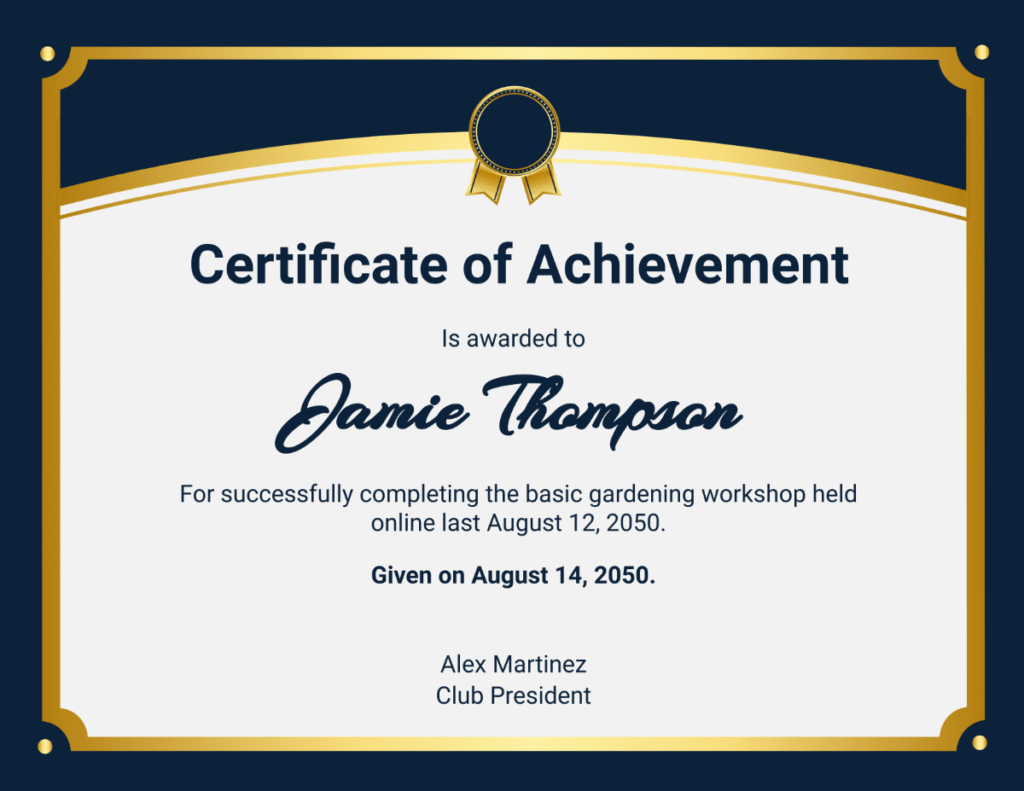
Image via Template.net
For instance, you can award certificates for completing each unit of a course, explaining a key concept, or getting better test scores. This helps your students see success as a process.
Peer Recognition Certificates
Another thing you can do is let students nominate one another for positive qualities, like kindness, leadership, or teamwork. This way, the recognition comes from peers. And it can help build empathy, collaboration, and respect between your students.
Skill-Based Certificates
You can also create themed awards like “Creative Thinker,” “Problem-Solving Pro,” or “Collaboration Champion.” With this, you highlight real-world skills and make your recognition feel more relevant to students’ growth beyond the classroom.
Digital Certificates
If it’s online learning or training environments, you can use tools like Canva, Credly, or Google Classroom to issue digital certificates with digital signage like this:
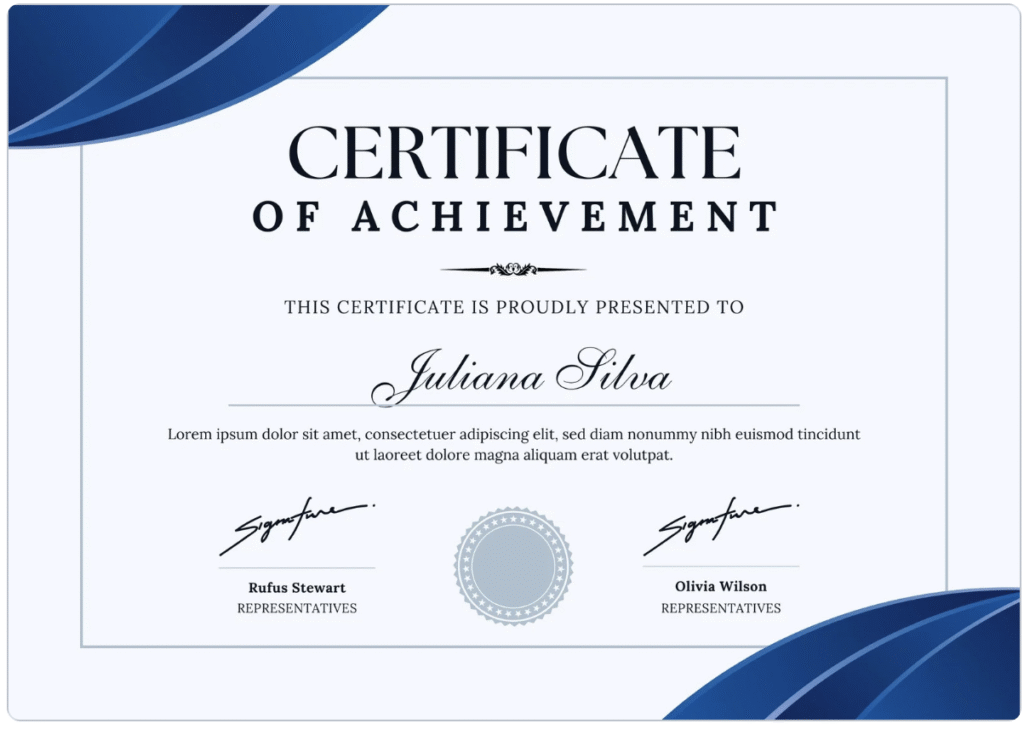
Image via Canva
They’re easy to share on student profiles, resumes, or portfolios. Plus, it extends motivation beyond the learning platform.
Surprise Recognition Days
You can give out certificates unexpectedly to students who show consistent effort or positive behavior. This way, you can keep their motivation high and remind them that you’re always noticing their good work.
| Small, creative moments of recognition can turn routine learning into a rewarding experience. |
How to Design Certificates That Inspire Motivation
Your certificate of achievement for students doesn’t need to be flashy to have an impact. The goal is to make it something the student feels proud to keep. And the design, wording, and tone all play a role.
So, here’s how to create a certificate of achievement for students that truly inspires motivation.
Keep It Clean and Readable
You should use clear, professional fonts like Georgia, Montserrat, or Open Sans. Plus, avoid clutter or overuse of color. This is because simplicity helps the message stand out.
Use Consistent Colors and Branding
You want to match the certificate’s style to your school or organization. Even more, you should add a logo, seal, or border that shows authenticity.
Include a Motivational Quote or Message
To add some emotional depth to your certificate, you can include a short, motivational line. It could be something as simple as, “Success is the sum of small efforts, repeated day in and day out.” — Robert Collier
Use Warm and Specific Words
Instead of just putting “Certificate of Achievement,” you can try something like: “Presented to [Name] for showing exceptional creativity and determination in Art Class.” This helps you add some storytelling to their accomplishment.
Use Easy Digital Tools
You can use platforms like Canva, Adobe Express, and Visme to create your certificate of achievement for students. These platforms offer free templates you can quickly customize. Plus, they allow you to create for both print and digital distribution.
| When students see a beautifully designed certificate with their name, it becomes proof of their progress that they can proudly share. |
FAQs
1. Do certificates actually improve motivation?
Yes. A certificate of achievement for students validates progress and builds confidence, which drives motivation.
| Acknowledgment through certificates can turn effort into more energy. |
2. How often should teachers or trainers give certificates?
Regularly, but not too often. Monthly awards or milestone-based certificates help keep motivation high without making recognition feel routine.
| Recognition works best when it feels earned, not expected. |
3. Are digital certificates as meaningful as printed ones?
Yes. You can easily share digital certificates and display them in online portfolios or resumes.
| When thoughtfully designed, digital certificates carry the same motivational value as printed ones. |
4. Should certificates reward effort or performance?
Both. Recognizing effort encourages persistence, while rewarding performance celebrates mastery.
| The best certificates and training programs strike a balance between the two. |
5. Can certificates work for adult learners too?
Yes. Recognition isn’t age-specific.
| Adults in corporate training programs or skill workshops respond positively to acknowledgment as well. |
Conclusion
We can see that motivation thrives on recognition. And when you take the time to acknowledge effort, you can help shape confidence, inspire growth, and strengthen the love for learning.
A simple certificate of achievement for students can spark that transformation. Whether it’s printed or digital, what truly matters is your message behind it.
Even more, you need to make recognition personal, consistent, and heartfelt. This way, you can create classrooms and training programs where achievement feels within reach for every student.
| A small certificate can encourage a big change in motivation and self-belief. |