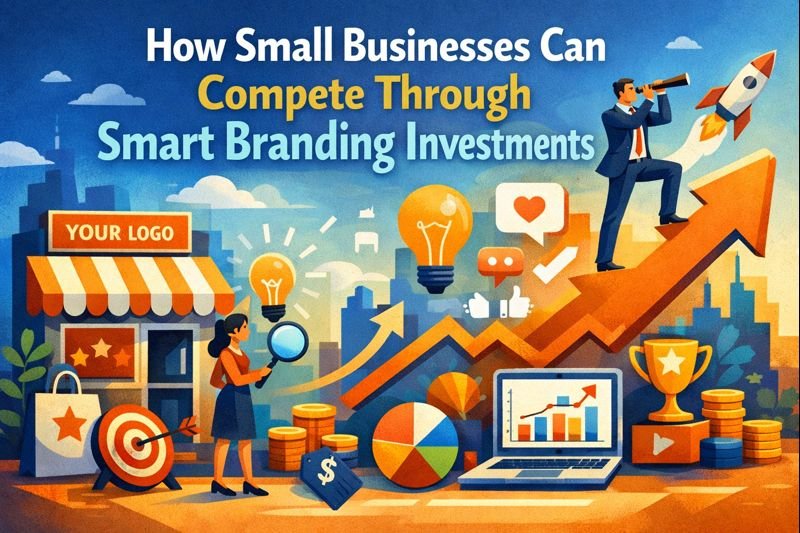
Small businesses don’t need massive marketing budgets to build a professional brand presence. While big corporations can throw money at every advertising channel, smaller operations have to be more strategic about where those branding dollars go. The good news is that smart, focused investments in the right areas can create just as much impact without draining the bank account.
Smaller businesses should invest in branding opportunities that carry more value (and longevity) than a one-time ad on television or radio. When the investment happens upfront, the physical branded items that come from such efforts sustain the exposure for months and years on end, well after the purchase. Such longevity is not always found in other offerings when competition for attention exists in so many other avenues.
Why Physical Branding is an Option
In a world gone digital, it’s easy to forget about physical branded items, but nothing beats someone who’s wearing or using one. After all, that person becomes a walking advertisement, providing organic exposure that’s far more valuable than a paid promotion on social media.
The challenge for small businesses, then, is to provide access to things that people want to utilize. Items that are cheap and fall apart after a week (or worse, get tossed into the back of a drawer) do little for brand exposure. It’s not about how many branded items a person has, but how good the quality of the item is that makes them want to use it often. One great hat is better than ten cheap shirts that will never see the light of day.
One Way is Team Apparel
One item that serves many purposes is team apparel. It’s a time-tested method of branding that gives employees and teams a consistent appearance with intention. This not only brings a level of professionalism to customer interactions, but also inspires employees that they’re all in this together and part of something greater than themselves.
Headwear specifically offers great visibility without the cost of full uniforms. Options for custom hats made in Canada allow businesses to create quality pieces that employees will actually wear outside of work hours, extending brand reach beyond business hours. The durability of well-made hats means they keep working as brand ambassadors long after cheaper alternatives would have worn out.
Recognition is All About Strategic Choices
Not every branded item makes sense for a strong return on investment. Business cards are necessary evils—and beyond reach. Branded pens get used but people rarely look at their desk unless they’ve got a drawer full of them. But wearing things checks all three boxes: useful, visible and lasting.
People need to wear clothing and accessible options (hats, bags, pins) as clothing options are available wherever someone goes. They need accessible things to hold onto while they walk—as long as it’s appropriate for the weather conditions too. Furthermore, high quality pieces last for years on end without extra investments, extending the exposure without added costs. The challenge comes when businesses think small and purchase the cheapest options available; these options often fall apart or are unattractive. A small, slightly higher price to pay for integrity and personal use certainly works in a brand’s favor when it comes to exposure over long periods of time.
Building Recognition
There’s no recognition without consistent appeal over time. While everyone knows that it takes more than one impression to have someone buy something, it’s important to note that consistent clothing elements help small businesses retain their brand through consistency as many people see graphics once and forget. Whether it’s the same color schemes or letters used in materials, things go overlooked when changes are frequently made along the way.
Sometimes this happens because small businesses get nervous; they think they need to “stay fresh” or “adapt.” But if anything, it confuses people who need to see logos multiple times before they finally gain traction in recognition. By having consistent graphics among team gear, promotional items and marketing efforts, time will enhance the recognition every time a window or channel appeals to a community member.
It’s Also About the Budget
Smaller budgets mean compromises must be made. Not every branding prospect is worth the effort—especially not in the beginning. Therefore, if it doesn’t make sense for ongoing exposure or reduces overall visuals in time, it’s best to pass upfront at the risk of spending otherwise more money down the road.
For example, while setting up a trade show booth might be great for business, it takes money away from a list of personalized efforts that could come into play if they are established first—and made for teams first for daily visibility with less expense. There’s no calculation there—it’s simple. It makes much more sense when companies spend money on investments that continue working for them without extra expense along the way from day one onward.
Also, dual purpose items get more use out of an initial investment than strictly defined needs. A well-branded item might lend itself to customer engagement efforts or team need/appearance but it can also be useful outside of work for personal ventures as well. This works with hats, shirts and bags to extend their expenses usage on a wider scale.
Playing the Long Game
Building a brand takes time, but if small businesses invest wisely from the get go they’ll find they’ll have an easier time continuing to grow since quality over quantity reigns supreme, time will work in their favor with consistency and extended messaging appeals work best for those without saturated markets and intimate niche communities.
The businesses that compete successfully against larger competitors aren’t necessarily the ones spending the most on branding. They’re the ones making smarter decisions about where those branding dollars go and choosing tools that keep working long after the initial purchase.