Our body is made up of trillions of cells for proper functioning of body, these cells have a specific DNA that directs them when to grow, divide and die. However, when these instructions go wrong due to mutations in DNA leads to cell growth in an uncontrolled manner.
Our old damaged cells survice instead of dying and new cells generate even when they are not needed. This leads to the formation of tumor, which becomes cancerous over time.
Cancer can be life-threatening, especially if diagnosed at a later stage. That is why it is crucial to detect which body part is affected by the cancer early and get the right treatment ASAP. Here is where immunotherapy comes into play.
What is Immunotherapy?
Immunotherapy is a treatment in which our body’s immune system is used to fight against diseases, like cancer. Instead of directly attacking cancer cells like in chemotherapy or radiation, immunotherapy helps the immune system recognize, target, and destroy cancer cells effectively.
There are different ways to treat cancer using immunotherapy, including:
- Monoclonal antibodies
- Immune checkpoint inhibitors
- CAR T-cell therapy
- Cancer vaccines
- Cytokine therapy
However, when it comes to side-effects, cancer vaccines and monoclonal antibodies have the least side effects. However, limited availability of cancer vaccine, slow response, and weaker effects, especially during advanced cancer, may not make this treatment ideal for all cancer patients. At times, researchers suggest mAbs as a great alternative.
What are Monoclonal antibodies (mAbs)?
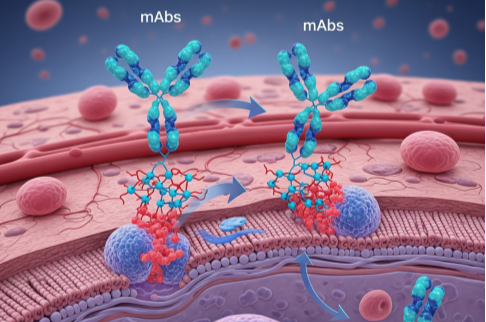
Monoclonal antibodies are lab-made proteins that mimic the natural antibodies produced by our immune system. Each mAb is designed to recognize a specific antigen on the surface of cancer cells.
Cancer cells have unique antigens, like HER2 in breast cancer. mAbs can target these cancer cells specifically and won’t harm the healthy and normal cells, making mAbs a powerful tool in cancer immunotherapy.
How mAbs Target Cancer Cells in Immunotherapy?
1. Block Growth Signals
Cancer cells grow fast because they send and receive signals telling them to keep dividing. However, some mAbs stick to the cancer antigen and blocks the signal that indicate cell to grow.
For example: In HER2-positive breast cancer, the cancer cells have too much of a protein called HER2. This protein tells the cells to grow and divide too fast. At times, Trastuzumab is used.
However, Trastuzumab is a mAb that sticks to the HER2 protein on the cancer cell. This blocks the growth signal, so the cell stops multiplying.
2. Mark Cancer Cells for Destruction
Some mAbs act like a “flag” for the immune system. When they attach to a cancer cell, they mark it as a threat. As a result, the immune system can easily find and destroy the marked cells.
For example: Rituximab (Rituxan) is used for certain blood cancers like non-Hodgkin lymphoma.
In blood cancers, cells have a protein on their surface called CD20. Rituximab is a mAb that binds to the CD20 protein and acts like a flag. This tells body’s immune system “here is the enemy”. Immune cells are then guided to that spot to kill the cancer cells.
3. Deliver Toxins to Cancer Cells
Some mAbs are used as delivery vehicles. They carry toxins, radiation, or chemotherapy drugs and attach directly to the cancer cells. This means the harmful substance goes straight to the cancer without damaging healthy cells.
For example: Brentuximab vedotin is used for Hodgkin lymphoma. This mAb binds to a protein called CD30 on Hodgkin lymphoma cells and release toxin directly inside the cancer cell. As a resul, the immune system gets the signal to distory this cell.
4. Help Immune Cells Work Better
Some mAbs are used to remove “brakes” on immune cells. Cancer cells often send signals to stop immune cells from attacking them. mAbs can block these signals. This helps the immune system do its job more effectively.
For example: Ipilimumab is used to treat melanoma (skin cancer). This mAb targets a protein called CTLA-4, found on immune cells. CTLA-4 acts as brake that slows down immune response. Cancer cells use this to hide from the immune system.
When Ipilimumab blocks CTLA-4, it removes the brake, allowing the immune cells to move freely and attack cancer cells with more force.
The Bottom Line
Monoclonal antibodies (mAbs) are a major step forward in cancer treatment. They work in smart and specific ways and helps our immune system fight against cancer cells. However, before you use a mAb for immunotherapy, make sure you buy monoclonal antibodies online from a reliable source, like AAA Biotech. For more information, visit the site.



Your writing has a way of resonating with me on a deep level. It’s clear that you put a lot of thought and effort into each piece, and it certainly doesn’t go unnoticed.