
Soul Alchemy NY · Holistic End-of-Life & Grief Support · Kingston, NY
There is a particular kind of silence that settles around a terminal diagnosis, not the restful silence of an ordinary evening, but a silence that feels full and pressing, as though the ordinary textures of life have suddenly receded and something enormous has moved in to take their place. In that space, many individuals find themselves searching not for answers, but for a way to speak what cannot quite be spoken, to hold what cannot quite be held, and to leave something behind that says, I was here, and this was my life, and it mattered. Creative expression, whether through painting, writing, music, storytelling, or any other form of making, has long offered human beings a way to do exactly that, giving shape and dignity to interior experiences that resist ordinary language. For individuals navigating serious illness, engaging in meaningful creative practice can become a powerful form of integrative support for major life transitions. one that honors the whole person, not just the body that is changing. This article explores the ways in which creative expression supports emotional processing, meaning-making, and a profound sense of self during one of life’s most tender passages.
The Language Beyond Words: Why Creativity Matters at the End of Life
Human beings have always turned to creative acts during times of great change, cave paintings, laments, funeral songs, and quilts stitched by many hands, and there is wisdom in that ancient instinct. When we are experiencing something that exceeds the capacity of ordinary speech, making something offers a different kind of release and recognition. For a person living with a terminal illness, the inner world can be extraordinarily rich and complex: gratitude, grief, unfinished longings, and a heightened awareness of beauty can all exist simultaneously, sometimes within the same hour. Creative expression does not ask us to resolve these contradictions; it invites us to set them down in some external form where they can be witnessed, held, and perhaps eventually understood. This is part of why integrative healing practices that include creative work have resonated so deeply with individuals navigating end-of-life experiences for generations.
There is also something deeply relational about making something when one’s time feels limited. A painting, a recorded story, a handwritten letter, a playlist compiled with care, these become objects of connection that outlast the moment of their creation. They carry a person’s voice, their sensibility, their particular way of seeing the world, into the lives of those who will grieve them. This kind of legacy work is not about grand gestures or finished masterpieces; it is about the act of reaching across time with open hands, saying something true about who you were and what you loved. Creative expression at the end of life is, at its core, a profound act of communication.
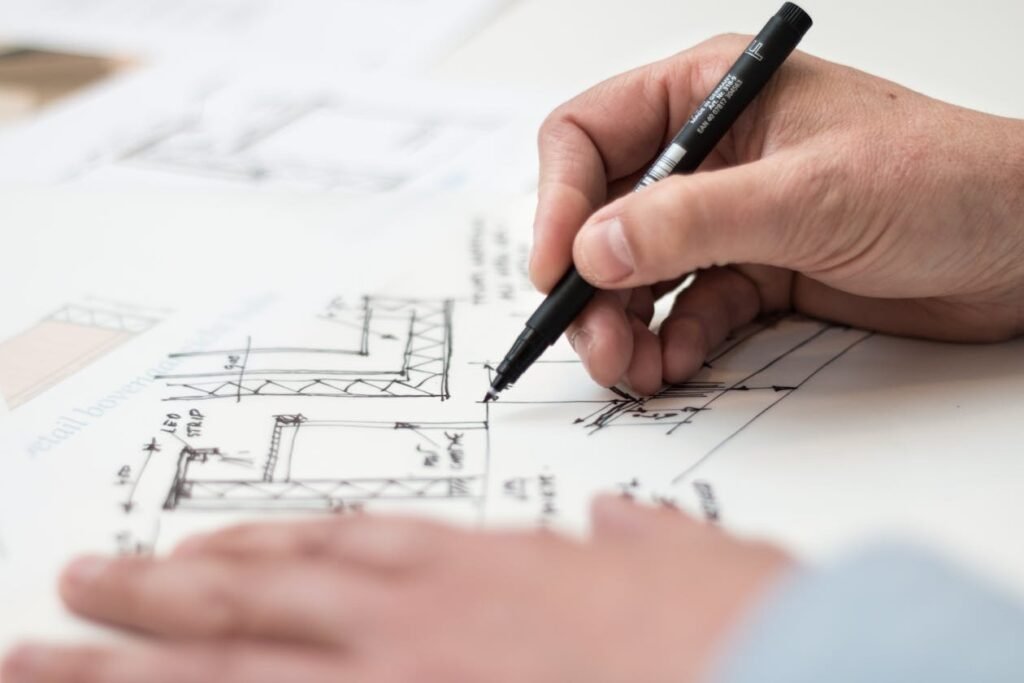
Art journaling offers a private, pressure-free space for individuals to explore emotions that resist ordinary language.
Storytelling, Music, and Journaling as Forms of Meaning-Making
Meaning-making during transitions is one of the most fundamental human needs, and creative expression serves this need in ways that are immediate, accessible, and deeply personal. Storytelling, for instance, allows a person to look back over the arc of their life and identify the threads of continuity, the values they carried, the people they loved, the moments that shaped them, and weave those threads into something that feels coherent and whole. Oral storytelling recorded for family members, written memoirs begun in a simple notebook, or even informal conversations guided by thoughtful questions can all serve this purpose. The form matters far less than the intention: to look, to name, to honor. In doing so, individuals often discover a quality of meaning and purpose that sits quietly beneath the surface of their experience, waiting to be seen.
Music occupies a particularly intimate place in the landscape of emotional expression. It requires no prior skill to engage with; one can listen, hum, sing softly, or simply request the songs that carry memory and meaning. Research in music and well-being consistently points to music’s capacity to ease tension, surface emotion, and create a sense of connection to something larger than the immediate moment. For someone navigating terminal illness, a playlist curated with intention, songs from childhood, wedding songs, and lullabies sung to children can become a kind of autobiography set to melody. Journaling, similarly, offers a private and pressure-free space where nothing has to be resolved, polished, or explained, and where the simple act of putting words on a page can bring a quiet but real sense of relief and self-recognition.
How Creative Practice Supports Nervous System Settling and Emotional Regulation
When a person is living with a terminal illness, the body and nervous system are often carrying an enormous load, not only the physiological realities of illness but also the sustained emotional weight of uncertainty, loss, and anticipatory grief. Creative activities that are gentle and repetitive, like the slow strokes of a brush across paper, the rhythm of knitting needles, and the steady motion of writing by hand can support a sense of internal settling that goes deeper than distraction. This is not a medical claim, nor is it a promise of any particular outcome; it is simply an observation that many individuals, across many traditions and many centuries, have found grounding in the act of making something with their hands and their attention. The body, given something familiar and rhythmic to do, often finds a kind of ease it cannot access through thinking alone. Creative practice, approached with gentleness, can become a reliable and self-directed way of returning to oneself.
Trauma-informed spiritual care recognizes that individuals facing serious illness may carry layered histories, old griefs, unresolved losses, and spiritual questions that have waited quietly for years and that now, in the intensity of a terminal diagnosis, rise to the surface with new urgency. A creative practice offered within this kind of attentive, non-prescriptive framework can become a container for that complexity, a place where nothing has to be fixed or finished and where the simple act of expression is enough. Holistic end-of-life care that includes creative modalities honors the full humanity of the individual: not only the body that is ill but also the spirit that is still reaching, still creating, still present. This orientation toward wholeness, rather than problem-solving, is at the heart of why creative expression matters so much at the end of life.

A calm, intentional environment supports the kind of reflective presence that creative and spiritual practices require.
Community, Witness, and the Gift of Being Seen
Creative expression is not always a solitary act, and for many individuals, sharing what they have made is part of the healing. Community-based spiritual care that includes creative sharing circles, gentle workshops, or facilitated legacy projects offers something that private practice alone cannot: the experience of being truly witnessed. When a person reads aloud something they have written, or plays a piece of music for a small, attentive group, or shows a painting they have made to someone who receives it with care, something shifts in the quality of their aloneness. Grief navigation support that weaves in collective creative experience understands this: that part of what we grieve, even before death, is the fear of being forgotten, and that being seen, in the fullness of our truth, is one of the most profound antidotes to that fear. Community becomes a form of belonging that illness cannot entirely take away.
For families accompanying someone through terminal illness, participating in creative expression alongside their loved one can also be a form of grief navigation support, a way of being together in the experience rather than simply enduring it. Making something together, even something small and imperfect, creates a shared memory and a shared language for the experience. It can ease the difficulty of conversations that feel too heavy for words, opening a gentler side door into connection. The object made, the poem, the collage, and the recorded story then become part of the legacy that the whole family carries forward, a tangible reminder of love that persisted and showed up, even in difficulty.
Dignity, Expression, and the Right to a Fully Human Ending
At its deepest level, creative expression during terminal illness is an assertion of dignity, a quiet but powerful insistence that a person remains, until the very end, more than their diagnosis. It affirms that inner life continues, that beauty still matters, that there are still things worth making and saying and leaving behind. This is not denial of what is happening; it is a full-throated embrace of what it means to be human in the face of it. When individuals are supported in accessing creative practices during this time, without pressure, without judgment, and without the requirement that anything be finished or perfect, they are being offered something genuinely rare: permission to be fully alive for as long as they are alive. That permission is, itself, a form of care.
The relationship between creative expression and end-of-life well-being is not a new discovery; it is a re-remembering of something that human communities have always known. What has changed is our collective willingness to offer this kind of support intentionally, within a framework of holistic end-of-life care that takes seriously the emotional, spiritual, and relational dimensions of dying. When creativity is woven into the fabric of how we accompany one another through terminal illness, gently, respectfully, without agenda, we offer individuals not only a way through the experience but also a way of meeting it on their own terms, with their own voice, and with the quiet confidence that what they have felt, thought, and loved has been worth expressing. That is not a small thing. That is everything.
To make something, even in the midst of illness, even without knowing how much time remains, is to say yes to life in its fullest sense.
