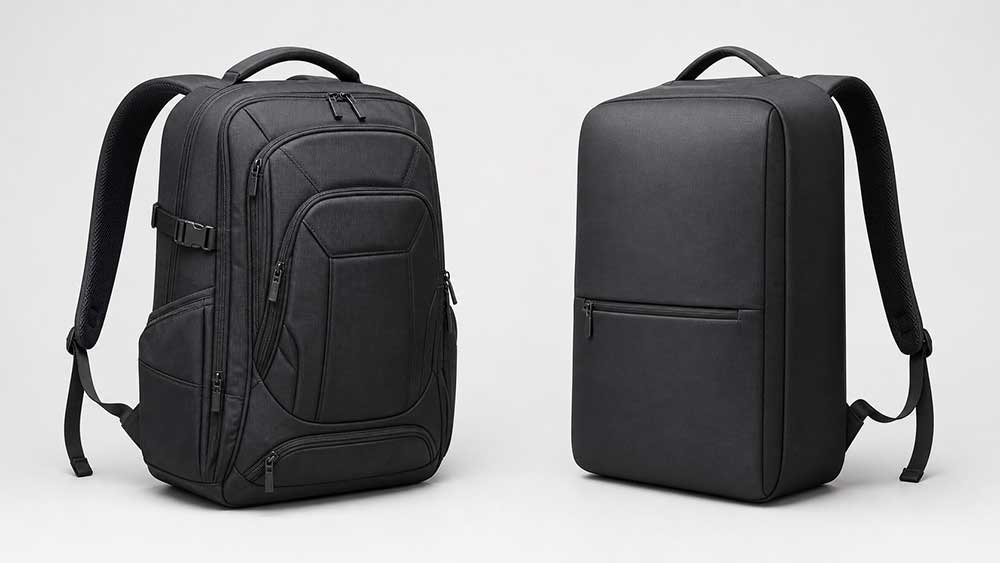
Launching a new backpack involves much more than choosing a fabric, adding a logo, and sending a design to production.
For brands developing their own collections, successful backpack development requires careful decisions about materials, dimensions, organization, comfort, construction, branding, sampling, and manufacturing feasibility.
The strongest products are usually created when design ideas and production requirements are considered together from the beginning.
Start With the Intended Customer
Before developing the backpack itself, brands should define how the finished product will be used.
A commuter may need laptop protection, organized compartments, water resistance, and comfortable shoulder straps.
A traveler may prioritize larger capacity, luggage compatibility, secure pockets, and lightweight construction.
An outdoor customer may require stronger materials, reinforced stitching, and improved resistance to weather and abrasion.
These different use cases influence almost every design decision that follows.
Materials Affect More Than Appearance
Fabric selection has a major influence on durability, weight, structure, cost, and overall product positioning.
Polyester is widely used because it offers versatility and consistent quality. Nylon may provide better abrasion resistance and lower weight, while canvas can create a more casual and lifestyle-focused appearance.
Brands should also consider lining, foam, webbing, reinforcement panels, thread, zippers, and hardware.
A strong exterior fabric alone cannot guarantee a durable backpack if other components are poorly selected.
Organization Should Solve Real Problems
Backpacks often need to carry electronics, documents, chargers, personal items, clothing, and accessories.
Common features may include:
- Laptop compartments
- Internal organizers
- Zippered security pockets
- Water bottle pockets
- Quick-access exterior pockets
- Document compartments
- Cable storage
- Luggage straps
However, more pockets do not automatically create a better product.
Each feature should support how the target customer will actually use the backpack.
Sampling Helps Identify Practical Issues
Technical drawings can communicate dimensions and construction details, but they cannot reveal every practical problem.
A physical prototype may show that a pocket is too narrow, the backpack feels too heavy, the shoulder straps require more padding, or the main opening becomes difficult to access when the bag is fully loaded.
For brands developing original collections, working with an experienced custom backpack manufacturer during sampling can help translate product concepts into practical, production-ready construction.
Small adjustments at this stage can prevent larger problems during bulk production.
Customization Creates Product Differentiation
Private-label backpack development can involve much more than adding a printed logo.
Brands may customize:
- Dimensions
- Fabrics
- Colors
- Linings
- Pocket layouts
- Laptop compartments
- Shoulder straps
- Zippers
- Buckles
- Metal hardware
- Embroidery
- Printing
- Labels
- Packaging
Companies such as Tamador support OEM and ODM bag development, helping brands develop customised products around their own functional, material, branding, and packaging requirements.
Manufacturing Feasibility Matters
A backpack that looks good as one prototype still needs to be repeatable during mass production.
Complex internal structures, unusual materials, custom hardware, and decorative details can affect production difficulty, cost, and lead time.
Brands should therefore evaluate manufacturability alongside appearance and functionality.
The objective is not to remove creative ideas, but to make sure those ideas can be reproduced consistently across a larger order.
Quality Control Supports Consistency
Quality standards should be established before bulk production begins.
Common inspection points include:
- Fabric color consistency
- Stitch quality
- Seam alignment
- Zipper operation
- Hardware finish
- Strap reinforcement
- Product dimensions
- Logo placement
- Internal cleanliness
- Packaging condition
Approved samples and clearly defined tolerances provide useful references throughout production.
Successful Development Connects Design and Manufacturing
A reliable backpack is the result of many details working together.
Materials, organization, comfort, construction, customization, sampling, and quality control all influence the final customer experience.
For brands developing their own backpack collections, considering these factors early can make the development process more efficient while reducing unnecessary problems during production.