In today’s digital economy, organizations are under constant pressure to improve efficiency, reduce costs, and make faster, data-driven decisions. For executives and business leaders, particularly those responsible for financial and operational strategy, the ability to harness data effectively has become a critical competitive advantage.
Modern businesses generate enormous volumes of operational and financial data across procurement systems, logistics networks, manufacturing operations, and customer interactions. However, the true value of this information is only realized when organizations have the tools and infrastructure to analyze it, automate processes, and turn insights into actionable strategies.
This is where artificial intelligence and advanced automation platforms are redefining enterprise operations. By combining scalable data infrastructure with intelligent automation tools, organizations can streamline workflows, improve financial visibility, and empower leadership teams to make more informed strategic decisions.
The Rise of AI-Driven Business Infrastructure
Traditional enterprise systems were designed primarily to store and process information. While these systems provided essential operational support, they often lacked the intelligence needed to analyze data in real time or detect emerging patterns.
AI-driven infrastructure platforms represent a significant shift from this traditional approach. Instead of simply processing data, these systems can continuously learn from it, identify inefficiencies, and recommend improvements.
At the enterprise level, enterprise AI platforms provide the technological backbone for advanced operational intelligence. These platforms integrate data from multiple business functions—finance, supply chain, procurement, logistics, and manufacturing—into a unified ecosystem that supports automation and predictive analytics.
For organizations managing complex global operations, this capability is transformative. Decision-makers gain visibility into operational trends, supply chain disruptions, and financial anomalies that would otherwise remain hidden within disconnected systems.
More importantly, AI infrastructure allows businesses to scale intelligence across departments. Instead of relying on isolated analytics teams, organizations can embed AI-driven insights directly into everyday workflows.
Data Visibility: The New Competitive Advantage
One of the biggest challenges enterprises face today is fragmented data. Procurement systems, logistics platforms, and financial reporting tools often operate independently, creating data silos that make comprehensive analysis difficult.
Without unified visibility, leaders struggle to understand the full picture of operational performance and financial health. This lack of transparency can lead to missed cost-saving opportunities, inefficient processes, and delayed decision-making.
AI-powered data platforms address this challenge by consolidating information from across the organization into a single analytical environment. Once integrated, the data can be processed using machine learning algorithms that detect patterns, forecast trends, and highlight anomalies.
For example, finance teams can analyze historical procurement data alongside supplier performance metrics and logistics costs to identify potential inefficiencies. This level of cross-functional insight helps organizations uncover hidden opportunities to improve operational efficiency and reduce expenses.
Automation and Operational Efficiency
Automation has long been a goal for enterprise organizations, but traditional automation tools often require rigid rule-based workflows that lack adaptability. AI-powered automation introduces a new level of flexibility and intelligence.
Instead of simply executing predefined instructions, AI-driven systems can learn from operational data and adapt processes accordingly. This capability allows organizations to automate complex workflows that previously required human oversight.
In procurement and finance operations, automation can streamline processes such as invoice processing, supplier management, and financial reporting. By reducing manual workloads, teams can focus on strategic activities that deliver higher business value.
Automation also improves operational accuracy. AI-powered systems can detect inconsistencies or irregularities in real time, reducing the risk of errors and ensuring that critical financial processes run smoothly.
For organizations operating in fast-moving industries such as manufacturing and logistics, the ability to automate decision-making processes can significantly improve responsiveness and operational agility.
Transforming Procurement and Financial Oversight
Procurement is one of the most critical areas where AI-driven insights can deliver immediate value. In many organizations, procurement data is scattered across multiple systems, making it difficult to track spending patterns or evaluate supplier performance effectively.
By implementing spend analytics software, companies can gain comprehensive visibility into purchasing behavior across departments and regions. These tools analyze procurement data to identify trends, uncover cost-saving opportunities, and detect potential compliance issues.
For CFOs and finance leaders, this level of insight is invaluable. Detailed spend analysis helps organizations understand where their money is going, which suppliers deliver the best value, and where operational inefficiencies may exist.
Beyond cost management, spend analytics also strengthens strategic decision-making. Finance teams can use these insights to negotiate better supplier contracts, optimize procurement strategies, and align spending with broader business objectives.
As organizations grow and supply chains become more complex, data-driven procurement strategies are quickly becoming essential for maintaining financial control and operational resilience.
Intelligent Document and Reporting Workflows
Enterprise operations rely heavily on documentation—from financial reports and procurement contracts to operational dashboards and regulatory filings. Managing these documents efficiently is critical for maintaining transparency and compliance.
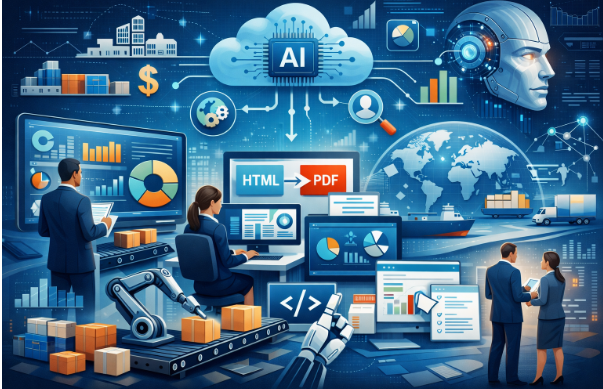
Automation technologies now allow organizations to generate, process, and distribute documents directly from digital systems. One practical example is the use of an html to pdf converter, which enables businesses to automatically transform web-based reports, dashboards, or invoices into standardized PDF documents.
This capability streamlines reporting workflows across departments. Finance teams can generate detailed financial summaries, procurement reports, or operational analytics directly from their internal systems without requiring manual formatting.
Automated document generation also improves consistency and audit readiness. Standardized documents ensure that reports meet compliance requirements while reducing administrative workloads for employees.
For organizations that manage high volumes of data-driven reports, these tools play a vital role in improving operational efficiency and information accessibility.
AI in Supply Chain and Logistics Optimization
Beyond finance and procurement, AI infrastructure is also transforming supply chain management. Global supply networks are increasingly complex, and disruptions—from geopolitical changes to natural disasters—can quickly impact operations.
AI-driven platforms can analyze real-time logistics data to predict potential disruptions and recommend alternative strategies. By evaluating shipping routes, supplier reliability, and demand forecasts, these systems help businesses maintain continuity even in uncertain conditions.
In manufacturing environments, AI-powered analytics can also optimize production planning and inventory management. Predictive models identify demand fluctuations and adjust procurement schedules accordingly, reducing both shortages and excess inventory.
For logistics teams, AI-driven visibility enables faster response times and more accurate resource allocation. Instead of reacting to problems after they occur, organizations can proactively manage risks and maintain operational stability.
Strategic Impact for CFOs and Executive Leaders
For C-suite leaders, the integration of AI infrastructure across enterprise operations represents more than a technological upgrade—it is a strategic transformation.
CFOs, in particular, are increasingly responsible for driving digital innovation within their organizations. Beyond managing financial reporting and compliance, modern finance leaders play a key role in guiding technology investments that improve business performance.
AI-powered platforms provide CFOs with deeper insights into operational data, allowing them to move from reactive financial management to proactive strategic planning. By combining financial analytics with operational intelligence, executives can make better-informed decisions that align with long-term business goals.
Furthermore, AI-driven automation reduces the administrative burden on finance teams, enabling them to focus on strategic initiatives such as risk management, investment planning, and growth strategy.
The Future of Intelligent Enterprise Operations
As businesses continue to embrace digital transformation, AI infrastructure will become a foundational component of enterprise strategy. Organizations that invest in intelligent data platforms today will be better positioned to adapt to evolving market conditions and technological advancements.
In the coming years, AI-driven systems will become increasingly autonomous, capable of managing complex operational processes with minimal human intervention. This evolution will enable businesses to operate with unprecedented efficiency and agility.
However, successful implementation requires more than technology alone. Organizations must also foster a culture that values data-driven decision-making and cross-functional collaboration.
By combining advanced AI infrastructure with strong leadership and strategic vision, enterprises can unlock new opportunities for growth, resilience, and innovation in an increasingly competitive global landscape.