Introduction
Artificial Intelligence (AI) is evolving at an incredible pace, and two of the most talked-about models today are GPT 5.3 Codex and Claude Sonnet 5. These AI systems are designed to help humans with writing, problem-solving, and coding, but they have unique strengths and features. In this article, we will compare GPT 5.3 Codex, Claude Sonnet 5, and also touch on Claude Opus 4.6, so you can understand which one is more suitable for your needs.
Overview of GPT 5.3 Codex
GPT 5.3 Codex is a language model developed to handle complex coding tasks as well as creative writing. It is an upgrade over the previous GPT models and has a stronger understanding of natural language. One of the biggest advantages of GPT 5.3 Codex is its ability to generate human-like text that feels natural and smooth.
This AI excels in tasks like programming, content creation, and problem-solving. GPT 5.3 Codex can also help students and professionals write essays, articles, and even technical documentation. Its advanced algorithms make it faster in understanding context and providing accurate results.
Overview of Claude Sonnet 5 and Claude Opus 4.6
Claude Sonnet 5 is a powerful AI model that focuses on creativity, conversation, and understanding subtle human inputs. It is widely recognized for its ability to maintain natural conversations and generate thoughtful responses. Unlike GPT 5.3 Codex, Claude Sonnet 5 is more conversational and often used in applications where human-like interaction is required.
Claude Opus 4.6 is an earlier version of Claude Sonnet 5 but still holds strong in performance. It has slightly fewer features compared to Claude Sonnet 5 but can handle most writing and conversational tasks efficiently. Both Claude models are designed to ensure ethical AI usage, and they are known for their safety features, making them a preferred choice for many developers.
Performance Comparison
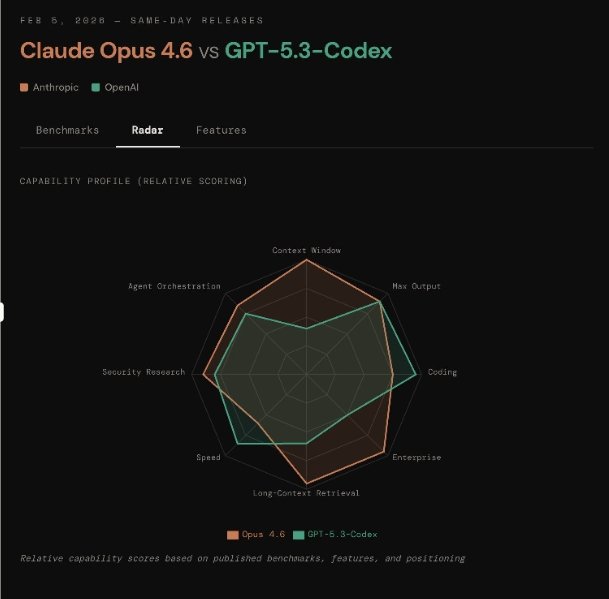
When comparing GPT 5.3 Codex and Claude Sonnet 5, performance is a key factor. GPT 5.3 Codex performs exceptionally well in technical tasks and coding. For example, developers can use it to generate code snippets, debug programs, and even create algorithms quickly. On the other hand, Claude Sonnet 5 is better at creative writing and conversational tasks. It can generate poems, stories, and even dialogue that feels more human-like.
Accuracy and Reliability
GPT 5.3 Codex is known for its accuracy in both coding and text generation. It can analyze large datasets and produce precise outputs. This makes it ideal for businesses and developers who need reliable AI assistance.
Meanwhile, Claude Sonnet 5 focuses more on reliability in conversations. It can maintain context for longer conversations and provides responses that are consistent and relevant. Claude Opus 4.6 offers similar reliability but with slightly less advanced features than Claude Sonnet 5.
User Experience
Both AI models provide excellent user experiences, but in different ways. GPT 5.3 Codex is favored by technical users who want a model capable of solving complex problems quickly. Its interface is designed to help users access coding and writing tools efficiently.
Claude Sonnet 5, however, offers a smoother experience for casual users and those interested in creative outputs. Its conversational abilities make it feel more like interacting with a human rather than a machine. The transition from Claude Opus 4.6 to Claude Sonnet 5 improved speed, contextual understanding, and the quality of generated content.
Applications and Use Cases
GPT 5.3 Codex is perfect for coding projects, technical writing, and research tasks. It can also help with educational purposes by explaining difficult concepts in simple language.
Claude Sonnet 5 shines in creative industries, customer support, and interactive AI experiences. Companies can use it to improve chatbots, enhance user engagement, and create creative content that feels authentic. Claude Opus 4.6, while older, is still valuable in these applications for organizations seeking a reliable AI solution.
Strengths and Weaknesses
- GPT 5.3 Codex: Strengths include coding expertise, accuracy, and technical versatility. Weaknesses are its conversational abilities, which may feel robotic in some scenarios.
- Claude Sonnet 5: Strengths include human-like conversation, creative output, and context retention. Weaknesses are its limited ability to perform complex technical tasks compared to GPT 5.3 Codex.
Conclusion
In summary, both GPT 5.3 Codex and Claude Sonnet 5 have their unique advantages. If you are looking for coding power, precision, and technical content, GPT 5.3 Codex is the clear choice. However, if you want creativity, human-like conversation, and engaging interactions, Claude Sonnet 5 or even Claude Opus 4.6 might suit you better. Choosing the right AI depends on your goals and the type of work you need to accomplish. Both models are leading examples of how AI is shaping the future of technology and communication.