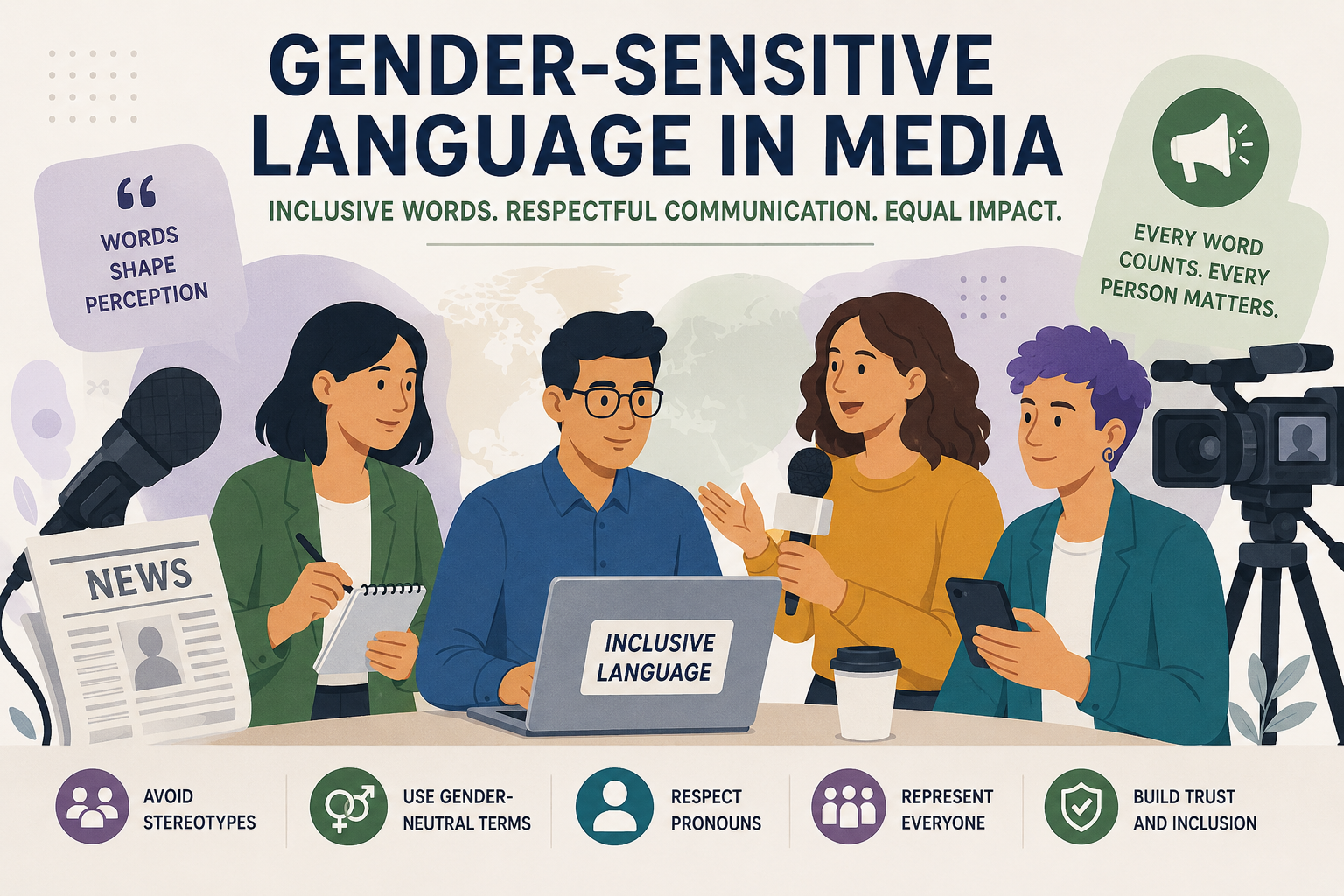
The media can greatly shape the way people think, talk, and communicate with each other. All headlines, ads, interviews, and social media posts impact the public’s perception of identity, equality, and belonging. There are many ways media can help create a culture of respect and fairness, but one key aspect is using gender-sensitive language. Communication can perpetuate or reinforce negative stereotypes or foster inclusion and understanding. Including everyone in the language that journalists, broadcasters, editors, marketers, and digital content creators use is crucial to responsible communication.
Language is a key focus as discussions on diversity and equality continue. Individuals with gender identity and/or gender roles are often excluded or marginalized in many traditional expressions and media practices in an unintended way. The use of gender-sensitive language by media professionals can help them communicate with a greater degree of accuracy, respect, and ethics. This will make audiences feel valued and represented and enhance the credibility and professionalism of media organizations. This article delves into why gender-inclusive language is important, some language challenges to steer clear of, and practical tips for using gender-inclusive language in all media.
What is Gender-Sensitive Language?
Gender-sensitive language are words and expressions which are free from bias, stereotypes, or assumptions about a person’s gender. It highlights equality and respect, providing communication that involves and respects people of all gender identities, such as women, men, non-binary, and transgender people. This kind of language is neutral and inclusive towards gender and does not depend upon old-fashioned conventions.
Gender-sensitive language in a media context may include the use of gender-neutral job titles, the use of personal pronouns, and the elimination of unnecessary references to gender in media stories and headlines. For instance, the writer can use the term “chairperson” or “chair” in place of “chairman”. Communicators can avoid using the word “he” or make gender-neutral changes in the sentence, such as using “they” or omitting gender altogether. These changes might seem inconsequential, but they can make a substantial difference in making communication through the media more fair and inclusive.
Key Characteristics of Gender-Sensitive Language
- Takes care to use gender-neutral language as appropriate
- Refrains from perpetuating gender norms
- Uses their name and pronoun(s) as they choose
- Removes superfluous gender identities
- Favours equity in representation and the worth of all citizens
Why Gender-Sensitive Language Matters in Media
Media is one of the main factors that influence the formation of cultural beliefs and cultural expectations. The language used in news stories, advertisements, movies, podcasts, and online can shape the opinions of others and the self-perception of people. Excessive use of gender-biased language by media can contribute to the reinforcement of stereotypes, which hinder opportunities and normalize inequality. Using gender-responsive language infers a more balanced and accurate picture of people.
Trust-building with audiences is yet another reason to use inclusive communication. Respecting identity and diversity is more likely to engage people with media brands and organizations. Proper use of language demonstrates social awareness and ethical responsibility in the media. This can help to enhance credibility, loyalty, and public image. On the other hand, if words are not used carefully, they can cause misunderstanding, criticism, and even alienation, damaging trust.
The Advantages of Using Gender-Sensitive Language in Media
- Promotes positive and respectful dialogue
- Eliminates negative thoughts and prejudices
- Builds audience trust and credibility in the brand
- Takes an up-to-date attitude to diversity and social values
- Enhances ethical standards of the journalist and communicator
- Practices safer and more welcoming media practices
Historical Influence of Gender Bias in the Language of the Media
Gender was commonly discussed and depicted in traditional media in narrow and stereotypical ways for many years. Men often had leadership, knowledge, and authority attributed to them, whereas women were usually characterized by their physical appearance, family roles, or emotions. These assumptions were echoed and perpetuated in the media. A man may be referred to as “doctor” and a woman as a “female doctor”, implying that she was not a doctor like a man.
These linguistic ways of doing things have long-term social impacts. Repeatedly seeing stereotypical gender portrayals can give audiences narrow views of what is possible, how to behave, and who they are. Young people can form their aspirations and sense of self-worth from what they are witnessing and hearing in the media. Using gender-sensitive language is one way that media professionals can help to break away from old narratives and help in the creation of more balanced, empowering media images.
Common Instances of Gender-Biased Language in Media
Sometimes, gender bias in language is so subtle that it can be embedded in communication that occurs every day. The key to change is to identify bad language and take steps to correct it. Certain words might appear safe because they have been around for many years; however, they could end up excluding or stereotyping people.
List of Terms that are Common and Biased for Gender and an Alternative that Could Be Used to Replace the Original Terminology
| Gender-Biased Terms | Gender-Positive Language |
|---|---|
| Chairman | Chairperson / Chair |
| Policeman | Police officer |
| Fireman | Firefighter |
| Businessman | Businessperson |
| Mankind | Humanity / People |
| Stewardess | Flight attendant |
| Manpower | Workforce |
| He (generic) | They / The Individual |
Other Means of Media Communication That Are Biased
- Describing women’s clothes more than women’s achievements
- Describing men as being “manly” or “stoic”
- Putting a comment on a person’s gender when it’s not appropriate or necessary to the story
- Making use of stereotypical family roles in advertising stories
- Assuming another person’s place without their consent
Practical Guidelines for Using Gender-Sensitive Language in Media
Consistency and intention are needed for using inclusive language. Good editorial practices and a careful examination of content before going to print can enhance the quality of communication in the media. Audiences’ experience and interpretation of media messages can greatly differ due to slight differences in wording.
1. Use Gender-Neutral Job Titles
It’s not uncommon for many professional titles to be based on gendered language. It’s important to replace them with neutral alternatives to ensure equal representation and avoid outdated assumptions.
Examples include:
- Actor instead of actress (when appropriate)
- Server instead of waitress/waiter
- Instead of the term “spokesman,” use “spokesperson”
- Sales representative instead of salesman
2. Respect Preferred Pronouns
Use individuals’ pronouns to refer to themselves. When pronouns are not known, one could use the singular “they,” which is the most respectful and grammatically correct choice.
Tips for Pronoun Use
- Make the appropriate request if you have it on the tip of your tongue
- Check official accounts or public statements
- Don’t make assumptions about how people look or what their names are
- Catch and correct errors as soon as possible and with respect
3. Avoid Unnecessary Gender References
Speak about gender when it is directly relevant to the story. Avoid using it if it doesn’t provide any useful context; leaving it out can reduce bias and improve neutrality.
4. Eliminate Stereotypical Descriptions
Be aware of using adjectives and framing. Don’t stereotype emotional/nurturing, strong, or aggressive personalities by assigning them to a specific gender.
5. Update Editorial Guidelines
Media organizations should create style guides with inclusive language and real-world examples of how it can be used by writers, editors, and producers.
Language Problems in the Adoption of Gender-Sensitive Language
Awareness of inclusive communication is increasing, but it can be challenging to consistently practice inclusive communication. Some professionals may be hesitant to change since they are comfortable with their current mode of communication and/or may fear getting it wrong. For others, it may be difficult to stay up to date with changing language preferences and standards.
All these problems can be overcome with education, flexibility, and open communication. Communication skills naturally change over time, and adjustment of communication skills is considered part of the responsibility of media. Errors should be considered learning opportunities and not a sign of failing to make progress. Continually supporting development and giving positive feedback helps build better communication climates within organizations.
Common Challenges
- Rigidity in adapting to changes in traditional language habits
- Avoiding the use of the right terms due to fear
- Limited understanding about the use of inclusive language
- Scheduling constraints which limit good editing
- Inadequate policies in place for inclusive communication
Gender-Sensitive Language in Digital and Social Media
Digital media platforms enable communication to be magnified at a rate like never before. People can be reached by a single post, headline, or caption within minutes and impact millions of people. This is particularly significant in an online setting, as users of your brand and organization will expect you to communicate in a considered manner.
Another advantage of social media is that it gets instant feedback from the public. Inclusive language can help to foster and establish stronger relationships and trust with the audience, while insensitive language can lead to backlash and damage an organization’s reputation. Gender sensitivity should be used in captions, hashtags, comments, video scripts, and user interactions to ensure digital communication is respectful and professional.
Inclusive Social Media Practices
- Use descriptive and inclusive captions and descriptions
- Encourage friendly discussions; don’t allow harassment or discrimination
- Track down posts that come across as being biased
- Be sure to feature a variety of voices and opinions
- Be aware of new terms and phrases
Creating an ‘Inclusive Communication Culture’
There is no better way to make progress than as part of a team. Media organizations need to establish systems to ensure that there is inclusive communication in all departments. This involves leadership support, staff training, editorial policies, review procedures, and frequent revision of language policies.
If inclusive communication is integrated into the culture of an organization, it will be able to enhance its credibility and better meet the needs of different target groups of media. The use of respectful language should be considered a standard expected of a professional and should not be thought of as a fad.
Organizational Strategies
- Formally develop inclusive language policies
- Offer ongoing training and development in diversity and language
- Talk with team members about words used
- Do editorial checks for bias
- Engage audience feedback/correction
Frequently Asked Questions (FAQs)
What is the chief aim of gender-sensitive language?
The primary aim of gender-sensitive language is to ensure that the language used is respectful, fair, and inclusive, without reinforcing gender bias and/or gender stereotyping. It enables all people to feel “heard” and “represented”.
Why is it significant to use gender-sensitive language in the writing of news?
Journalism has an impact on the public and social attitudes. Inclusive language encourages reporters to be accurate and ethical in their reporting while also building trust with readers and helping to eliminate bias.
Does gender-sensitive language only exist in the form of pronouns?
No. Pronouns are key, and there are also other components to gender-sensitive language like steering clear of stereotypes, avoiding unnecessary gender references, and using respectful language throughout communication.
How might media outlets educate employees on the use of inclusive language?
Workshops, editorial style guides, diversity training, and periodic content reviews are just some of the tools that organizations can use to educate and reinforce people’s understanding of and commitment to using inclusive communication practices.
Is gender-sensitive language an effective way of engaging audiences?
Yes. Communicating in a respectful and inclusive manner can resonate with audiences. With careful use of words, you can build trust, boost your brand’s reputation, and increase engagement for the long haul.
Conclusion
Language is used to influence perception, and media can help to create a perception of identity, equality, and belonging in society. It’s a good way of communicating more respectfully and inclusively to use gender-sensitive language. Media workers can play a part in a more balanced and representative public debate if they steer clear of biased terminology, stereotypes, and thoughtfully select their language.
In the future, the need for inclusive communication will continue to be a crucial part of ethical storytelling and building trust as media keeps changing. Gender-responsive language isn’t a restriction on language; it’s an extension of understanding and a way to ensure that all people are represented in the stories we tell in a way that demonstrates dignity, respect, and visibility.